-
Ithaki Garden
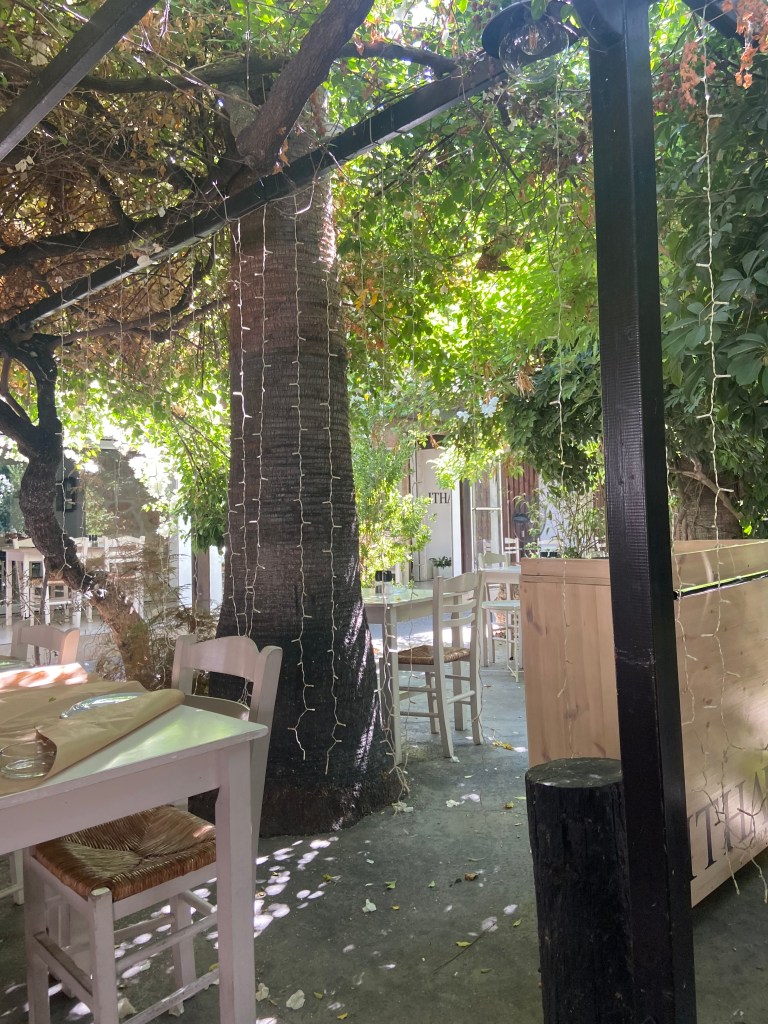
Ithaki Garden, home of the most amazing appetizer: fried feta with honey and sesame seeds. Once again, I am back with another blog post related to food. Rightfully so, as I’ve been to this restaurant three times within a week. I’m the absolute worst at directions, so I honestly couldn’t tell you how to get to this place, but if you can find it, it’s worth it. My criteria for a great restaurant are built up on the atmosphere/aesthetic, the food, and the employees. This place, as the name suggests, is set in the middle of a beautiful garden. The “ceiling” and other areas surrounding the seating are covered in leaves, vines, and flowering trees. This design provided much-needed shade, as did the various fans. Next, the food. Fried feta with honey and sesame seeds, Fried feta with honey and sesame seeds. The first two times I went, I got this appetizer in addition to the main course. The third time, however, I went solely for the feta, one last bite of heaven before I was forced onto an 11-hour flight. I didn’t realize how much my life was lacking until I tried this dish. Every flavor was perfectly balanced with the other, and, it was always served while it was still hot. Even if I was allergic to dairy, I’d risk it all for this feta. Having been there three times in such a short time frame, some of the students and I were convinced that the waiter we had each tie hated us. We had absolutely no reason to think this, absolutely no ground for it, but it still made us nervous when we went back a third time. This last time visiting heaven on earth, I was joined by only two other students. We asked our usual waiter for the bill, and when he came out, he had a grin on his face. Perplexed, we watched as he set down a round of free mystery shots on the table, next to the bill. He did not hate us.

-Olivia R.
-
Elevator Mishap
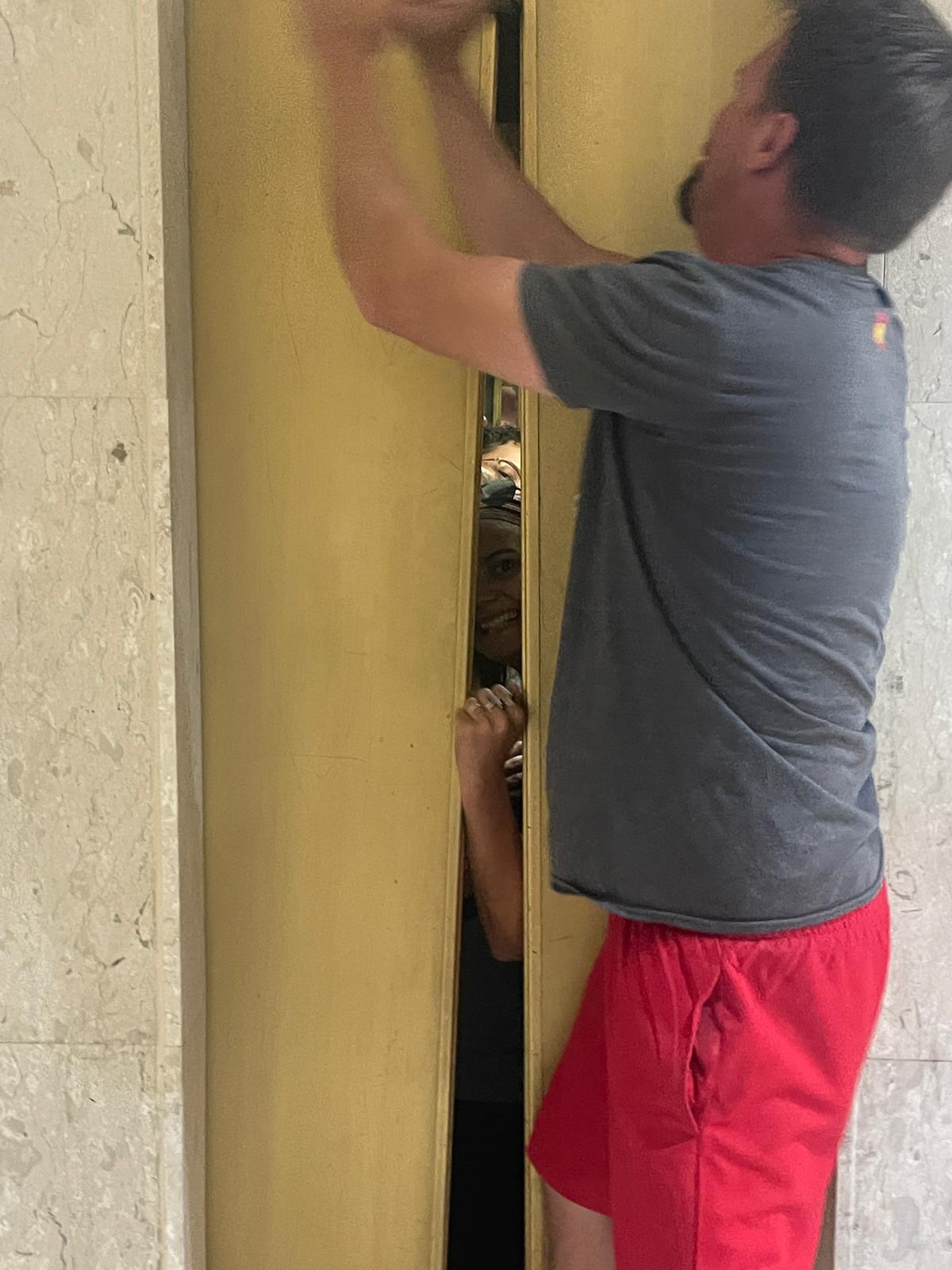
In our last two weeks in Cyprus our apartment building experienced a number of issues. These issues began with the ceiling leak in our apartment which after being fixed for a few days began leaking periodically every few nights. The leak continued up until the night of the 27th right before I began my flight home the following morning. The continuous leak in our apartment was not the only issue to befall our apartment building in our last two weeks as the elevators on both sides experienced various problems. These elevator problems culminated on Tuesday the 26th when as we were leaving to go out to a group dinner we over packed the elevator causing it to jam. Although the elevator had jammed on the other-side of the building before, the packed and claustrophobic nature of our Tuesday jam caused some of us to panic and try to pry the doors open. After calling down the professors we were able to pry the doors open enough using a car jack to allow everyone to squeeze out and the elevator was allegedly completely operational only about two hours later. I do have to give it up to the property manager Michael though who was always there to at least temporarily fix the leak in our apartment or the elevator that we definitely over packed.
Tristan F.

-
Cyprus Bars and bar life
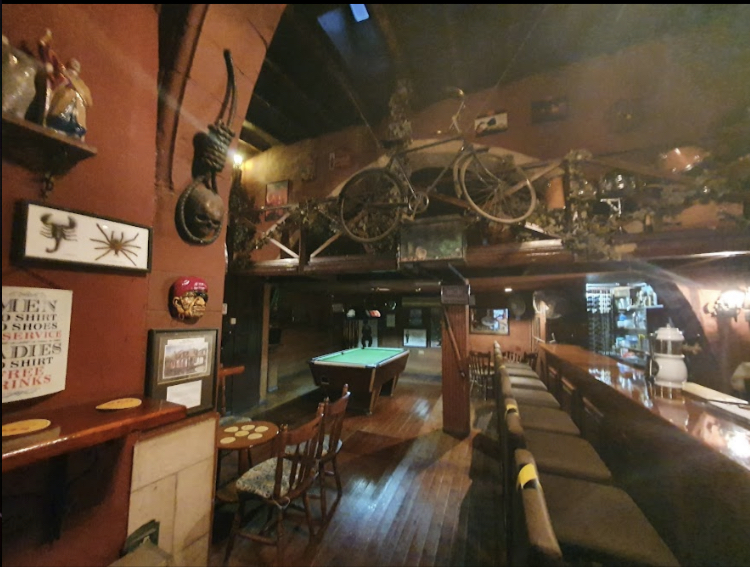
Like the restaurants in Cyprus the bars on the island are often far cheaper then their American counterparts and I can remember a few times where our group’s tab did not exceed 30 euro. Even when we were in a group of over eight people I do not believe our bill ever exceeded 120 euro. Beyond getting drinks at the island’s many bars most of the restaurants also offer cheap prices for both beers and drinks and beers such as Keo and Carlsberg can be found at most restaurants. Many of the bars and boardwalk restaurants are also a great place to meet friendly locals and tourists. Throughout my stay in Larnaca I met a number of really interesting people at the various bars around our apartments. Although the employees and owners of these bars and restaurants are themselves incredibly friendly I also notably met a few tourists from across Europe at these same establishments who were equally friendly. Two of the bars that I felt offered the most friendly environments were the Meeting Pub which can be found right on the main boardwalk and the Bowler’s Pub which is found in an alleyway near the Church of Saint Lazarus. American tourists are not super common in Cyprus and many of the bars or restaurants that you begin to frequent will recognize you and remember your orders and these places can become the source of endless conversation.
Tristan F.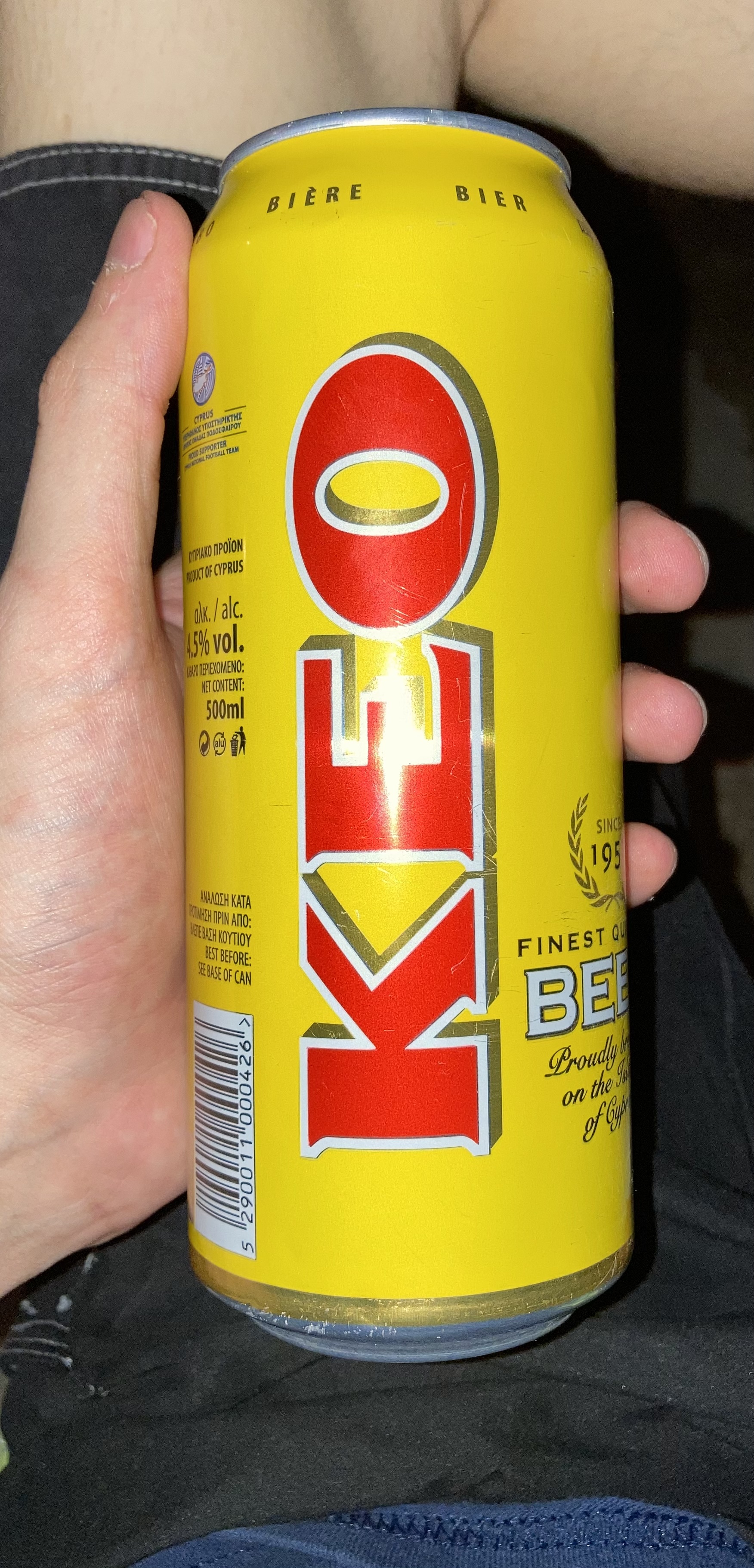
-
Cyprus Restaurants
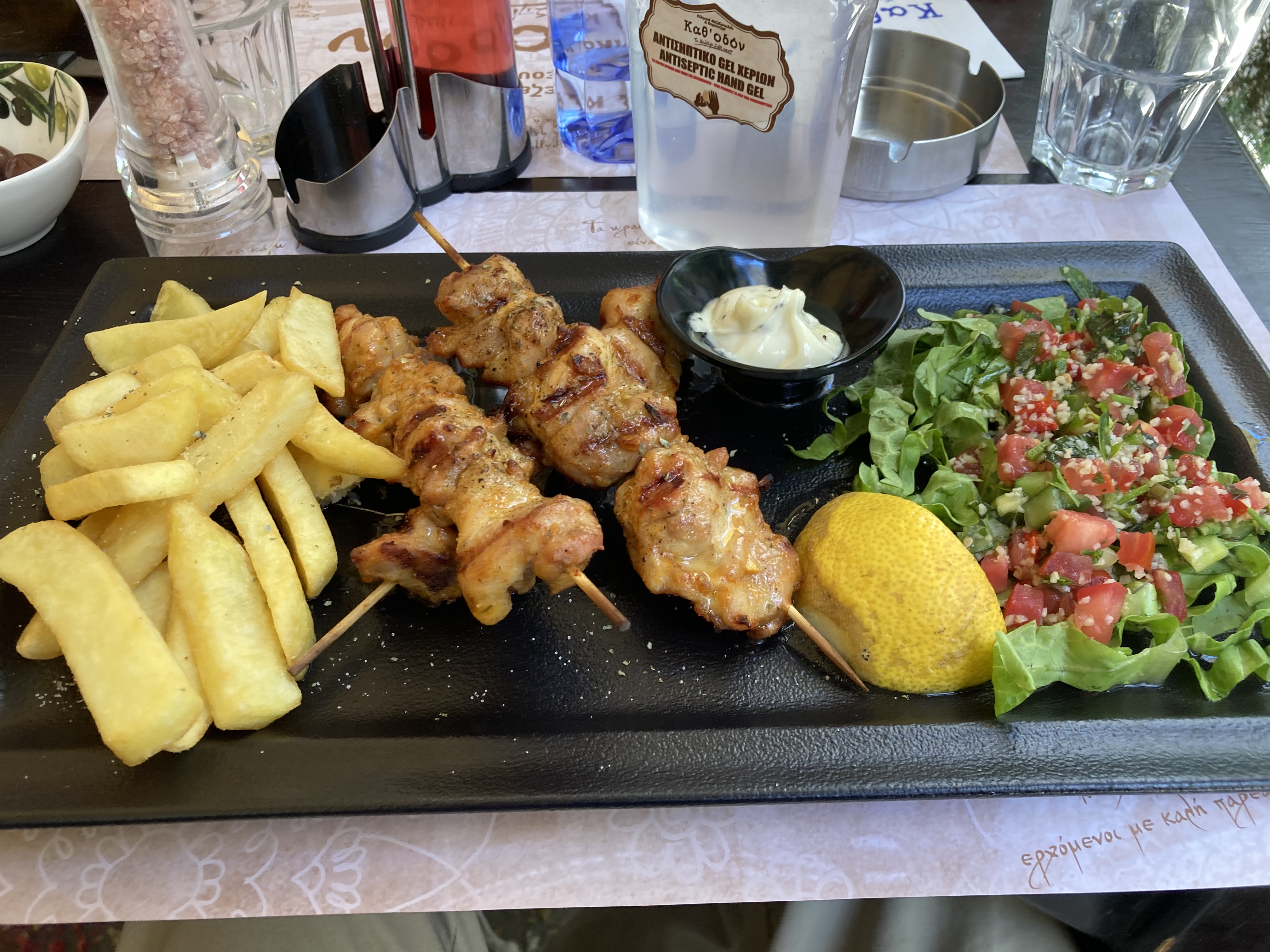
Everywhere we went in Cyprus whether it be on the boardwalk of Larnaca Beach or feet away from the border crossing in Nicosia had amazing food that was often far cheaper and far more filling than any restaurant I had been to in the United States. While in Cyprus I found myself eating out almost every night which is something I typically avoid when I’m back home because of the price that comes with eating out in the U.S. and during our stay in Larnaca I also found myself trying a number of items I had never heard of before such as Sheftalies and Halloumi cheese both of which I really enjoyed. Beyond just being cheaper to eat out in Cyprus I felt you almost exclusively got more food for the price than you would at any comparable place in the U.S. and for less then $10 a person you will be surprised to see how much food you will be getting. Even though the boardwalk and beach beside our apartments were obviously more tourist centered, the prices and portions at many of these restaurants made them some of my favorites. In my opinion some of the best restaurants along the boardwalk beside our apartments were the Tuck Inn restaurant and the Kalamaki Bar, both of which offer a good selection of Greek and Mediterranean food. The further away you get from the beach and tourist locations the better the prices and portions you’ll find and the restaurants surrounding Terra Ombra are a clear indication of this as there are multiple restaurants that provide both massive and cheap meals within the surrounding area.
Tristan F.
-
Umm Haram Mosque:
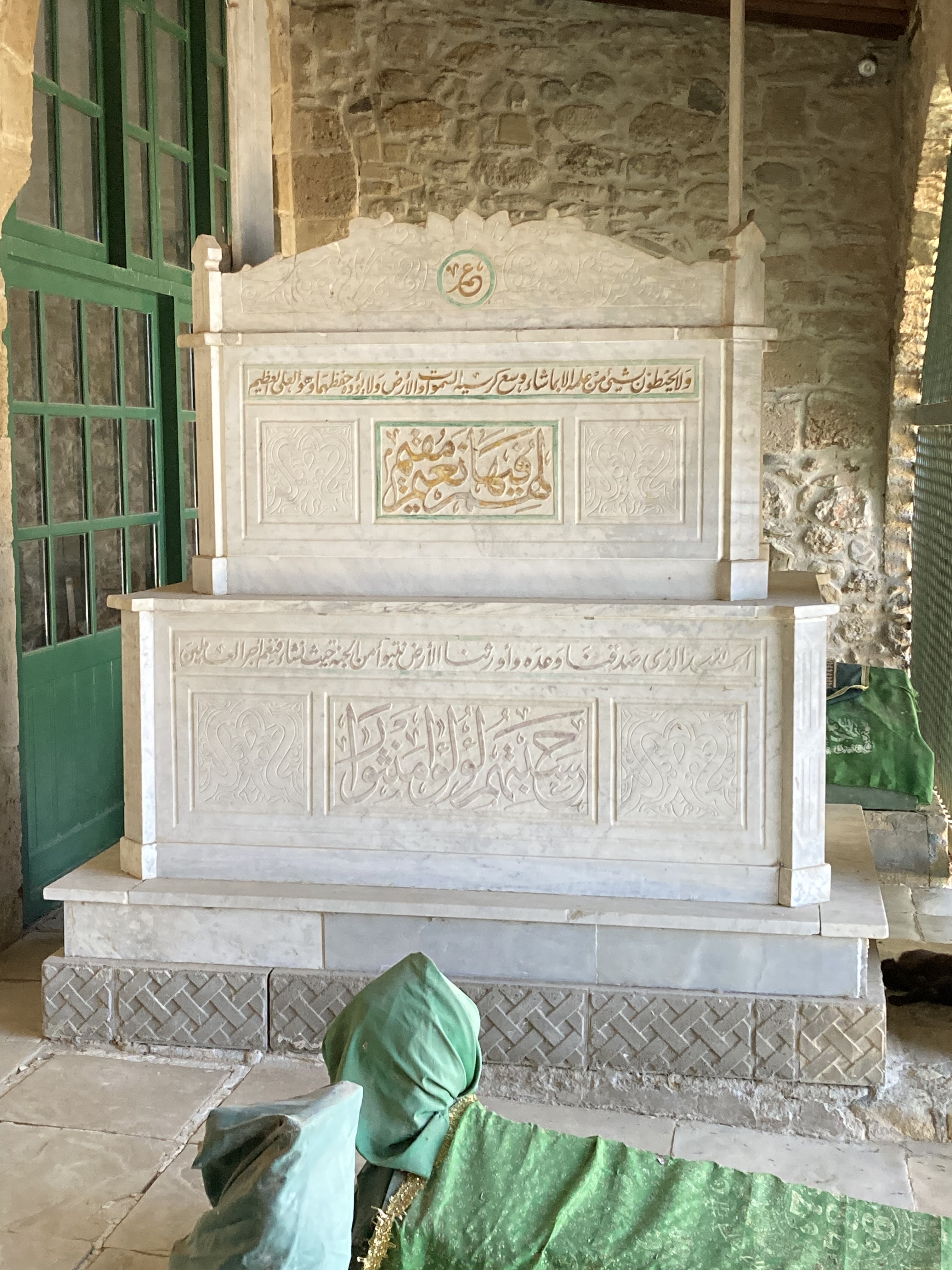
One of the stops on our final field trip in Cyprus was to the Umm Haram mosque on the outskirts of Larnaca. The Mosque is built on the edge of the Larnaca Salt Lake and was constructed during the Ottoman occupation of the island in the mid to late 1700s. The mosque has grown to become a very significant holy site in Islamic tradition as it was constructed over the tomb of Umm Haram who was one of the Prophet’s wet nurses and who died during the initial Islamic raids of Cyprus under Caliph Muawiyah in the 640s. Although the actual mosque was built much later this site has been described as both the third and fourth most holy site in Islam by some contemporary sources. The location of the mosque at the edge of a salt lake that is normally inhabited by flamingos and the architecture of the building itself are stunningly beautiful and it is interesting to see how well looked after the compound is, due to the limited nature of Islamic pilgrims to the site. During our trip to the mosque much of the site was still unfortunately restricted due to Covid guidelines and interior of the mosque and the tomb itself were largely restricted. Although our access to much of the site was very limited I was still very impressed by both the mosque and the tombs we were allowed access to, as it has given me context into what Islamic tombs and burial traditions are like and can be compares to Catholic or Orthodox Christian traditions as is evident by holy sites such as the Church of Saint Lazarus.
Tristan F.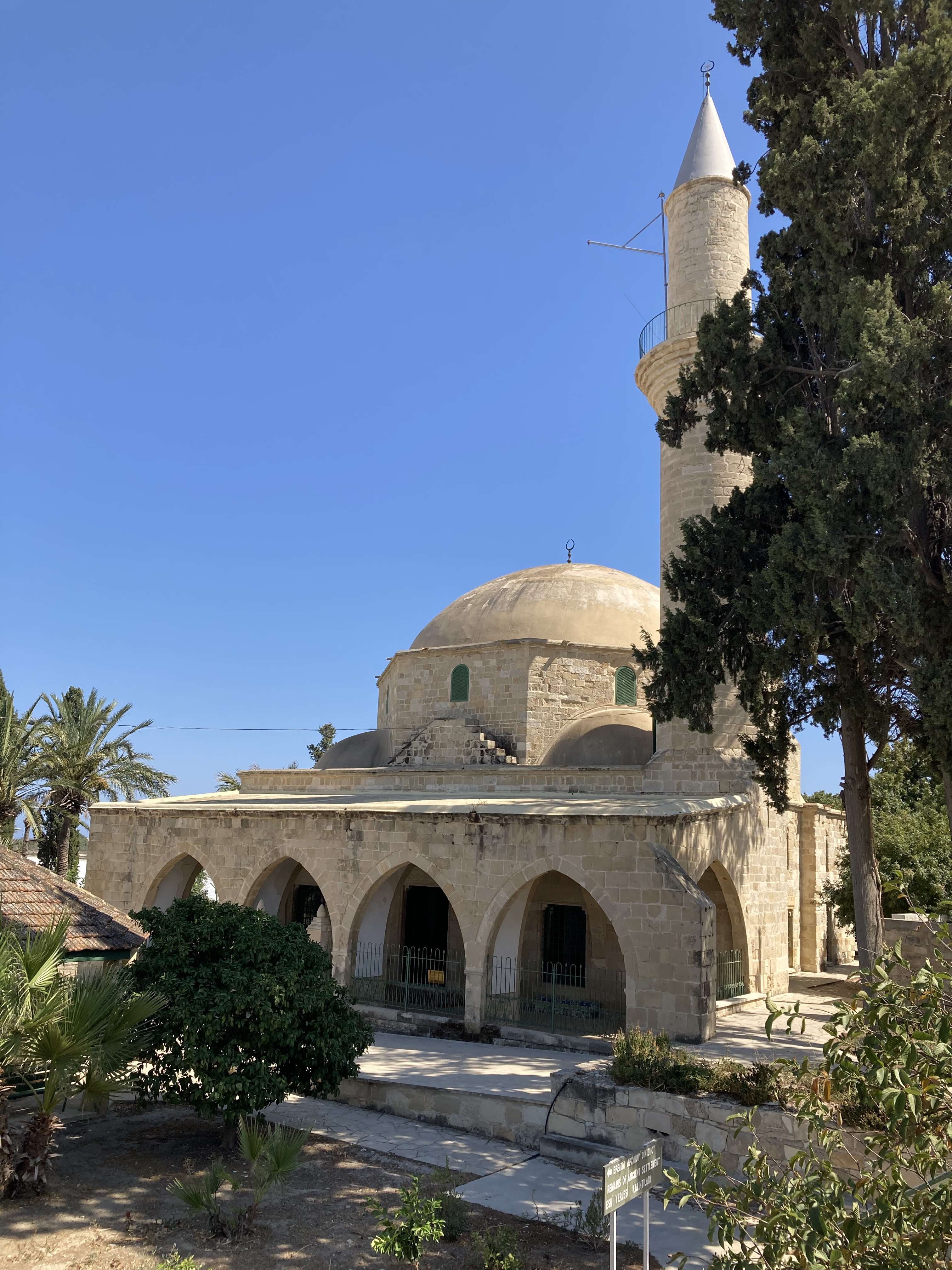
-
Cypriot Entrepreneurship
I mentioned George in one of my previous blog posts and I wanted to tell part of his story, but I needed the chance to connect with him again so I could share some of the photos of his labor. George is a native Larnaca Cypriot around 53 years old. He has a wife, two sons age 26 and 14 and a daughter I believe is 23. He was born in a house about a 7 minute walk from the beach where he lived his entire life until moving out on his own. His parents retired elsewhere and left him their home which was one of a series of row homes next to an apartment building. Through his family he was able to raise up enough money (around 100,000 Euros) to purchase another one of the row homes just two doors down. It was seriously dilapidated, had not been lived in for twenty years, and the mud brick interior walls were crumbling. But George had a plan. He was going to make a small bed and breakfast type hotel out of it. Small studio style apartments for tourists to stay in. This was in 2018, and over two years of work, he managed to reconstruct and renovate the property. There is another very tiny row home in between his new business and his childhood home which he hopes to buy at auction sometime in the near future. He is going to connect all three homes together, each with a few rooms to rent, and have a bar for alcohol and snacks, a backyard pool and a rooftop jacuzzi. But for now, he has only managed to complete the first building, his initial investment property. He gave it the name Magdalene, after his only daughter who will help him run it once he manages to complete all phases of his master plan.
He told me the ‘Magdalene’ was built in 1935. When he bought it, he did a walk through video recording the very poor shape it was in along with the extremely old fashioned means of living the previous owners lived by. The ‘kitchen’ did not have a sink, but a very large piece of limestone slab that was carved out as a basin or a sink. Little piping in the home for basic running water. Roof that had collapsed. All the walls except for the front stone walls were mud brick and plaster that had began to crumble from neglect. There were a few charming parts, like the front foyer had a tile pseudo-mosaic which he made sure to incorporate in the hostel, although slightly modified to fit symmetrically with the new wall layout. He repurposed as much material as he could out of the red bricks and lower stone foundational walls. Even wooden beams that had been buried inside the mudbrick for nearly 80 years was restored and crafted into furniture lighting. Old doors were restored and modified for glass windows and bronze door handles. George had to teardown the back half of the home, but he rebuilt it to his specifications and added a second level and connected that level through a metal welded semi-spiral staircase. George and a few of his friends did most of the work, but George said he spent several hours a day for nearly two years to see his dream come true.
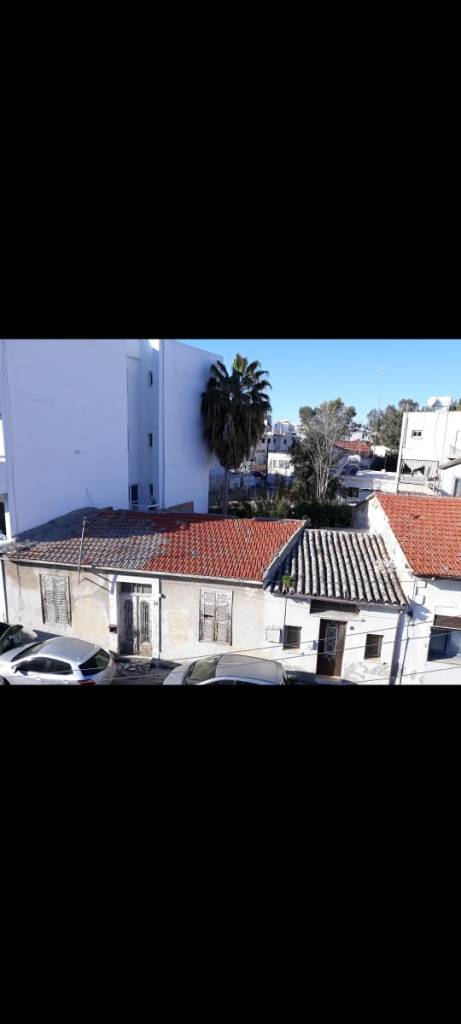
The front from an elevated view before being worked on. It is the left most home, the small dark roof is the next property he home to buy to connect everything together. Notice no hot water system on the roof. 
Today. He preserved and exposed part of the stone wall structure of the home. 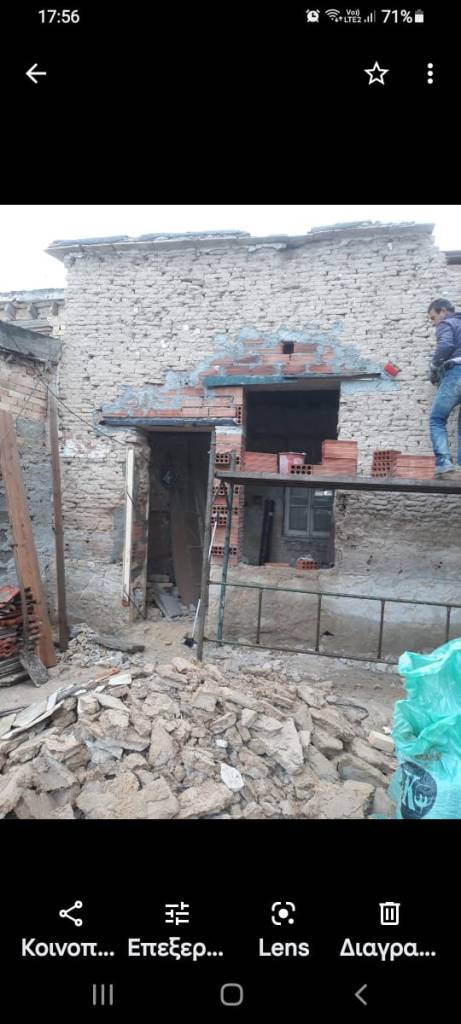
The interior courtyard looked like this. You can see the pile of crumbled mudbrick that most of the walls were made of. George worked to shore up the walls that had mudbrick that was not structural unstable. 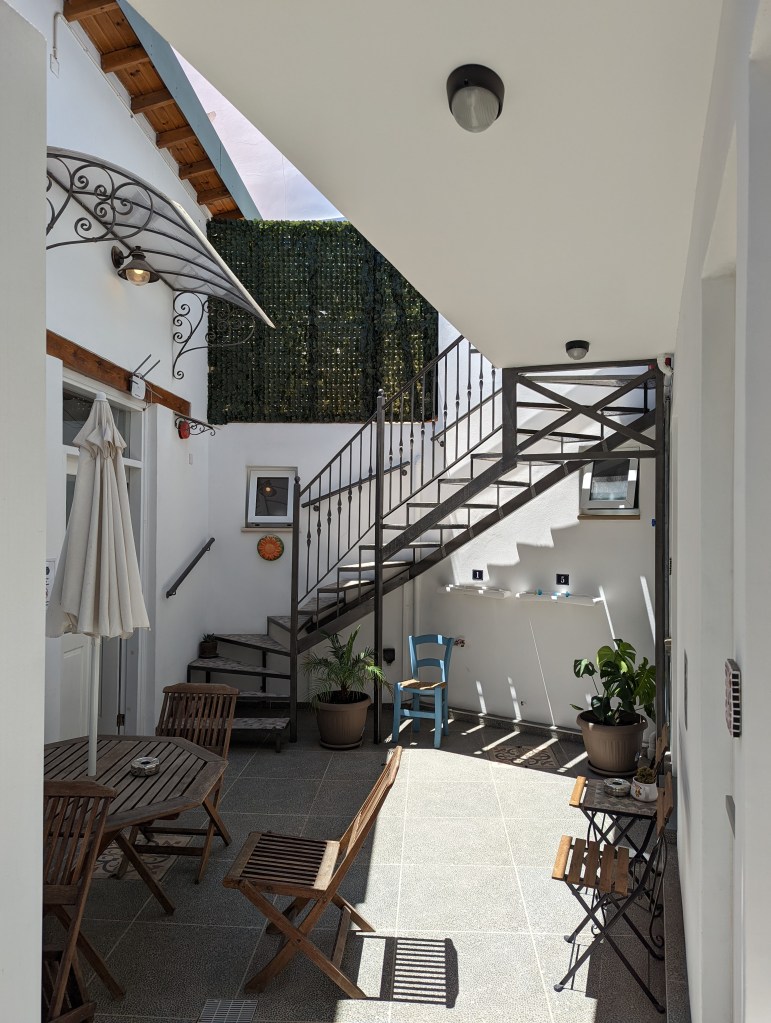
Interior Courtyard now. 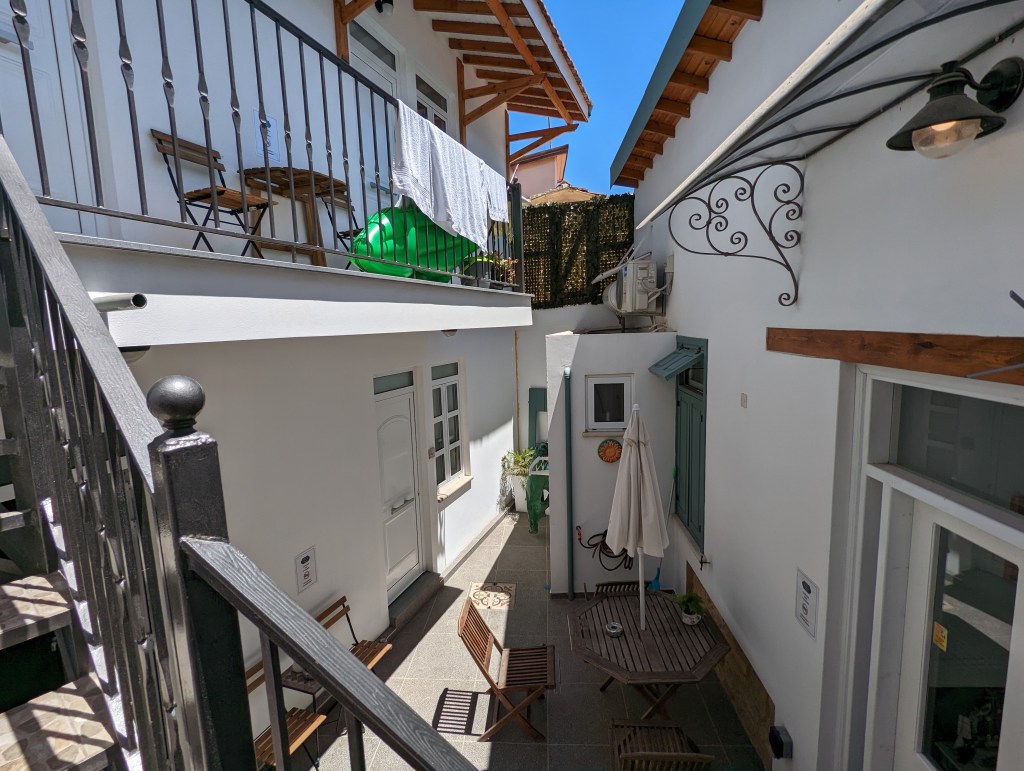
The umbrella is where the man was standing on the scaffolding two pictures before. 
The foyer with the preserved tile mosaic. He had to removed it, raise the floor several inches to allow water piping underneath the floors, and then reconstruct it with a slightly altered design. 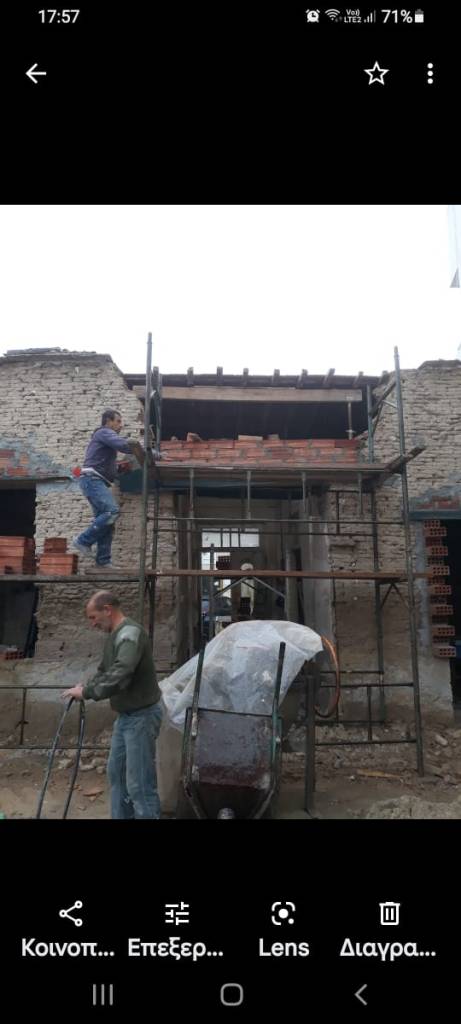
Looking down into the foyer. 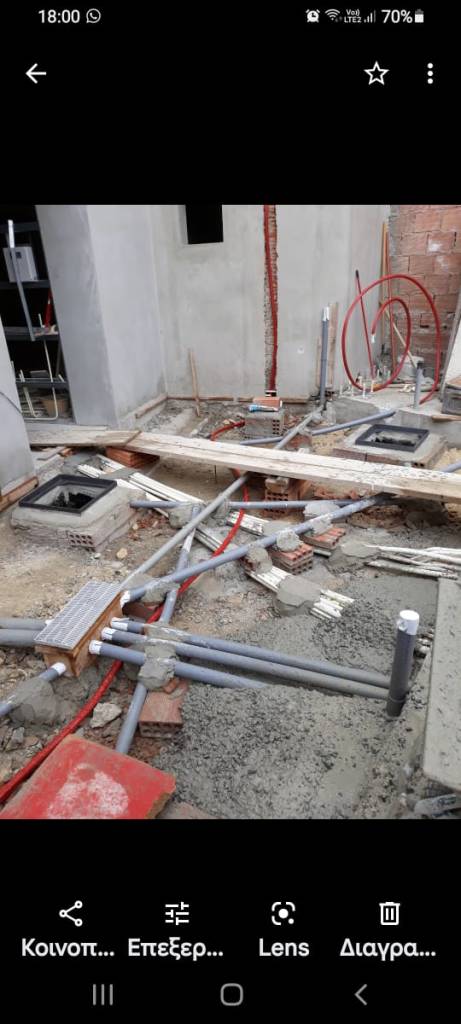
A home that originally barely had plumbing had to have 6 different independent networks of pipes for waste water, cold water, and hot water. 
Constructing the staircase and the new upper level. 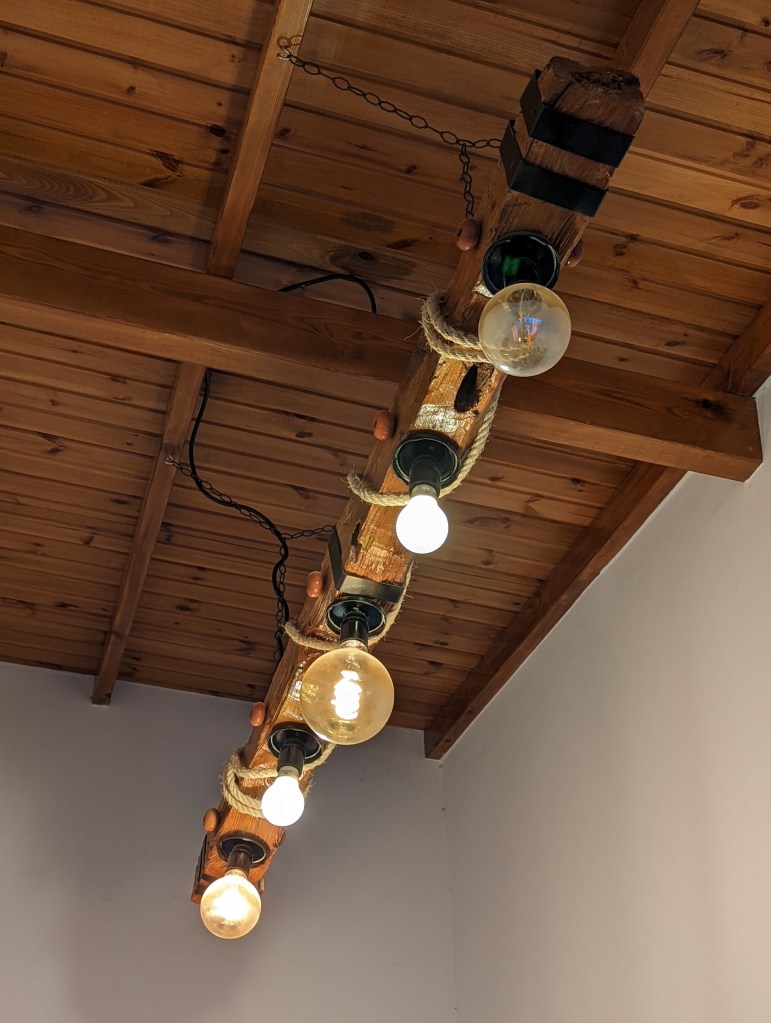
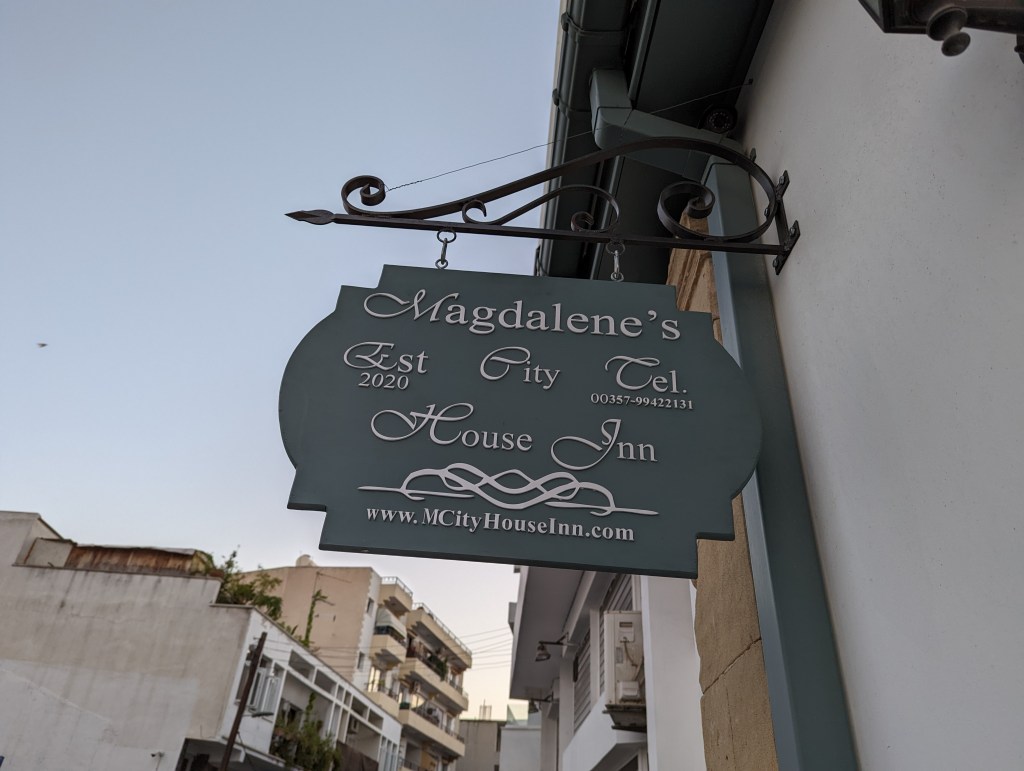
Wooden support beams from walls and ceilings that George saved, treated, and converted into decorative lighting. I spent several weeks in Cuba back in 2017 and was blown away by some of the clever ingenuity of local Cubanos in constructing make shift lodging for tourists to stay in so they could earn some extra money. They had little material and money to work with and sometimes the results left something to be desired. But I’ve now had a chance to see how Cypriots approach the same challenge of keeping and updating old structures, but with greater access to materials and capital to see their projects through to the end. It was wonderful to meet George and talk with him the several days I lived in his lodge. He would sit down and make you a cup of Cypriot frappe and ask you tons of questions about your life while also sharing openly about his. If you want to stay in Larnaca after the excavation is over, I would very much recommend checking in with George and see how far he has come in his project and if he has any rooms available for you. His number is post on the sign out front.
-Adam E.
-
The Mosaics of Nea Paphos
Nea Paphos was a Greek and later Roman city on the coast of Cyprus west of modern day Paphos. Sometime after the Diadochi wars for the control of Alexander the Great’s empire, Nea Paphos was made the capital of the island replacing Salamis. So with that micro image of its history, you just know it had to be a grand place.
In 1965, Polish archaeologists began excavating the site and started to uncover the vast amount of history that lay beneath the surface. In 1980 the location was designated a UNESCO world heritage site and today it is known rather more publicly as the Paphos Archaeology Park. It really is a bit of a theme park for history nerds without the flamboyance or pageantry of a real theme park. It is quiet, almost somber, and requires hiking around the site from location to location. Plenty of time to contemplate what it may have looked like many centuries ago as you walk. You must realize that of the several villas, the theatre, the basilica, the agora, and other remains that are exposed and left for tourists to come see, everywhere under your feet you walk over other buildings or roads that have yet to been discovered or uncovered. Nea Paphos might very well be a Pompeii sized site waiting to be understood.
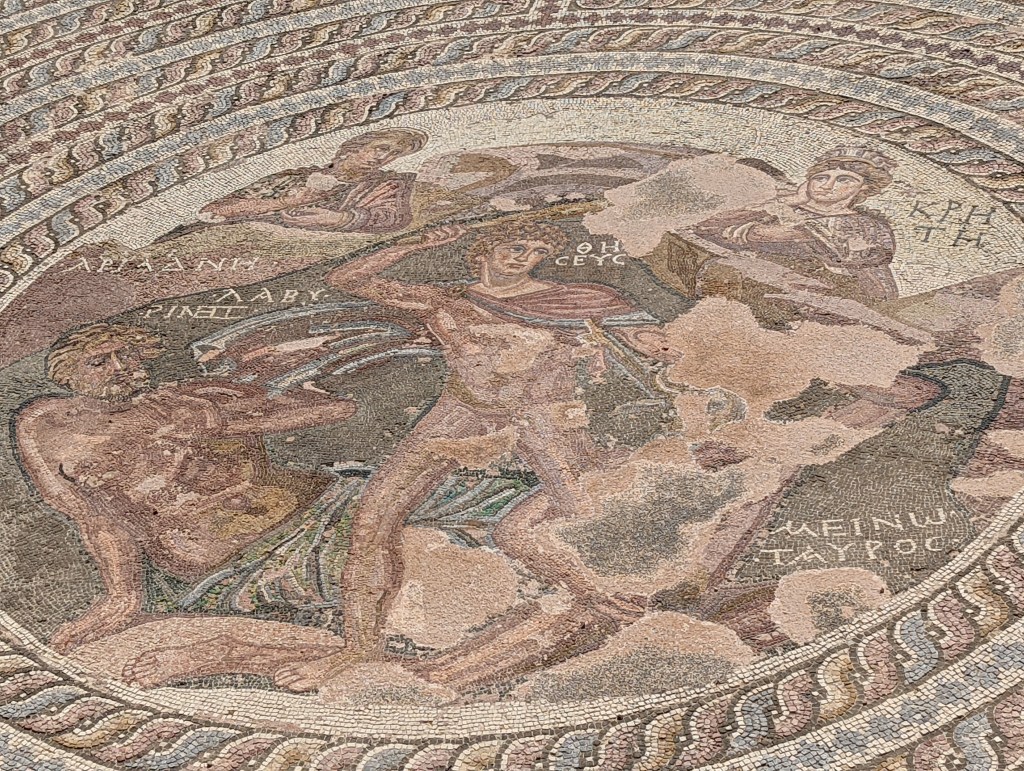
What the park is known for most is the incredibly preserved and varied Roman mosaic floors. Several grand villas of the wealthy had entire rooms covered in representations of great Greek mythology and cultural iconography. Be it the birth of Dionysos, depictions of gladiatorial combat, or pleasing geometric shapes woven into patterns. Most of these mosaics date from the 2nd to the 4th centuries CE, and sadly earthquakes struck Nea Paphos and much of Cyprus in the 4th century, destroying many cities and sites, often causing people to abandon them all together. But the sudden departure has left much of the areas rather well preserved even after all this time.
The photos speak for themselves.

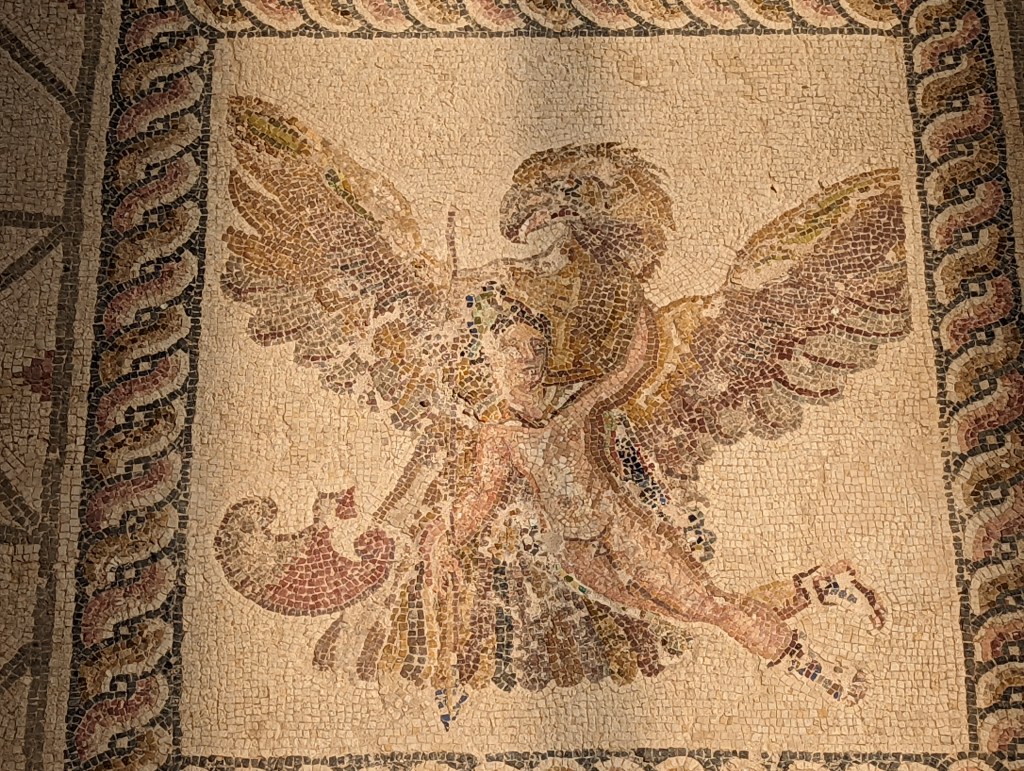
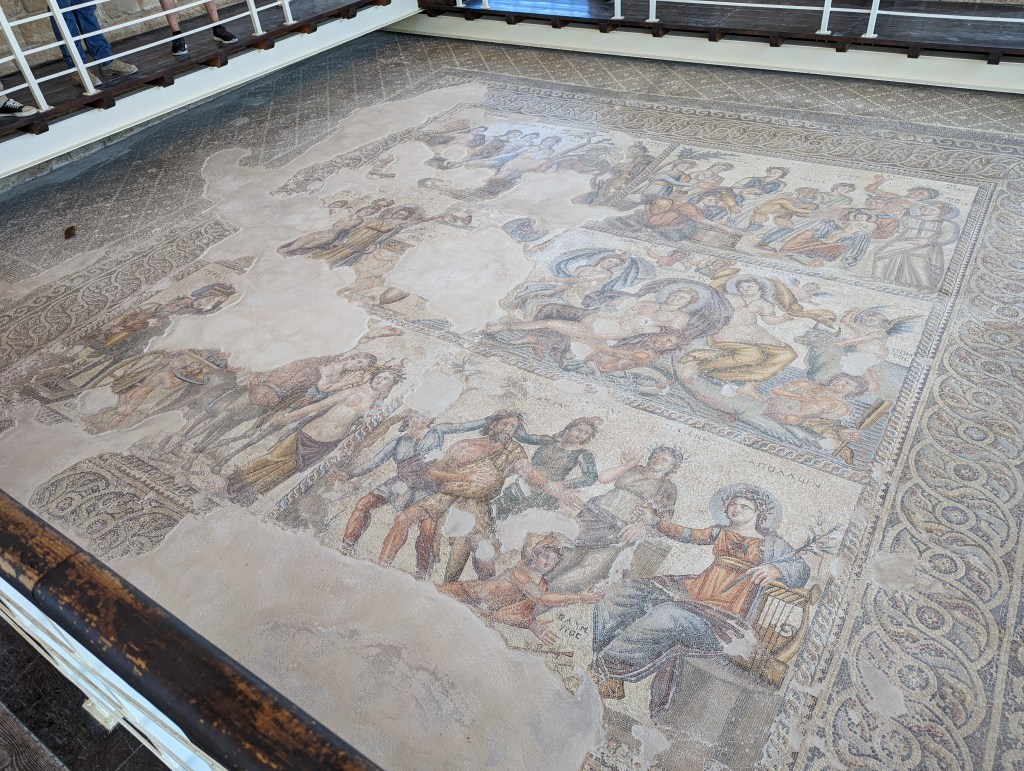


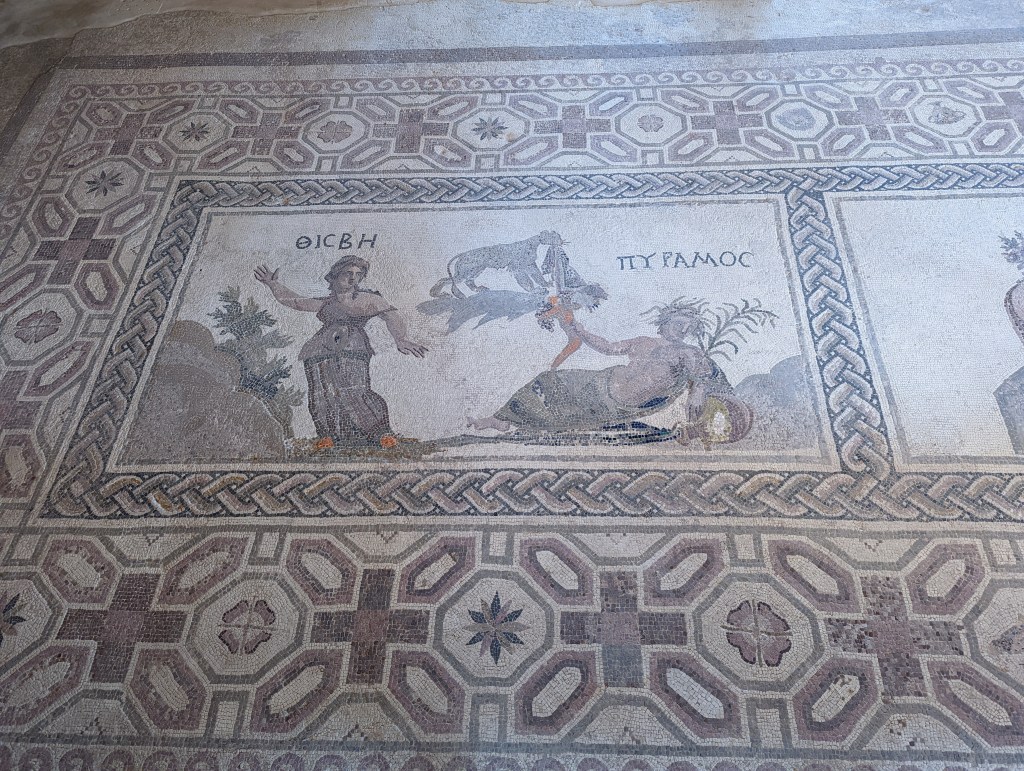
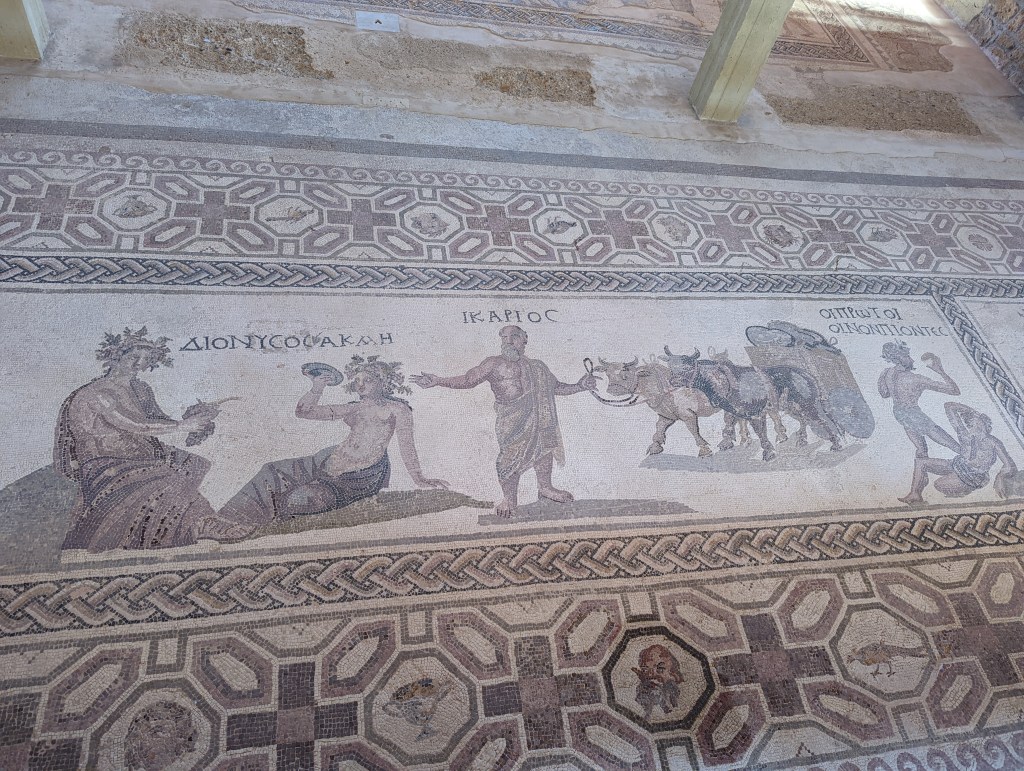
-Adam E.
-
Phoenicians in Larnaca
Not all discoveries are made during the dig. Sometimes artifacts are not examined much before they are bagged, tagged, and taken away to storage. Once the students start doing the tedious grunt work of pottery washing, some of the missed finds come to light. In 2019, a handle for a piece of pottery was placed in a bag with likely little consideration. In 2022, it was pulled out of the bag and began to get cleaned up. (It seems that is normal that previous seasons find get cleaned up by the next season students… we got through 2019 but barely touched our own finds). I began working on this rather innocuous pottery item and realized there was some marking on it. I showed it to the professors and they started discussing that maybe it was two different Greek letters. I spent more time scrubbing it clean and the image became more clear.
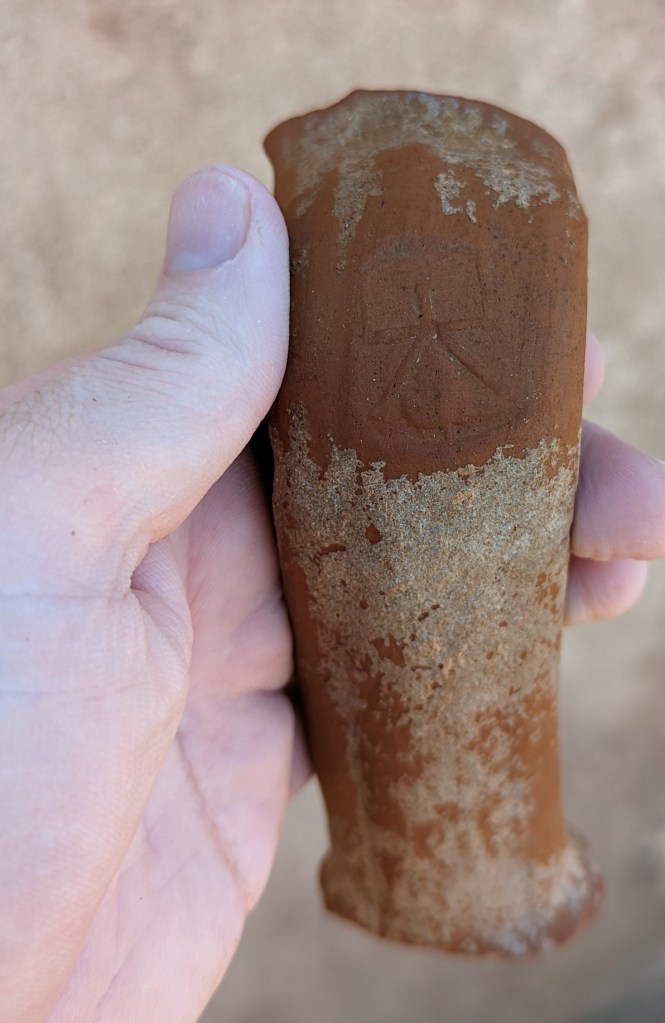
In the shade, it immediately reminded me of the symbol of Tanit. Tanit was a very important Phoenician goddess, the chief deity of the Carthaginians, who would have been in control of much of the seas in the western and central Mediterranean during the time period of our site. I brought it back to the professors and they saw it as well now too. One of the graduate students perked up to take a look and agreed. She seemed to have a specific affection for Phoenician history and I assume it was her area of focus as over the weeks she was able to refer back to her knowledge of Phoenicians on many different topics. Additionally, once it was in the light, there was a clear triangular shape inside the ‘skirt’ of Tanit. I thought it was a bell, but one professor was pretty sure it was a tree. The tree would make more sense, if you understand the historical and religious importance of the cedar tree in the Levant. All the way back to the Epic of Gilgamesh, the Sumerians wrote in Cuneiform tablets about Gilgamesh visiting the Cedar Forest which was a realm of the gods. It is believed by some this Cedar Forest was located in modern day Lebanon, which is where the Phoenician Empire took root in cities like Tyre. Cedar trees can have that bell like shape almost like that of a pine tree. Even today, the modern Lebanese flag has a cedar tree on it. The cedar tree is mentioned over seventy times in the Bible, most of these citations are found in the Book of Pslams. Needless to say, the importance of the Cedar Tree seemed to last for millennia and spread all throughout the Semitic peoples traditions and religions.
My professor described to me the practice of pottery manufactures sometimes having a branded makers mark on their wares, or the merchants who purchased wares and took them abroad to sell would store them in their own marked pottery. That was his assumption, and this jives with the idea of Cyprus being a nautical crossroads for much of the Mediterranean and Near Eastern civilizations at this point in time. Perhaps the troops at Vigla had merchants come to their gates offering goods, or the soldiers themselves acquired them from looting or purchase from local cities such as Kition (ancient Larnaca). This piece of evidence is no smoking gun in trying to figure out who built the military installation at Vigla, but it does help form a picture about daily life and the means of acquiring resources in the area.
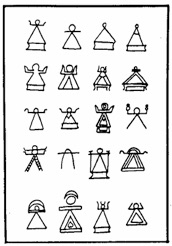
Examples of Tanit 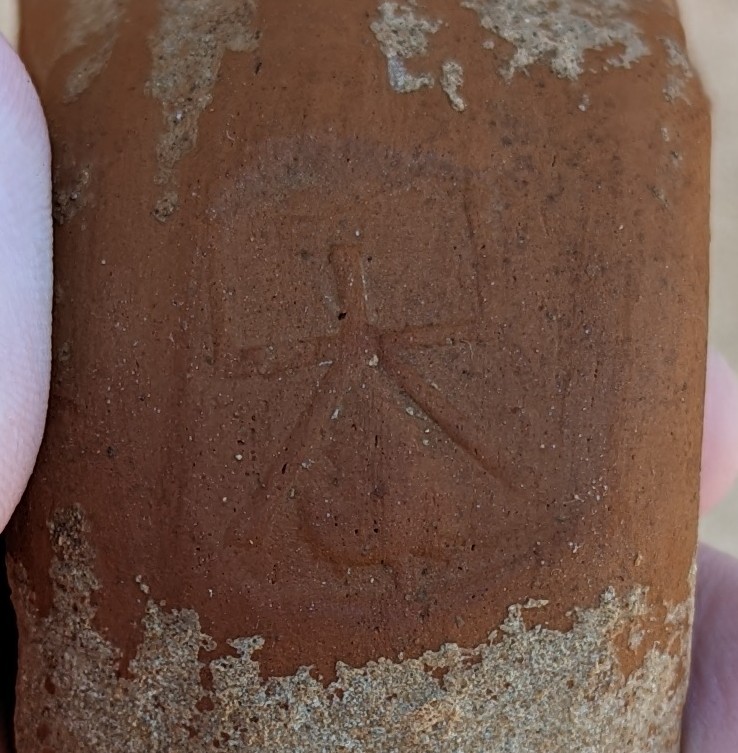
Close up. Notice the similar shape of the figure and the jagged triangular tree at the bottom with a trunk. Is the curved top part a crescent like some of the Tanit depictions often show or just the edge of the cartouche? Stay curious and remember the little details. It might turn a simple marking find into a bigger question.
-Adam E.
-
Semitic Figurine Discovery
My one big find while excavating Vigla this year was a figurine. After my time in isolation from COVID, I had my chance to get back at digging. I was placed in a section that was initially given the designation of Stratigraphic Unit 8207 (SU8207). The way I described it to everyone was that is felt like I was in the back seat of a Toyota Corolla with the windows up without air conditioning in the middle of summer. It was low enough below the surface that no breeze would come through it, so after just minutes down on my knees sweat would drip from my nose, my chin, my neck, and begin soaking through my shirt. I’m fairly tall standing at 6’2″ and around 185 pounds, so the cubic footage of this area trapped between an ancient stone wall and the exterior wall of our trench was extremely cramped. The pit was triangular in shape where the stone wall and trench wall nearly came together the length of the SU. It was originally being worked on by another person larger than me who was here for the early days of the project, so I have no idea how he managed to maneuver around in it.
The early parts did not yield many finds. Eventually it was realized that I blew past the floor of the room that used to stand there, but we had a section of it still present. This helped us determine the location of the floor as I worked my way into the more narrow parts of the SU. And this is where things started getting interesting. After some removing of floating stones in the broken mud brick layers, approaching the assumed floor level, I had an obvious collection of broken pottery rather conspicuously stacked on top of each other. As I worked the sherds of pottery out, nothing stood out about them other than the fact most of them seemed to fit together or be nearly identical. Something I initially took as a stone, as I do not have my archaeologist eye developed yet, I worked around and ignored. After taking a moment to get a drink of water and catch some of the coastal breeze, I stared down at the collection of material and realized there was a pattern on the stone. I got back in the trench and brushed away at it for a short way before a smile took over my face.
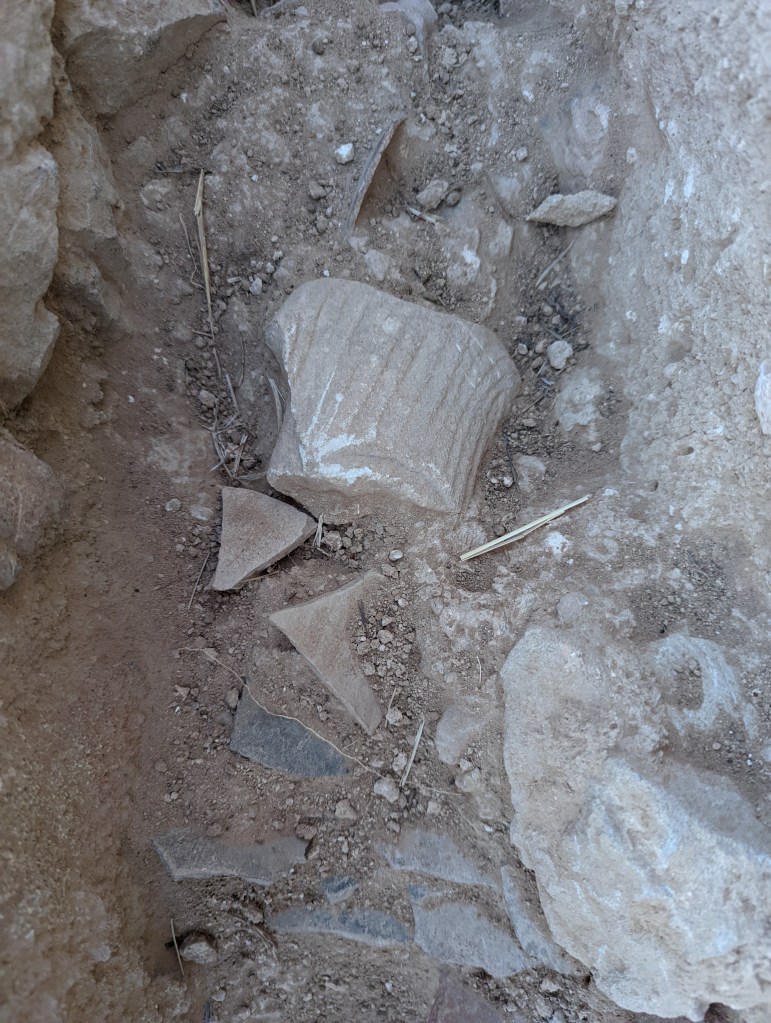
In Situ I called over for a more professional eyeball and immediately was told I found a figurine. To be honest, I did not even assume it was something like that at first. I had no idea what I was looking at. But once I was told it was without a doubt a figurine made of limestone, it made perfect sense. I spent time working around it, removing small amounts of dirt with a brush and chipping slowly away at the compressed mudbrick layer. We gave this floor level area with all this material culture a new designation of SU8218. I was not able to work on it more until the following day where I finally cleared enough around it where it came loose. I pulled it from its 2500 year old resting spot:

Figurine from the front 
Figurine from the back 
Figurine from the side So I found a male figurine. You can see the beard, right at the shoulder/neck level. The figurine lacks a lower half, head, and arms, as they have been broken off long ago based on how smooth the corners of the breaks were. I was hoping to find the other pieces, but they were not located in this deposit. Perhaps they lay just inches away beyond the wall of the trench, as more pottery was imbedded there at the floor level.
There was a discussion about the artifact on site for a short while and it was concluded that is had both a Greek influence (which makes sense as we are working a Hellenistic site) but also had a Semitic influence, mainly the beard shape and presentation. If you notice on the front, the body has a shape that looks like a robe, but as one of the graduate students pointed out to me, the ‘bite mark’ on the lower part of the body was intentionally shaped, as the vertical robe pattern continues underneath the mark. She suggested the robe was that of the Greek Peplos or Chiton, a common form of clothing at that time consisting of a long tunic for men or a long shoulder draped robe for women. A belt, rope, or long part of the hanging fabric would be wrapped around the waist, giving it the appearance of another piece of fabric over the legs like a skirt or kilt.
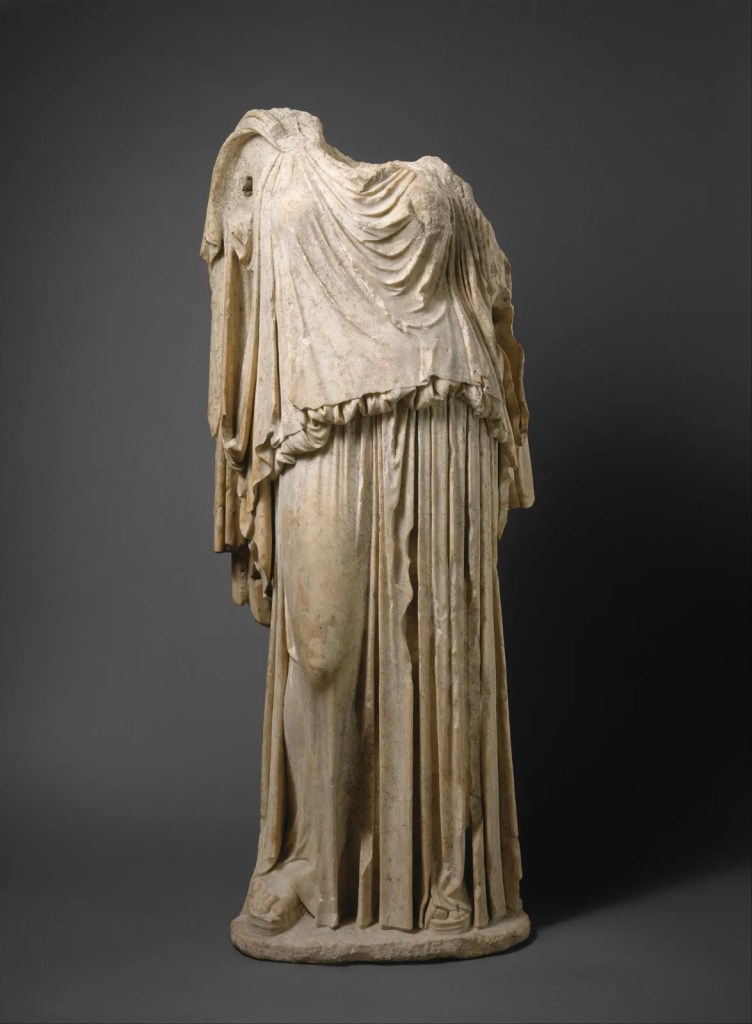
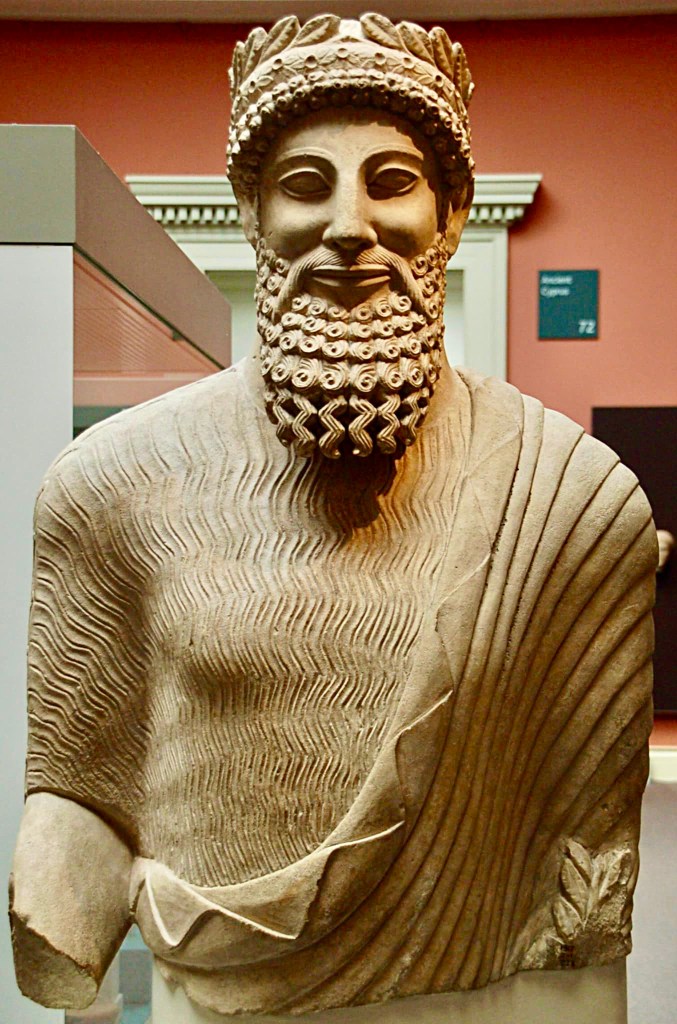
An example of a peplos or chiton. Male fashion was usually with the ‘skirt’ above the knees. As we don’t have the whole figurine, it is hard to give a purpose or assign a more specific origin to the artifact. Everything would be speculation or an educated guess. So in the spirit of speculation, I took the time to try and find culturally similar limestone figurines or statues using internet resources. The focus was on textured square beards and robes that had the pattern of vertical yet angled plumage. Everything I found that had these characteristics were from Cyprus or in the Near East. Trying to dial in the time period ruled out some objects, but some of the most comparable examples were anywhere from 200 to 400 years older than the time period our site was. This is to not say that this figurine had to be made around the end of the 4th Century BCE, but it would be easier to explain its presence if it were manufactured around that time. The closest example of a large, much more costly and well produced statue I found was that of a Limestone statue sitting in the British Museum found in Cyprus. It was from the Achaemenid era showing both Persian and Hellenistic influence. It however dates back to the Late 6th to the Early 5th century. Perhaps there is a conceptual relationship between my small find and this magnificent piece of art. More likely though, my unprofessional mind is looking for connections I am no where near equipped to make.
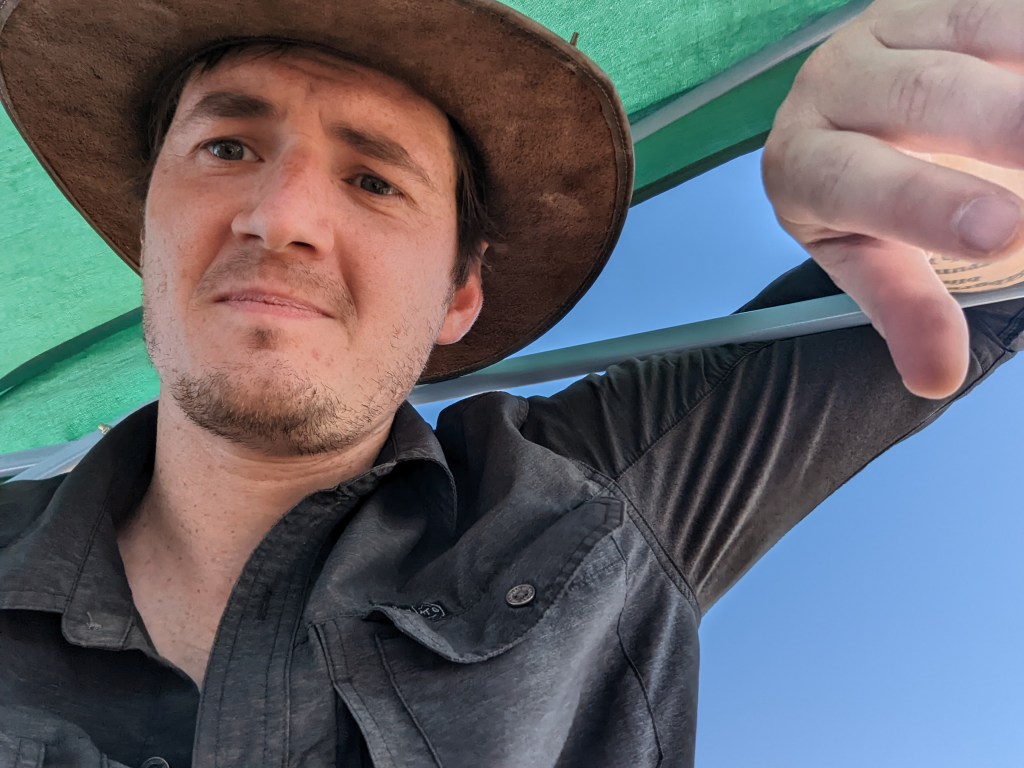
I cannot wait to read the analysis of the find by an expert. The figurine I decided to name Cora, in honor of my close friend back home in Denver whose father was from Athens. She bought me a leather hat on my birthday last year and told me to wear it on my first archaeological dig. Indiana Jones is what everyone always thinks when you tell them you are into archaeology. Here’s to you Cora. You are now forever associated with a headless, bearded man.
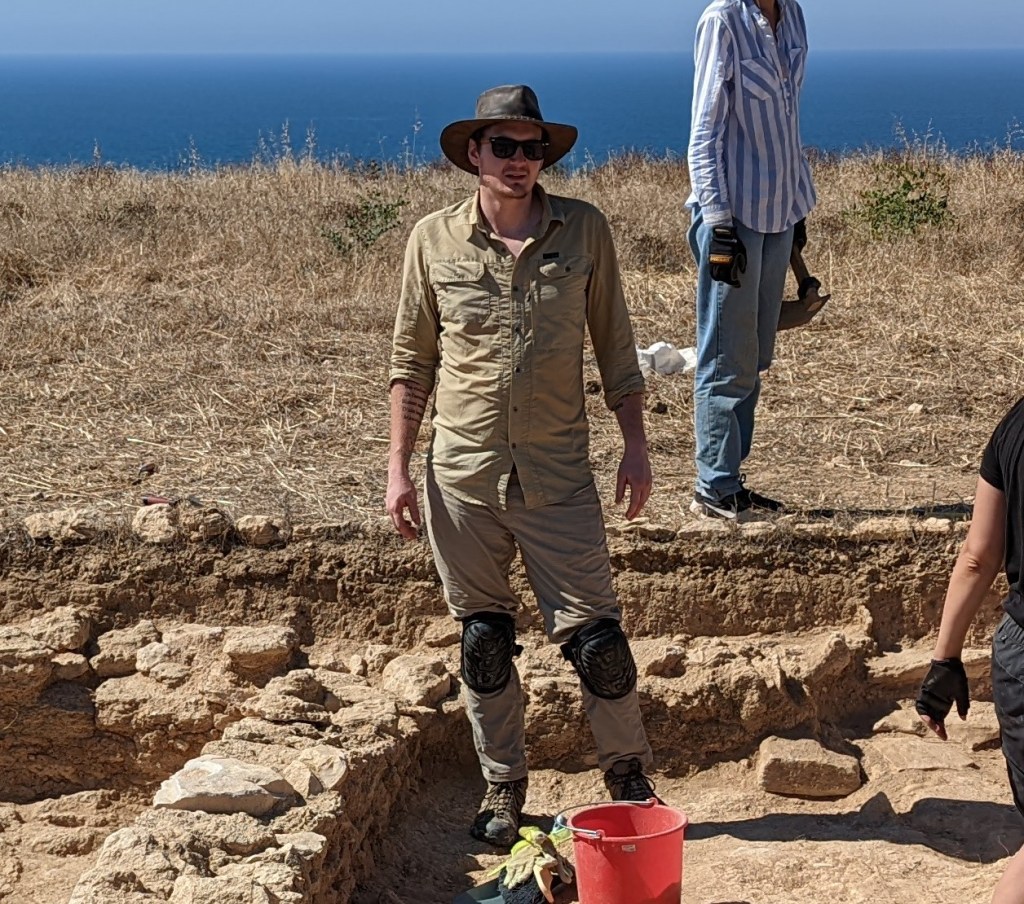
Fun fact: about five hours after this photo I found out I had COVID. Get vaccinated. -Adam E.
-
An Athenian Story of Larnaca
I spent enough time at the ‘Meeting Pub’ for meals and a few drinks that I got to know most of the employees. One in particular was super excited to find out I was American. Most English first language speakers who would dine there would generally be Irish or from the U.K. But this young man Dimitris (he liked being called Jimmy) always wanted to visit or move to the United States. He told me he and many other Greeks like him still saw it as the land of opportunity that wasn’t available to him in home of Athens. We began talking about basketball and then various other subjects (Giannis Antetokounmpo is a living demi-god among Greek basketball fans.) I told him of my friend whose father was Greek and moved to the U.S. at 18 years old to eventually open his own restaurant that he still runs in his 70’s. Pegasus Taverna in Detroit if you are curious. This was the sort of thing Jimmy longed for, entrepreneurship and being self-made, taking care of your family though your own blood and sweat. He explained to me how ones family, especially the mother, was held in such high regard culturally in both Greece and Cyprus. Everything you do, you must ask yourself, “Would this make my mother upset? Will she cry?” I had the chance to walk with him later that night as he had a 40 minute conversation with his mother on the phone, and she was living up to every trope you will hear about Greek mothers who worry about their children.
Jimmy invited me down to MacKenzie beach, which is about 3km south of the main beach of Larnaca that the students of the excavations here will come to know very well. I sat down with Jimmy over drinks at a tiki-style tavern right on the beach called ‘Rebuke Lounge’. There I had the chance to pick his brain about working in the service industry in Larnaca as well as the reasons why he left Athens to work here. We spent a few hours talking about many things all revolving around this topic, but I will try to condense them into specific points.
In Cyprus, the minimum monthly wage is 700 Euros. Compared to Athens at 400 Euros, that is a lot of money. But at his job he made 1365 Euros a month, plus another 300 from tips that were pulled together and distributed amongst employees (know that tipping in most of Europe is uncommon, not expected, and is generally reserved for when you are really happy with the service). With local taxes taken out he is left with 1200 Euros and the additional 300 Euros that he called, “on the black” which means it was never recorded for tax purposes by the business so employees got more. Cyprus (along with Greece) has a pretty normalized ‘black market’ of jobs, accommodations, and other things that keeps money from going into the government coffers and keeps more in the pockets of the average worker. The nature of having cash centric services tend to lend to this. That is why everyone you go you always get a receipt for a transaction with cash. If you didn’t, someone might not be exactly on the level.
So Jimmy takes home about 1500 Euros a month. He tells me that 1500 Euros a month in Athens is really big money for a job. He felt you were effectively rich if you brought home more than 2000 a month. In Cyprus, it just means you are doing fine. He told me housing, like an apartment for one or two people in Athens, if you stay away from the city center, would cost maybe just 250-300 Euros a month, but energy bills could be a couple hundred every two months. One can see how quickly 400 Euros would disappear if almost all over it went to housing and electricity. He could not give me figures on housing costs in Larnaca, but he did imply they were likely more than Athens but compared to the wages people usually received, a person would be comfortable working in Laranca. In Athens, the best jobs are “public domain” jobs, basically anything working for the government. He said people fight hard to get those jobs and never leave them, as the money and pension is enough to never really worry about anything financially. He made just as much serving tables in Larnaca than a person with a degree working in a government office did. Part of his wages he sent home to his mother just so she never had to struggle on just one income. Jimmy’s father is English living somewhere back there, but tends to bounce around from the United States and various European countries. In talking with Jimmy, I never got much of a hint that he saw his father very often. More so when he was younger, but maybe not for the past few years.
So everything seems pretty rosy with Jimmy’s life, right? Well, hold the phone. The reason Jimmy was not able to tell me the cost of housing in Larnaca, despite living here, is that his housing is provided by his employer. The owner also owns a building near the St. Lazarus Church. Jimmy lives in a normal two bedroom flat with another employee and only pays 50 Euros a month for covering energy, water, and building maintenance. This seems like a hell of a deal, especially for someone who is only working seasonally between university and taking time away from school just to travel. But know this… if Jimmy loses his job, Jimmy loses his housing. I do not know how common of an arrangement this is in Cyprus, perhaps it is unique. But it would make me weary, personally, to know an employer holds that much control over my life. But it seems based on the wages and how many of the employees of the ‘Meeting Pub’ have worked for the same employer for several years, he is a decent and fair man to be employed under.
The last thing about both Greek and Cypriot jobs, is that the work week is six 8 hour days. Your normal work week is 48 hours, not including unpaid lunches during your shift. More than one day off a week is reserved for vacation time (which is usually one whole month off) or special holidays. There does not seem to be an overtime in Cyprus like we imagine, where any hours beyond a certain number pay out at a 1.5x rate. Instead, if Jimmy has to come in and work on his day off, he is paid a full 8 hour day, even if he works only 3 hours. I would assume if we worked a full eight hours, it would just be at the normal rate. All this being said, Jimmy makes about 6.25 Euros an hour in wages after taxes, but not including the under the table tips.
I hope this lengthy post really paints a picture for you of the potential standards of living you can encounter in Cyprus. These people work longer weeks than we are accustomed to for much less. But no one place is the same and no people’s experiences are monolithic. Make friends and learn about their lives. One of the reasons you can see many Brits retiring out to Cyprus or Athens is because their pensions or retirement funds can be stretched a long ways leading to a comfortable life in a paradise. When a lot of Greeks are young, they dream of coming to England or the U.S., while the old Brits and Americans dream of retiring where the young want to flee. Strange irony that is.

My good friend Jimmy. -Adam E.
Study Abroad in Cyprus
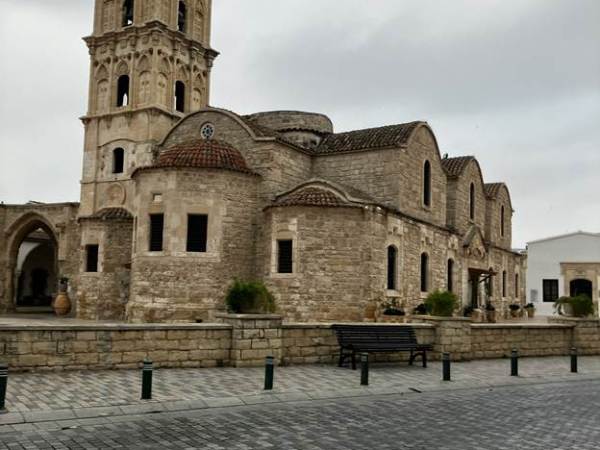
By: Arthur Pino Coming to the Old World is a new experience for me. I can say that, besides the luxuries and brands similar to those in America, it is quite different. This land has been inhabited for at least 4,000 years, according to the sign outside the Agio Lazaros (The Church of St. Lazarus).…

House of Dionysus
By: Arthur Pino On a field trip, we went to Paphos, where we were able to visit a “World Heritage Site.” This would be the second opportunity I have had to see one in my life within the last year; the other was Chichen Itza in Mexico. It was a very hot day, and walking…

A Big Discovery!
By: Arthur Pino Today was another hard but rewarding day. It was the first time I had worked in the trenches three days in a row, and I felt it. This day, in particular, revolved around hands. My hands themselves, and an accessory for hands. As usual, I did not wear gloves to start…

