-
Phoenician Masks
While at the Archaeological Museum of the Larnaca District, I absentmindedly took a picture of a mask I liked. Later that day I would read about Phoenician-Punic masks and their connections to Archaic Greek masks found at Artemis Ortheia. I realized that the mask I had liked was one of these Phoenician-Punic masks, and I promptly fell down a bit of a rabbit hole. This particular 12th-century BCE mask in Larnaca was found in Kition and is a type of “hero mask” which was typically paired with a grotesque demonic mask. These paired Phoenician masks followed a tradition of creating grotesque masks based on the Babylonian demon Humbaba and possibly served as a type of protection to scare off evil spirits. The Phoenicians would include the hero mask as an archetype of an ideal Phoenician hero. The specific purpose of these masks is not fully known, but they are numerous in areas with Phoenician influence.
The Phoenician masks would be fairly similar in appearance to several terracotta masks found in Sparta. The Greek masks date to a later period (around 600 BCE) and only depict the demon masks. These mask bear a similarity to both the image of the gorgon and later Greek theatre masks. This very particular artistic trend demonstrates the slow progression of culture from the Near East to Cyprus to Greece. I found it particularly interesting how the many carriers of these cultural trends were the Phoenicians; They not only carried this trend across the Mediterranean but altered and evolved the trend.
audrey
-
Nicosia: The Cyprus Museum
Hi folks! Today we took our first trip to Nicosia, the capitol city, where we visited the Cyprus Museum. There we saw hundreds of incredible artifacts, but one stood out to me in particular. A conical rhyton from the thirteenth century BC which caught my eye due to its outstanding blue color, the product of a blue grey enamel. This rhyton is made of faience, a thick and hardened glaze, and was excavated from Kition in 1962. Missing its lower half, the rhyton measures 27 cm in height. The figure also lacks its handle, but still clearly shows three horizontal layers each depicting their own images and artwork. On the uppermost register there are animals shown in motion including bulls and goats. The middle register shows the hunting of a bull, and the lower register has artistically crafted spirals and waving lines. The rhyton is an excellent example of the diverse history of the island, as the animals and spirals are stylistically similar to Mycenaean works, while the hunters are Levantine in style with likely Syrian influences. The rhyton would have been crafted with the intention of storing drinks either to be poured or drunk directly from the vessel. Due to the placement of the handle and what would appear to be its relatively size, along with the artistry of the rhyton, my guess is that this would have been used in more ceremonial contexts and would have been poured rather than drank directly from. I think this rhyton is amazing for both its beautiful artistry and also its representation of numerous influences from around the Mediterranean world. My visit to the museum definitely helped illustrate the ever-changing influences present on the island with numerous examples of diverse artistic styles from around the Mediterranean world present throughout Cyprus’ history.
-Grace Simonsen
-
First Week at Vigla
It is Friday July 7, and I have officially finished my first week of digging at the Vigla site. What a wonderful experience! This week I got a serious work out. Monday started with throwing bucket after bucket of rocks off the side of the hill at the south end of our dig site. This was in order to have a clearer workspace which was then cut back and marked out to become the third of our open trenches on the site. In one week a 5m-by-5m flat piece of grassy land became a half foot deep trench. This was a very dusty, and to me any, very impressive endeavor. In order to uncover the mysteries that lie below, we began by using pickaxes to break up the earth and then, using a terrae (a tool very much like a hoe), scooped up any loose dirt which would be taken to the sifter where any pieces of pottery, shell or metal were separated, placed in plastic bags and labeled. The job of sifting almost never stopped, and one week in I imagine we collected and sifted hundreds of buckets full of rock and dirt which have produced many bags full of pottery sherds. Once the plot had been cleared of most of the loose dirt came the job of using brushes to sweep up any leftover loose pebble, rock or dirt, which also went through the sifter. My favorite find from the week was a wonderful jug base which was mostly intact and left a wonderful and shapely mound in the packed dirt once it was removed. One of the many things I learned this week was how to use a Munsell soil color chart which is used to indicate the color of soil at given depths in our trenches and is recorded along with a great deal of other information such as coordinates. The site is stunning! We overlook Larnaca Bay and behind us are plateaus and hills cut by winding white roads, but by the end of the day we are far from anything so beautiful (well, I think we’re all totally beautiful people we are just beautiful people thickly coated in dirt and sweat). While physically challenging the work is deeply gratifying. I am looking forward to the week ahead and all the new discoveries we are sure to make.
-Grace Simonsen
-
Chapter One: I Geek Out Over Some Ancient Dead People
I was lucky enough to already know a handful of my classmates before we all touched down in Cyprus. It was strange to see them here, even though I had been expecting them. How odd to watch each other go about our days in one country, and then be thrust together in a dusty pit together for four weeks in another? Very odd. But not unwelcome.
Two of my classmates here in Cyprus were also my classmates in Dr. Michaela Stock’s Forensic Anthropology class at Metro. I never thought I would be interested in forensic anything, my stomach too weak for even paper cuts, but Dr. Stock is an icon and an American hero, so I registered for the class anyway.
And I loved it.
It’s not something I would consider for myself professionally, but the intersection between what a forensic anthropologist does and what an archaeologist does is important. I always explain archaeology to people who think I dig up dinosaurs like this: “I excavate culture. Pottery, weapons, tools. Things that people left behind. I don’t care about what dinosaurs are doing. That’s none of my business.”
Sometimes, people follow up my explanation with a question, which is almost always: “Do you dig up bodies?”
And while I have never dug up a body, I reply that sometimes archaeologists do.
The conversation usually devolves from there.
The difference between the work of a forensic anthropologist and an archaeologist is, in my opinion, a separation of intent. The intention of a forensic anthropologist is to study the remains of a person and decide how they died, when they died, and infer any information about the individual they can based on that information, as well as through gathering a biological profile. An archaeologists’ intention is to decipher what information the remains of an individual can contribute to the site in which they were discovered.
The exhibit titled “Five” in the Nicosia Archaeological Museum is where the two intents intersect into one greater example of anthropological study.
The exhibit chronicles the lives of five individuals from different areas of Cyprus, detailing where they were found and what the region was like at the time of their deaths. It expands on each set of remains to create a story for each person, using abnormalities in biological profile to invent anecdotes. For example, one woman had a notch in her teeth where she would have dragged a thread as she sewed. From that, we can infer that she was a seamstress.
The things the individuals were buried with also relate to their stories. One person, a child, was found with a diadem and earrings, which means that they were likely from a well-off family.
The locations where each individual was found help to paint the picture, like a man born in a fishing village with a healed over wrist sprain, which could have been a result of the work he was doing on boats.
Some unhealed injuries give insight into the deaths of these individuals, like a man who had many perimortem injuries was illustrated to have been thrown from his horse.
To see the ways in which the forensic aspect of the discovered remains helps to provide context to the cultural aspect that goes with archaeology was so incredible to see right before my eyes in a museum.
And to get to see it with Annika and Rachel was a treat. We were geeking out and taking pictures to show Dr. Stock. It was funny to remember sitting in that classroom together, with no idea where we would be in a few short months, taking about the same things in a new place.
-Abby
-
Larnaca Archaeological Museum
On Wednesday July 5, I visited for the first time the Archaeological Museum in Larnaca. The museum was impressive for its large selection of artifacts spanning the whole of known human habitation on the island. My favorite section of the museum was its collection of Neolithic artifacts (5000-3900 BC). These included numerous stone, clay and bone artifacts. There were both stone tools such as those for food processing and figurines which were described as clearly phallic in nature. However, I failed to see this as obvious, and I would like to gain a better understanding of this assumption. What I found to be the most interesting of the bone tools were needles, some of which even included a small eye which would have had to have been carefully carved out and would have allowed those using the needles to sew. The needles indicate the production of textiles on Cyprus in the Neolithic period which may have included the construction of clothing, nets and other perishable materials which rarely survive in the archaeological record. While needles have been found in many other parts of the world with dates thousands of years earlier, it was still impressive to see such small and important tools in person. Along with the needles at the museum there was also a small object (my guess is roughly 2.5 in long) which was flat with a handle and square head with jagged edges, almost like a fork or little brush. The purpose of this object is not known but it reminded me of something which could be used to brush out a dolls hair or comb in the sand. Perhaps this object was crafted for a child or used for special dishes, but like most things, we will likely never know. I would highly recommend a visit to this museum and plan on going back again with more time to read about and explore objects in more depth.
-Grace Simonsen
-
Pigeons
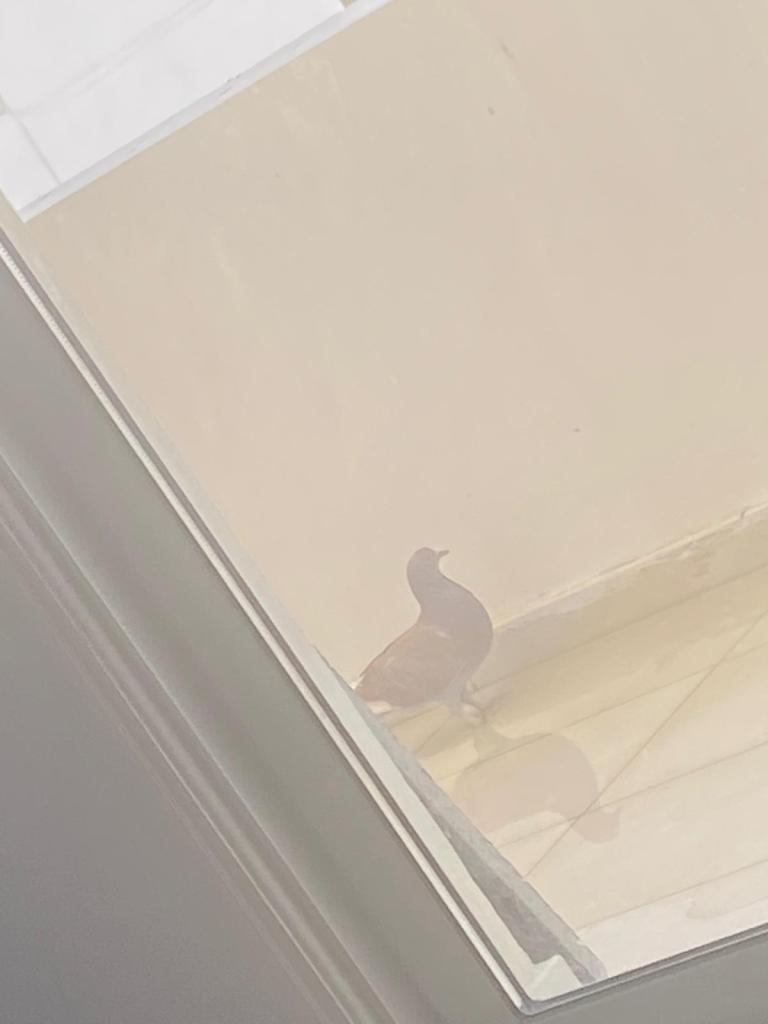
Does anyone actually want to read a 250-word blog post about pigeons? Probably not, but here we are. The balcony of my room has been forcefully taken over by a single brown pigeon. Every time I go out there, there it is, perched up on the AC unit in the corner. Although nothing will ever rival my fear of the campus geese, this brown pigeon comes close. Every time I feel its beady little eyes on m, I get a chill down my spine, and the pigeon knows this. I swear. One night, I decided to FaceTime one of my friends from the states. Since it was late, I decided to sit out on my balcony in case I was too loud. That was the mistake. I got outside, shut the door, and sat down on a chair. The minute I was fully settled into my seat, surrounded by darkness, my ears were suddenly plagued with the sound of ruffling feathers and incoherent cooing. The brown pigeon that owns my balcony flew down from its spot, and I almost fell out of my seat from fear. Not even two days later, that same pigeon was terrorizing another pigeon on the balcony.
Everywhere I go, pigeons. I’m only scared of the pigeon on my balcony so the other ones I come across don’t scare me, it I still do my best to put substantial distance between us. Except for one pigeon. One of the other students, Grace, and I decided to go to Aphrodite’s Secret for yet another nut haul. On our way there, we came across an injured pigeon. To our dismay, there wasn’t much we could do. We popped into a nearby bar and got it water, and also had a man move the pigeon out of the street and to the shade for us. Moment of silence for the street pigeon.
-Olivia R.
Evil balcony pigeon -
The Neolithic Settlement of Choirokoitia
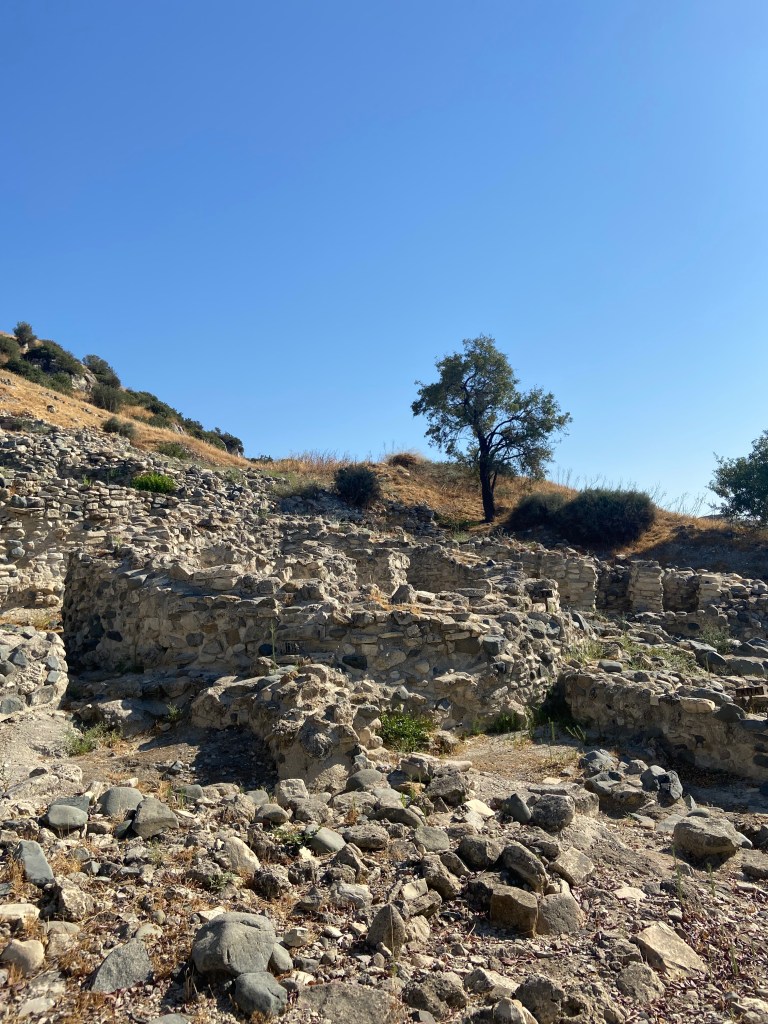
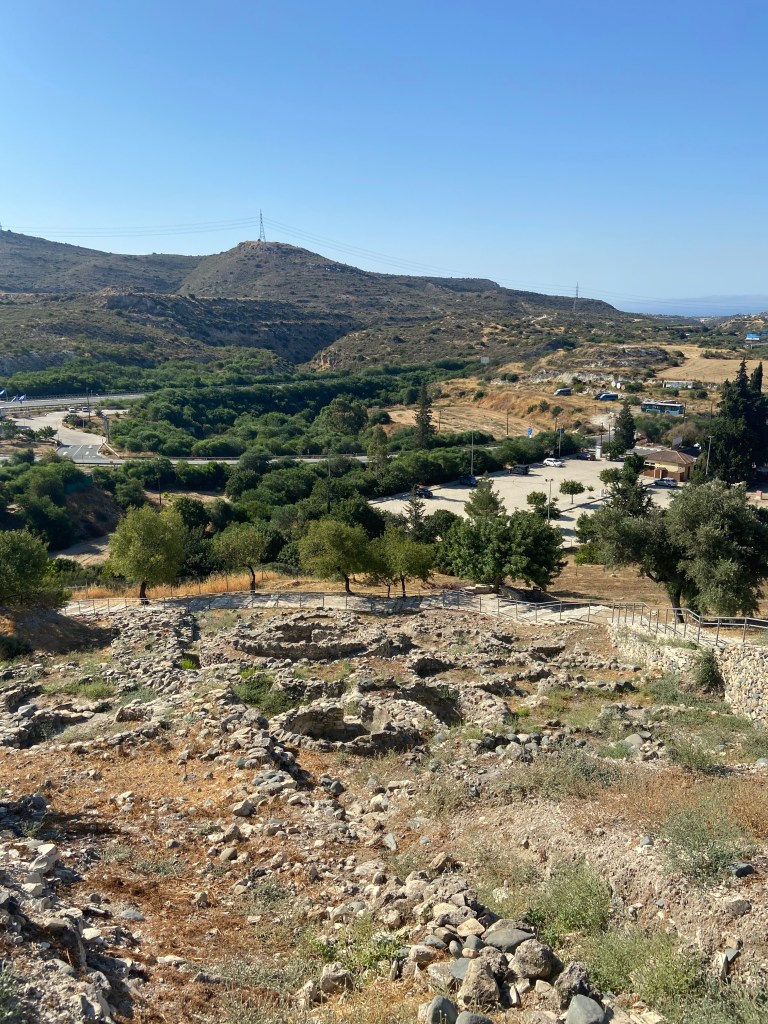
The Neolithic settlement of Choirokoitia is located in the Marconi valley. This settlement reveals the development of the Cypriot Aceramic Neolithic, an original civilization. The communities that settled here date back to the end of the 7th millennium BC. Upon settling here, inhabitants brought new plant and animal species with them, thus increasing the biodiversity of Cyprus. This site was discovered in 1934 by P. Dikaios; later in 1976, it was taken over by the CNRS. The collection of Neolithic homes present at the site appears to be part of an architecturally complex system. Taking into account location, the builders of these homes would’ve had to adapt them to hilly, rocky terrain. Additionally, this settlement was constructed in a location that provided natural forms of fortification- a deep bend of the river in the north, east, and southeast- in addition, to successive walls that were established in the west.
With guaranteed protection, control over the entrance to the village was given to its inhabitants. Multiple groups of homes, and house compounds, were discovered in this settlement. These compounds consisted of several buildings laid out in a circular shape. Within each compound is an inner, central courtyard. These courtyards were used for grinding, and likely other household activities as well. The building material of these homes included stone, pisé, and sun-dried mud-brick. These materials were both used individually, as well as in conjunction with one another. The flat roofs of the homes were constructed using a combination of branches, pisé, reeds, and earth. The impressive civilization living here vanished suddenly, and without leaving any type of explanation. The site was left uninhabited for some time until the emergence of the Ceramic Neolithic.
-Olivia R.
-
The Archaeological Site of Kourion
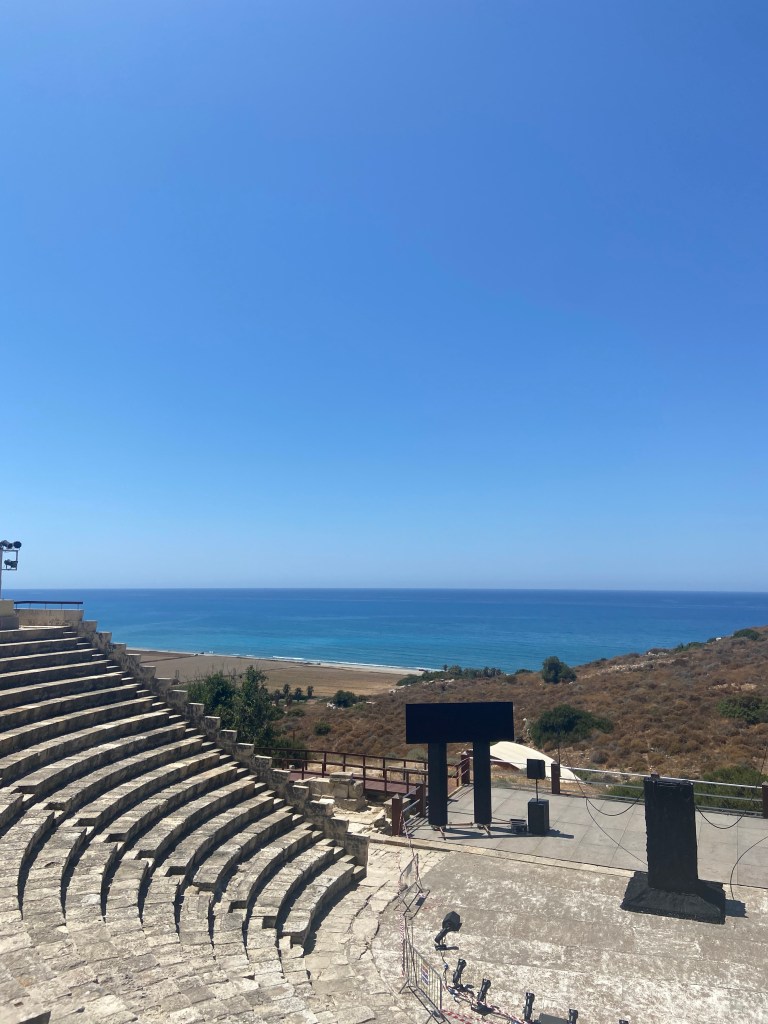
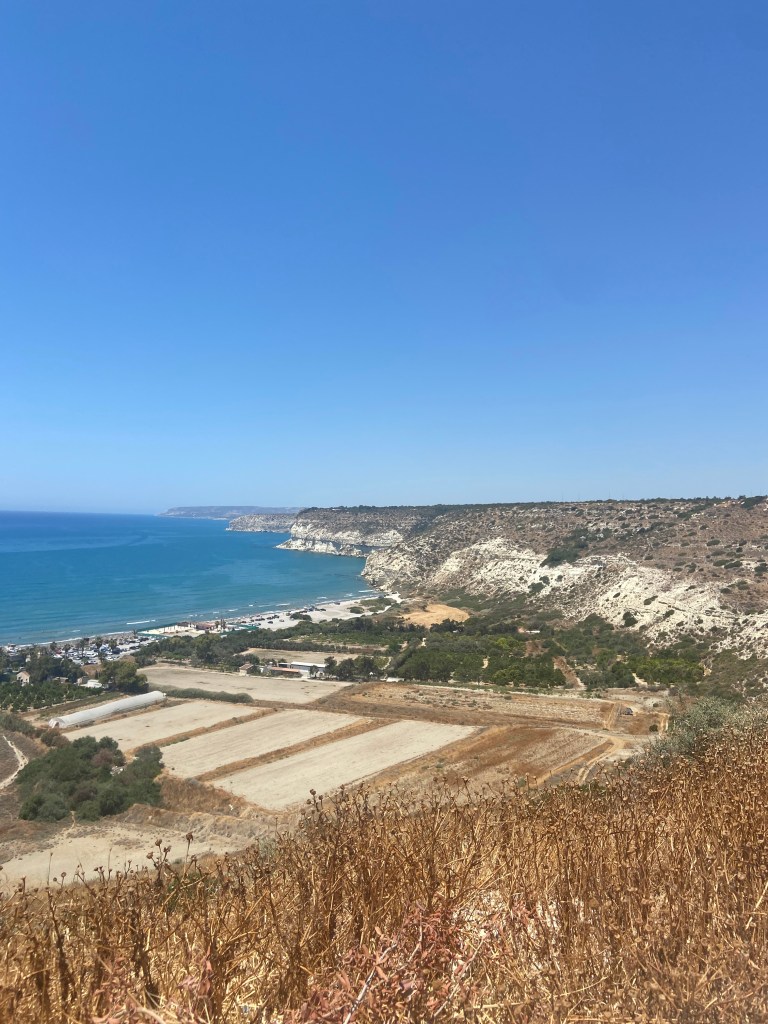
The archaeological site of Kourion is located in Episkopi, just on the west coast of Limassol. The city of Kourion itself was one of ten of the most important ancient kingdoms in Cyprus. This archaeological site boasts historically significant places including the ancient Kourion Theatre. This theatre dates back to around the end of the 2nd century BC. The theatre originally had a capacity upwards of 3,000 people, but now only holds around 2,000 due to numerous renovations and reconstruction. The theatre was built using a Greco-Roman style, and sits on top of the Acropolis looking out onto the Mediterranean Sea. It’s estimated that the initial capacity of the theatre was built to hold just 25% of Kourion’s population. This estimate provides important information about the sheer size and importance of this ancient kingdom. Today, the theatre is still used for concerts, as well as Shakespearean plays.
Another significant part of this site is the House of Achilles. This private house dates back to the 4th century AD and was built as a Roman Villa. This home contains multiple well-preserved, Roman-era mosaics. One of these mosaics depicts Achilles disguised as a woman, by his mother, and hiding among King Lykomedes’ daughters. The house is located toward what would have been the entrance of the ancient city. This location suggests that the home was both open to the public, and could’ve been used to receive important guests. In addition to this house, The House of Gladiators and the House of Eustolius also contain 3rd and 4th-century mosaics that are well-preserved.
-Olivia R.
-
Larnaca Medieval Fort
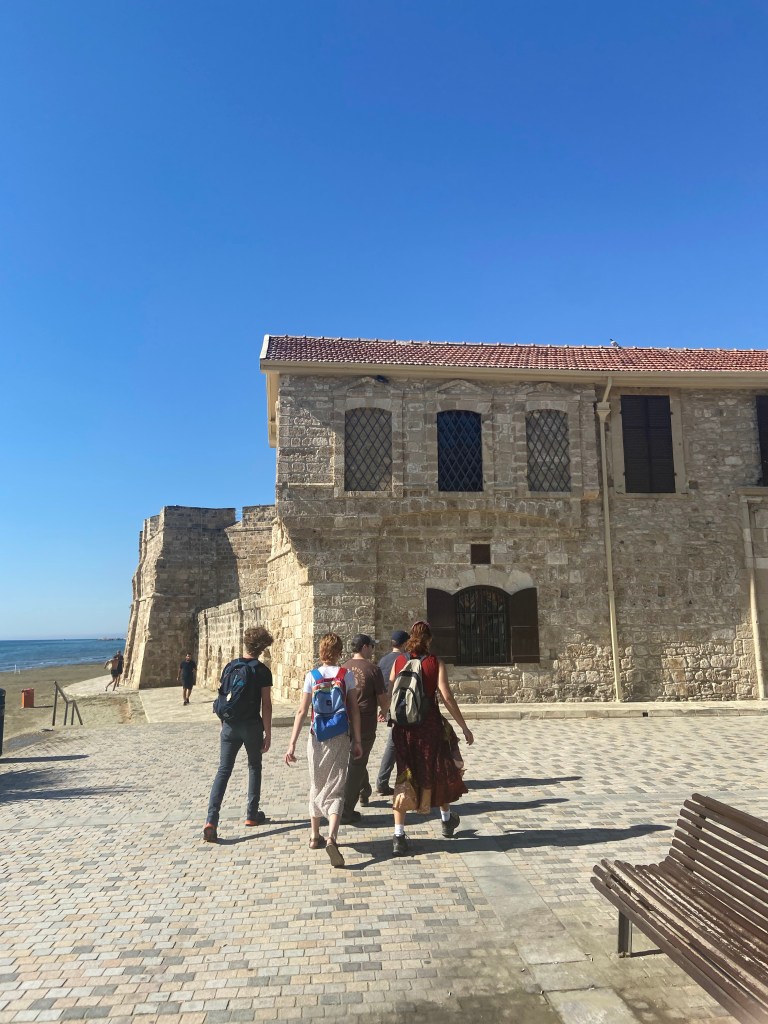
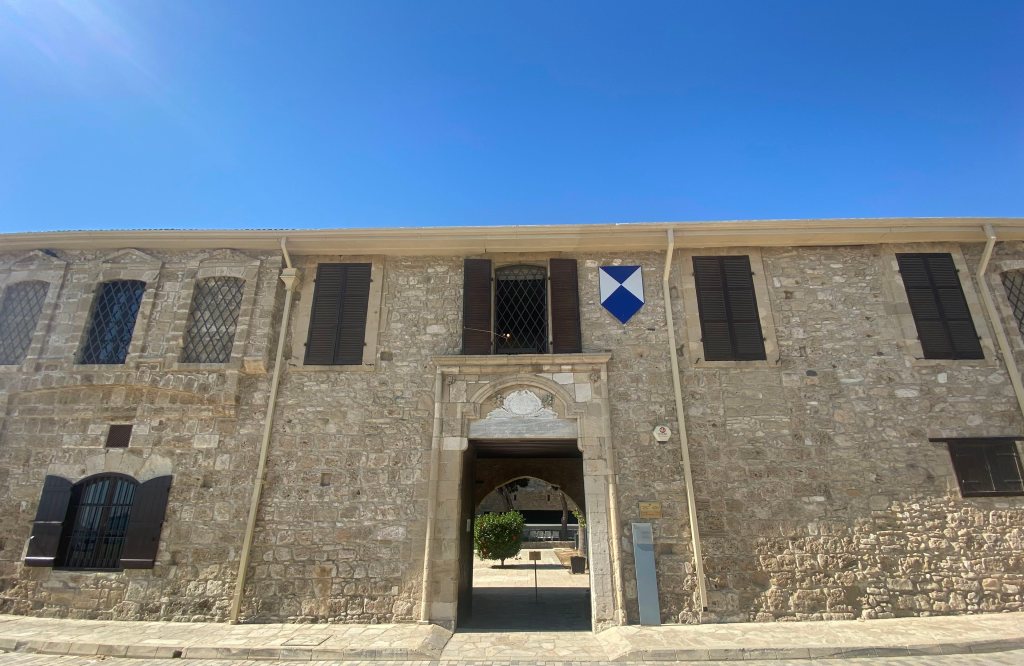
Along the Larnaca, the beach is a medieval fort. This fort is estimated to date back to the time of the reign of King James I. It’s likely that this fort was constructed to serve as a method of protection for the town’s harbor. Aside from this, there is little known today about the full extent of the plan for this fort. Since construction, the fort has been in a state of conservation and has been used in a variety of ways spanning from the 14th century to the present. On the North side, there’s a two-story building that was built during the Ottoman period. This is evident given both the architectural style and the Turkish inscription located above the door. It also differs significantly from the East and Soth wings which are dated to earlier periods. The Western chamber on the east group floor was used by the British administration to execute prisoners. The gallows constructed there were used up until 1948. The use of the fort today has once again been altered, and is now a museum. This museum is host to a collection of antiquities ranging from the 4th to 18th centuries. This fort is an example of a unique type of preservation. A lot of architecture, especially dating to ancient periods, degrades over the years because it remains empty. When buildings have no use, they’re less likely to be taken care of. A lot of European castles, for example, sit empty and unreserved despite their historical significance. The Larnaca Medieval Fort, however, has remained in constant use since its construction. This constant use has forced this fort into preservation.-Olivia R.
-
Transport Amphora at Vigla
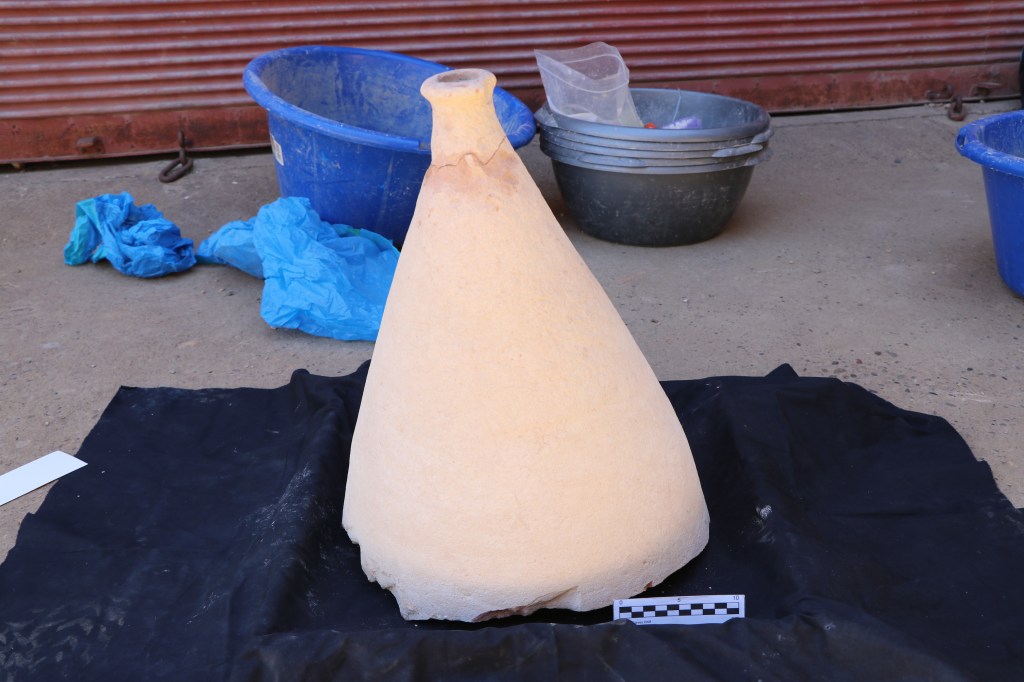
One of the special finds at Vigla is a partial amphora. This vessel was found in situ in the floor of the Eastern room. At the time of excavating this vessel, there was little to no ceramics being found in that trench. The inside of this vessel was excavated, but little came from this aside from mud-brick and a few shreds of ceramic. At this time, there isn’t an estimate for the date of creation. However, it’s assumed that this amphora can be dated back to around the same time as the wall it was abutting. Given the size and shape, this was likely a transport amphora. Transport amphorae were used for the transportation of various products such as, but not limited to, wine, olive oil, and dried cereals. These were used widely throughout the Mediterranean, so, it’s not uncommon to have found one at the site. It’s possible that the inhabitants of this home had multiple transport amphorae, given their ease in leaving it behind. Not much was found around the vessel aside from more, what can be presumed to be, collapsed mud-brick. Given the quality of this vessel, as well as the consideration of these being common throughout the Mediterranean, this vessel was likely created by an artisan. Travel amphorae are characterized by their large, angular, cone-like shape, as well as a more narrow foot. Taking into consideration the commonality of these vessels, they would’ve needed to be produced in great quantity which would require some kind of specialist to be making them.
Study Abroad in Cyprus
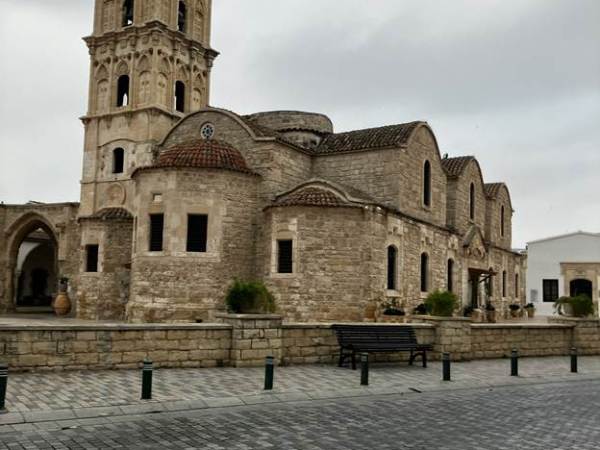
By: Arthur Pino Coming to the Old World is a new experience for me. I can say that, besides the luxuries and brands similar to those in America, it is quite different. This land has been inhabited for at least 4,000 years, according to the sign outside the Agio Lazaros (The Church of St. Lazarus).…

House of Dionysus
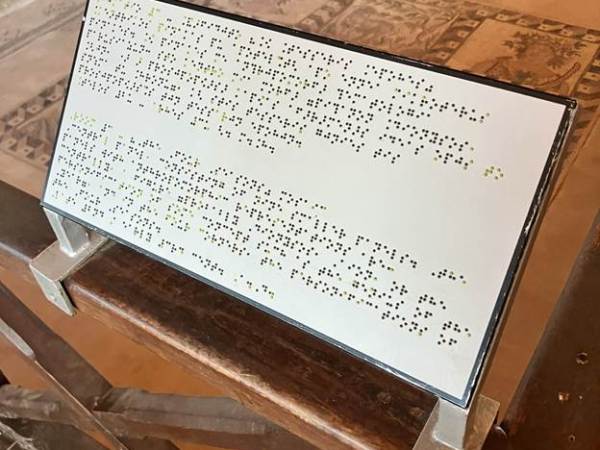
By: Arthur Pino On a field trip, we went to Paphos, where we were able to visit a “World Heritage Site.” This would be the second opportunity I have had to see one in my life within the last year; the other was Chichen Itza in Mexico. It was a very hot day, and walking…

A Big Discovery!
By: Arthur Pino Today was another hard but rewarding day. It was the first time I had worked in the trenches three days in a row, and I felt it. This day, in particular, revolved around hands. My hands themselves, and an accessory for hands. As usual, I did not wear gloves to start…
 Vigla Archaeological Project