-
The People of Cyprus
Before arriving in Cyprus, we had been told numerous times by Dr. Olson and Dr. Stephens how welcoming and excited the people of Cyprus were to interact with Americans. I was a little skeptical of this. Over the last two weeks it has been abundantly clear that this is completely true. Cyprus is very far away from America. It takes at least two, sometimes three, plane rides to get here from the States. So, many Cypriots are not used to seeing Americans here, so much so that they often assume that I am from the U.K. or Australia. Due to this especially, the Cypriots that live here and many of the people that have immigrated here are very excited to see an American.
This plays out in a variety of ways, from servers bringing us extra food or free shots at the dinner table to storekeepers being very excited to tell me everything there is to know about Cyprus. They wax poetic on the lore of the cats on Cyprus to the lace making on the island. I had heard that the hospitality here on the island was extraordinary and it is true. The people of Cyprus go out of their way to show kindness and hospitality. The other incredible thing about Cyprus is there are so many people from so many different places here. I would argue that in a restaurant full of people you could find people represented from at least 20 different countries. People are here visiting, or very often they immigrate from places like the U.K. and Greece. Today, as I was wondering around Larnaka, I met a lovely man who owned a shop with his wife where they sold home goods like decorative items, light fixtures, and even the famous Cyprus lace. The man was so delighted that we were American, my roommate Paris and I spoke to him for forty-five minutes about life in Cyprus. He told us about many of the wedding traditions that are seen in Cyprus and Greece, including that a small wedding in Cyprus is 300 people and that all of the people going to the wedding help pay for it. Another encounter that filled my soul was with a couple at the farmers’ market. They set up a farmers’ market on the boardwalk from around 6pm to midnight. A couple was selling cutting boards and other kitchen tools that they did resin work on. I decided to buy some wooden spoons for my mother as a gift. The husband started talking to me about where I was from and we discussed that I was from America and they were delighted. They asked where specifically in America and I told them Colorado. The husband then hugged his wife and said, “Baby, your spoons are going to Colorado”. That moment felt so surreal and special that I could help bring someone’s work halfway across the world.
Cyprus itself is incredible and I feel so lucky to be able to be here working on archaeology, exploring the history of ancient peoples, and learning about their culture. However, hands down my favorite thing about Cyprus is the people. The people here are so kind and willing to share their culture and who they are. That feels incredible. Also, the fact that so many people intersect on this tiny island continues to amaze me. It makes me think of how many people have passed through Cyprus over thousands of years. So many ancient peoples must have come to this island whether it be for trade, military, or a new start. That thought often occurs to me when I am having an interaction with a Cypriot and they break into a smile and say, “ You are an American! What are you doing all the way out here?”
Madi Barber
-
Finding Bedrock
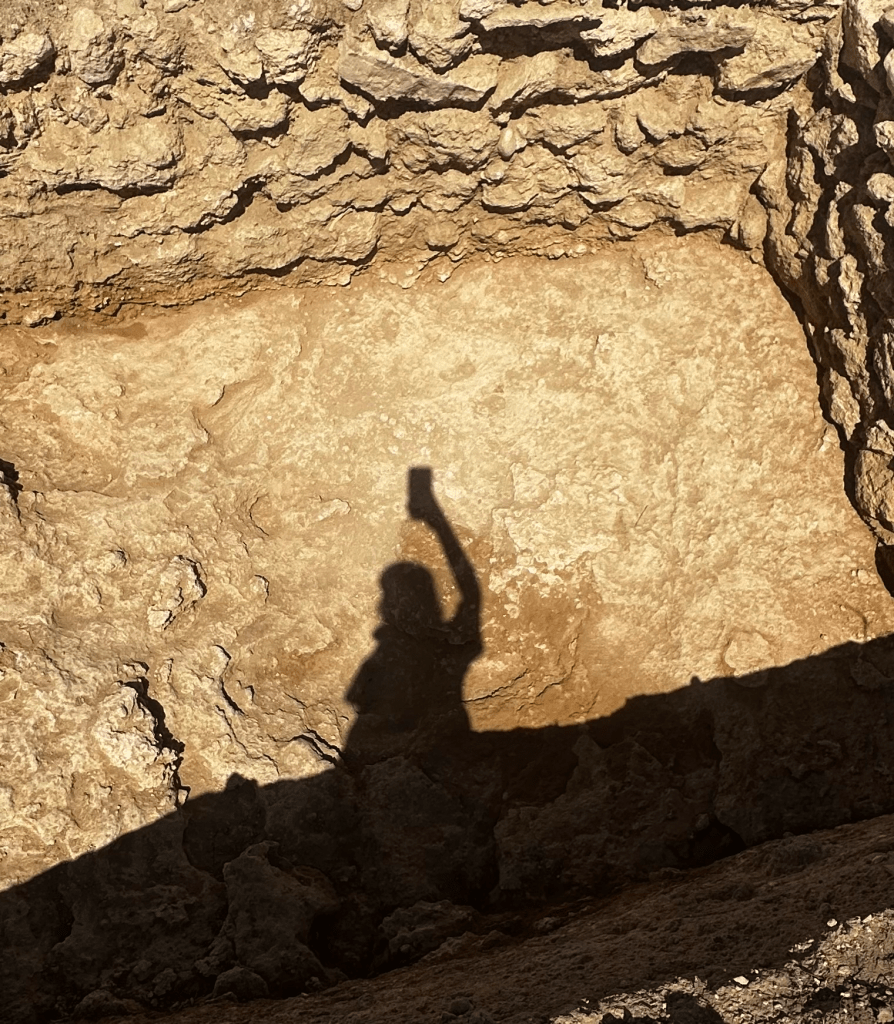
After the first few days on-site, I settled down in EU 23 under the watch of Dr. Mel. During our first few days, we spotted the very top of bedrock on the eastern section of the trench, just a small section that wasn’t even a foot in diameter. This would be the beginning of a horrific dance to uncover the rest of the bedrock. The bedrock seemed to just slope gently down with the highest point being on the southwest corner, or at least that was the assumption until we came upon the first hole. Tucked in the southeast corner, I dug away, getting slowly more and more frustrated as bedrock refused to be found. It was a strange dip in the bedrock that would be nothing compared to the later holes.
We continued following the bedrock down after removing the lovely ashlar. Again, it seemed like it would be simple. It was gently sloping north so we assumed it would continue to do so. But unfortunately, it was not so simple. The bedrock would drop off into this set of twin awful cavities. The hole kept going down, and it would take the entire rest of the day before we finished our side of EU 23. It was impossible to sweep out the dirt completely, and my trench-mates and I were growing more and more tired as the end seemed so far away. Eventually, we did reach bedrock, and it was satisfying to see the end of our side of the trench. We couldn’t go any further; we were done.
audrey
-
Murex Shell
On Friday, July 7th, we were just about done with digging. Everyone was helping sweep out EU 24 and was excited to be done for the weekend. Then someone (Grace!) found an intact base of a pitcher. Of course, we had to take a point on it! Then the trench supervisor found a fully intact murex shell next to the pitcher. With an exhausted sigh and an eye roll, he helped set a point on the shell. Out of all the finds thus far (I write this in the second week of digging so I may bite my words.), this one was the most exciting to me.

Murex shells are particularly fascinating due to their quality and high demand. The murex is a type of sea snail that was used to make what would become known as “Tyrian purple”. This purple was a natural pigment that was incredibly difficult to make with a process that often involved high amounts of labor for only a small amount of dye. The purple comes from a secretion from the snail’s defensive glands and often the fastest way to get this mucus is to crush the snails. Because of the difficult process, this dye was very expensive in ancient times and became famously associated with the emperors of Rome, the most famous customers, and the Phoenicians, the most famous producers of the dye hence the name “Tyrian purple”.
What fascinated me the most about this little shell was its surprising appearance on our site. Its link to prosperity and higher social classes does not easily overlap with our military fort which not have housed highly wealthy leaders. Cyprus has always been a trading center between the Aegean and the Levant, so it’s not completely baffling to see it. It was still a wonderful surprise that set my head spinning for the rest of the day.
audrey
-
Waking to Sirens in Cyprus
Today I awoke to the distant sound of sirens. After a moment I recalled an interaction with a local who informed me that in recognition of the anniversary of the Turkish invasion of Cyprus some 49 years ago, the alarms would sound around 5 am. The droning noise faded and then slowly grew louder than it had before, and despite knowing why and that nothing was wrong, my heart still beat faster, and a wave of fear swept over me. It was in 1974 that the island would awake to a day that would change it forever more. In the first phase of the invasion 40,000 Turkish troops landed on Norther Cyprus following years of building conflict between the desires of Turkish and Greek Cypriots. The Turkish troops acted in response to a Greek sponsored coup d’état which removed the President of Cyprus, Archbishop Makarios III, and replaced him with a pro-Enosis nationalist named Niko Sampson. After taking control of a small portion of the island a ceasefire was called, but failing peace talks eventually led to Turkish forces increasing their numbers in August, resulting in the capture of roughly 36% of the island. A ceasefire was again called and the line that was held by Turkish forces at this time became and remains the UN Buffer Zone across the island. Some 150,000 people were forced to leave the Northern half of the island and 60,000 Turkish Cypriots were forced to move from the South to the Northern portion of the island in the proceeding months. The so-called Green Line which still divides the island is why the capitol city of Nicosia looks the way it does today- divided in two. In 1983 Turkey recognized the portion of the island north of the Green Line as the Turkish Republic of Northern Cyprus (TRNC) although they are the only country internationally to do so. Upon entry of Cyprus into the European Union the TRNC is viewed as an illegally occupied territory under international law. The division of the island affected all Cypriots and remains a touchy subject. Before writing this post, I noticed that the Serano brand peanuts I have been snacking on throughout my time here was a company founded in 1974. Curiosity took over and lead my right back to the topic at hand. While being founded in 1970 the original Serano team, husband and wife Evangelos and Olga Neophytou, were forced to leave their house, becoming refugees as a result of the war. Working with what knowledge they had built in the years leading up to the invasion, they did what they could and started Serano. They now continue to run and build their business, reaching international markets with the help of their children. There are thousands of stories like these across the island, but the roots of why they are where they are now are not forgotten, and I imagine many Cypriots felt the same jolt I experienced waking this morning to the sound of sirens.
-Grace Simonsen
-
“Five Face to Face” at the Cyprus Museum
The “Five Face to Face: Meet an Ancient Cypriot” exhibit at the Cyprus museum immerses museumgoers into the life of an ancient Cypriot. The exhibit focuses on giving an insider look at these ancient Cypriots’ lives based on evidence left on their bodies. The exhibit does a breakdown of the area in which each ancient Cypriots would have been living. The exhibit also features a narrative in the voice of each Cypriot based off of evidence found on their body and in their burial. For example, one of the ancient Cypriots, called “The Woman from Omodos” was found with a notch in her teeth. She was buried with a needle and ovoid stone, both which are used in textile production. The chip on her teeth and what she was buried with give indications on what type of occupation she had and what activities she participated in. The exhibit featured a narrative from the perspective of the Woman from Omodos. The narrative focused on her weaving and sewing occupation. The exhibit used the clues left behind on the bodies of ancient Cypriots like the Woman from Omodos to tell a narrative about who these Cypriots were. The exhibit also had sounds from the different occupations of the ancient Cypriots playing in the background, such as the grinding of wheat or the sounds of sewing. The exhibit did a spectacular job of making these ancient people real and telling their story in a powerful and interesting way. This exhibit utilized the bones of the ancient Cypriots and what they were buried with to create a picture of what life was like for ancient Cypriots. It allowed museumgoers like me to get a much better look at both the lives and deaths of ancient Cypriots. For me, it can often be hard in museums to imagine the real people who used the artifacts displayed or lived during that time. The “Five Face to Face” exhibit brought the ancient Cypriots to life and made it easy to imagine what life could have been like for them.
Madi Barber
-
Healthcare in Nea Paphos
Hi all! We recently took a trip to the lovely city of Paphos. There we visited the Paphos Archaeological Museum, which was simple, small and truly wonderful! My favorite artifacts there were the clay hot water bottles, which were excavated from a building near the center of Nea Paphos. The building, though not completely excavated, is thought to have been a medical center due to medical tools being found in tombs, inscriptions relating to doctors, and the clay water bottles in the shape of specific human body parts. The clay vessels date to the early Roman period (roughly 1 c. BC – 1 c. AD) and are particularly unique finds. The vessels are in the shape of the body part they would have been used to heal, and include ears, the chest, elbows, hands, groin, thighs, knees, shins, and feet.
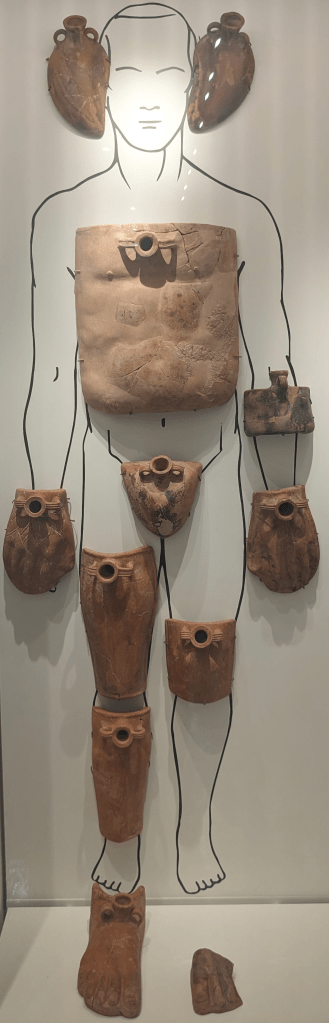
The vessels which were constructed to be very thin (only about 3 mm) would have been filled with either hot water or oil and then applied to the body part in need of healing. Paphos during the Roman period was a well-known and vibrant medical center, so I think it is very cool to find possible evidence of what may have been a rather lush medical treatment at this time. Similar vessels have also been found in areas of metropolitan Greece, and heat patches made of cloth are mentioned in ancient texts for the use of treating rheumatism. I think they must have also had some form of spiritual healing aspect due to being in the shape of the body part they were intended to heal and show evidence of the strong association between belief and medicine. These were really cool to see in person and added a truly unique aspect to the museum!
-Grace Simonsen
-
Ideas for Sustainability in Cyprus
Cyprus is a beautiful country. There are mountains to ski in the winter, stunning beaches, amazing plants and some extraordinary wildlife. However, Cyprus is a small island and tourism has taken its toll. It is not uncommon to see plastic bags caught up in shrubs, juice containers along roads, cigarette butts scattered in the sand, and plastic water bottles just about everywhere. Trash piles up quickly in waste bins and gets left on streets or beaches to be strewn about in wind gusts or pulled apart by animals. Most waste appears to go directly into the garbage, and I have seen few signs of a recycling or compost system. However, I have come across a few things I would recommend as a visitor to the island that can be done to help keep this wonderful place and the magnificent sea surrounding it cleaner and safer for all its inhabitants. First off, while I have read that the water here is safe to drink from the tap few people choose this option and most opt for small plastic water bottles, and their numbers rack up quickly in the summer heat. If you are planning on visiting Cyprus, I would absolutely recommend bringing your own reusable water bottle. Even if you don’t feel safe drinking from the tap, you can buy a large 10- or 15-liter bottle from most stores or mini marts and refill it at a Mr. Penguin station for something like 6 cents a liter. You then have access to a fresh source of H2O to fill up your own personal bottle which you can bring with you to the beach, out to dinner, or on a site like Vigla. When you are done with your trip and ready to throw out your large water jug, head on down to the beach for a final swim and look for the large metal fish which acts as a recycling bin. Here you can also recycle soda cans or other recyclable containers. My second bit of advice would be to follow the pack-it-in pack-it-out rule, whereby you make sure that anything you bring with you leaves with you. I would absolutely opt for bringing your own reusable bag like a canvas tote which can go everywhere with you and act as a bag for the beach, shopping, picking up groceries, taking clothes to the launder, or something to pick up take away dinners, stuff snacks into and something the carry a spare plastic bag in. The plastic bag is so you have something with you for when you do run into garbage lying about or when you create your own trash and there is not a proper bin around. My last bit of advice would be to take notice of the food you are eating. Maybe instead of grabbing a snack wrapped in plastic something more like an apple that doesn’t come pre-wrapped would do. Also be aware that when you go to the grocery store all produce is bagged to be weighed before purchasing, sometimes you can sneak around this if you are okay with a sticker going right on your sweet potato, but I would also keep my eyes out for some kind of light weight reusable bag, or just reuse the plastics bags you had to snag the first time. When you go out to eat be mindful that meals are usually pretty big, so if you’re not too hungry maybe consider sharing your meal with a friend to produce less food waste… or you could give a stray kitty a few bites of what’s left. I know this is all stuff most of us have heard before, many of us practice regularly at home, and are not always possible to follow through with in a new place, but I do think it is important nonetheless, and all things I wish I would have been more aware of before coming. I think sometimes it is easy to think of a new place as being less of our own responsibility, but in the end, we are still on the same incredible planet. We are guests always. Cyprus is a tiny place and with so many tourists we could really make a difference on the lives of those both living here and visiting by taking care of the ecosystems we interact with.
-Grace Simonsen
-
Aphrodite’s Pomegranates
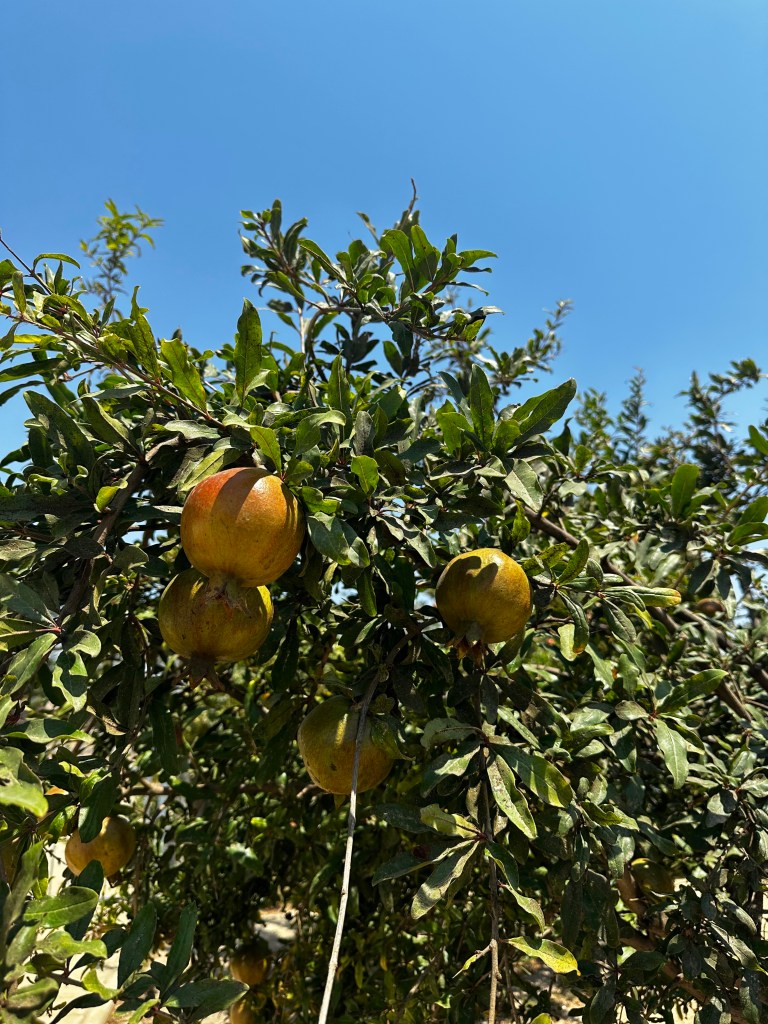
Pomegranate juice and pomegranate-based food are prominent across Cyprus. According to a new local friend named Christos, pomegranates are not only beloved for their flavor but for also for their cultural significance. Pomegranates in Cypriot culture are symbols of fertility. He demonstrated a sculpture of a woman’s torso where a pomegranate was placed where the uterus would be (I did not take a picture unfortunately). He also explained a tradition where a pomegranate would be broken apart after a wedding before the married couple move in. This tradition would bring the couple good luck and fertility in their marriage. Pomegranates are also symbols of both life and death with their blood-red juice and bone-like mesocarp being good pictures of our own bodies. They are often found both at modern weddings and in ancient tombs, or at your local gift shop as a small statuette.
While at the Ancient site of Kition, my classmate (Paris!) and I found several pomegranate trees planted around the site. According to the museum signs around the site, pomegranates would be a sacred fruit of Aphrodite and fertility by extension. Aphrodite would be the one to plant the first pomegranate trees on Cyprus, or so the legend grows. It is likely the reason why they were also planted at the Sanctuary of Aphrodite by the museum. The pomegranate’s connection to fertility is further demonstrated by it’s connection to Hera and Demeter who were also fertility goddesses, each control a slightly different aspect of fertility.
Pomegranates are not native to Cyprus rather they were brought over as a luxury good from modern-day Iran. It was an important cultural symbol for ancient India, Egypt, and Israel. The Greeks would incorporate the pomegranate into their myths (recall that Persephone ate the fruit of the Underworld which was a pomegranate) and follow in the death symbolism. The fruit would not only work its way across the Mediterranean but also up the Silk Road to China and Korea where it would also be viewed as a fertility symbol. Despite only being native to Iran, the pomegranate has traveled across the globe as a symbol of prosperity, fertility, life, and death.
Side note: I am not a huge fan of pomegranates and their flavor. Aesthetically speaking, they are beautiful fruits, but I am simply not the biggest fan of their taste or texture. I do enjoy playing eye-spy with them in Larnaca and seeing when I can spot this fruit.
audrey
-
Leda and the Swan
Alright, its Hunter Powell back with y’all sharing another mythological story based off our last field trip.
On our previous field trip (yesterday, Tuesday the 18th) we visited two museums: the Archaeological Museum of the Paphos District and Aphrodite’s Sanctuary. There is one piece of art at both museums that I want to write about. These would be a bust of Castor, one of the Dioscuri twins, (Archaeological Museum) and a mosaic of Leda and the Swan (Aphrodite’s Sanctuary).
Firstly, the bust of Castor:
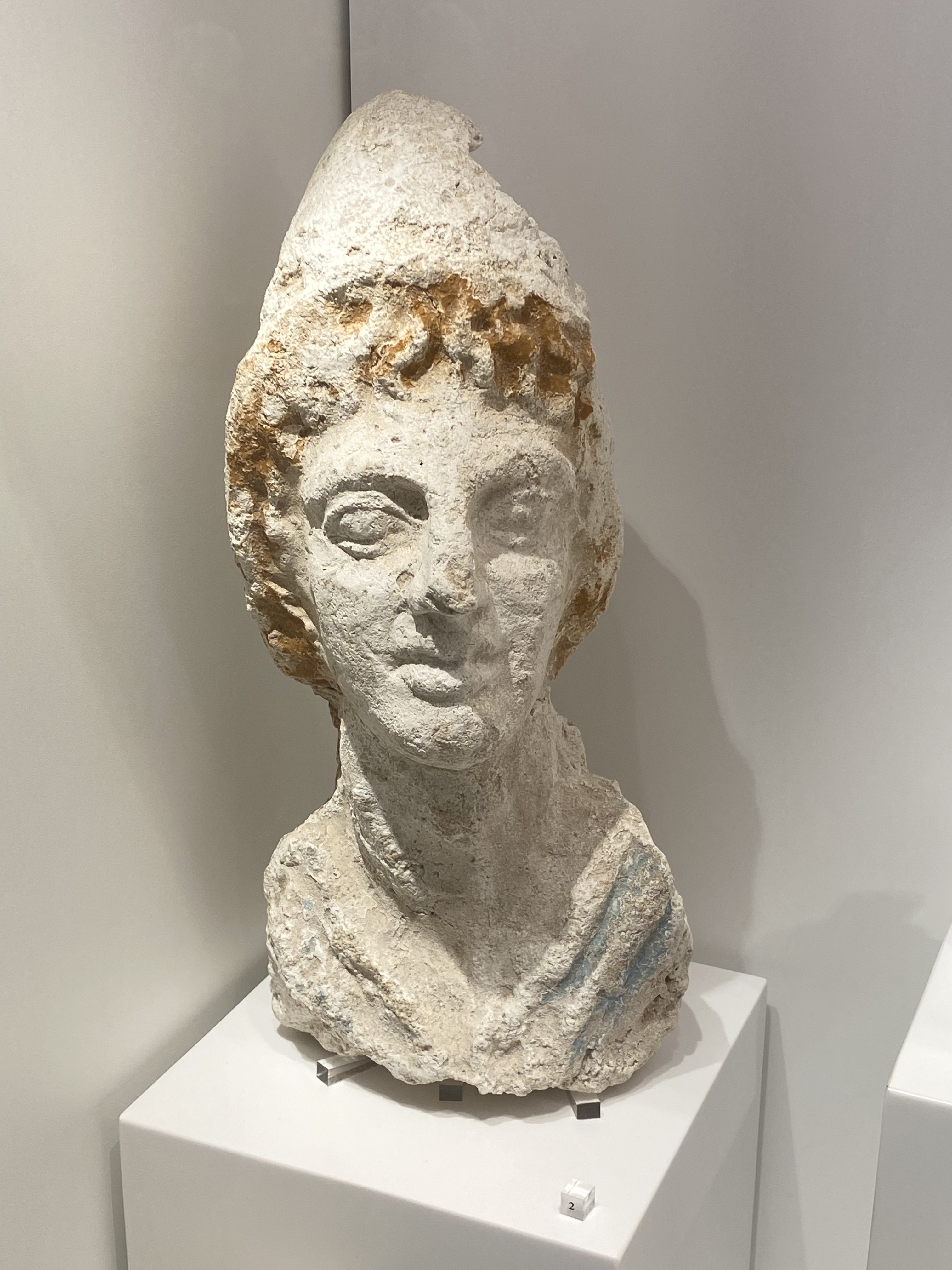
Castor was the son of Leda and the king, Tyndareus. His twin sister was Clytemnestra, which some of you may recognize as the wife of Agamemnon. These siblings also had another set of twins, whose father was Zeus. Technically these four were born at the same time, making them quadruplets. These two are Pollux (Polydeuces) and Helen of Troy. Yes, that’s correct: the Dioscuri twins are directly related to Clytemnestra and Helen. There are many myths regarding the Dioscuri twins and many contradict each other. In one myth, as Castor lay dying, Pollux begged Zeus to share his immortality with Castor. Zeus kept this promise by placing them in the stars as the constellation Gemini (which is also their Roman name). This is somewhat contradicted in the Iliad when Helen gazes on the approaching Achaean army and notes, “‘…but two I cannot find, and they’re captains of the armies, Castor breaker of horses and the hardy boxer Polydeuces. My blood brothers. Mother bore them both. Perhaps they never crossed over from Lacedaemon’s lovely hills or come they did, sailing here in the deep-sea ships, but now they refuse to join the men in battle, dreading the scorn, the curses hurled at me…’ So she wavered, but the earth already held them fast, long dead in the life-giving earth of Lacedaemon, the dear land of their fathers.” This implies that both Castor and Pollux were mortal as they are both deceased. Other important myths place them in the legendary group of Jason’s argonauts. They were considered to be the patrons of sailors and athletes. They also assissted in the hunt of the Calydonian Boar.
Secondly, the mosaic of Leda and the Swan:
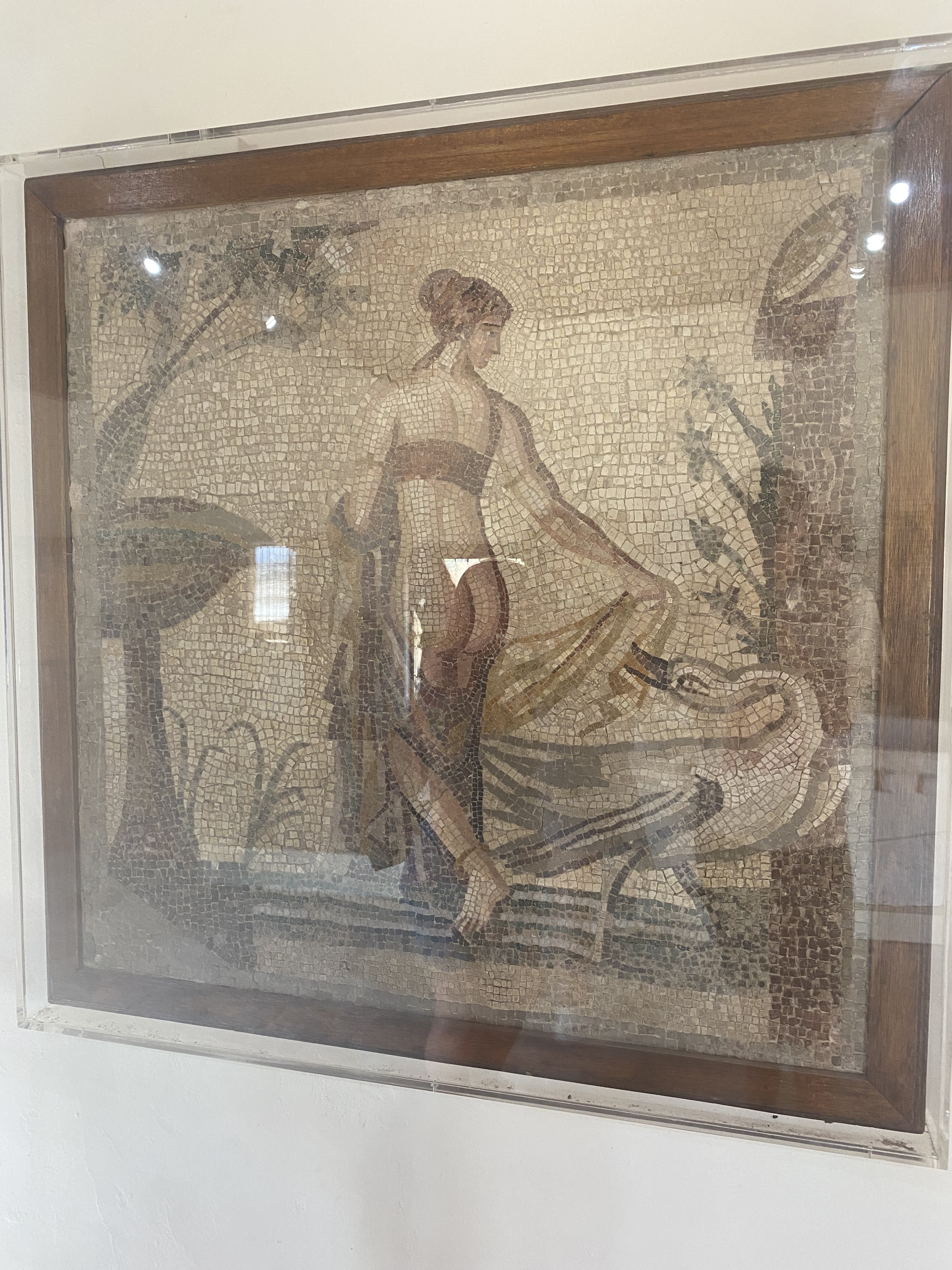
As stated above, Leda is the mother of Castor, Polydeuces, Helen, and Clytemnestra. The swan in this mosaic is Zeus. Myths state that Zeus appeared to Leda as a swan. While some myths portray the births of the quadruplets as a normal birth, some portray them as being laid in eggs. It is clear that both pieces of art written about in this post are connected.
Anyways, I just wanted to share these pieces and a little about their mythological relevance!
Thanks for reading!
-
Bedrock, the Bones of the Earth
Have you ever seen someone get really injured? Like working in the kitchen, cutting vegetables too fast, and their knife slips? The blade goes way too deep, and the wound doesn’t bleed right away? Have you ever seen bone showing through?
To me, that’s how it feels to see bedrock.
This surface, lightly colored, buried deep (or not so deep) beneath the sediment, being slowly revealed with pickaxes and hand tools and little brushes. Hard, smooth, undulating, seemingly impenetrable. It doesn’t feel like we’re supposed to see it. It should be hidden. But in one trench, there it is, laid bare. This is not the trench I’m working. In fact, I don’t really like to go over there. The bedrock looks so vulnerable like that. Exposed, scraped, baking in the hot sun. A handpick comes down on it and my teeth hurt. It shouldn’t be out here like this.
The Ancient Greeks built their structures on it. My colleagues dig down and find walls resting on top of it. Our professor mentioned that the Ancient Greeks sometimes carved holes into it. I feel nauseous thinking about that.
Archaeology is about digging down and exposing the past, but somehow the bedrock feels too far. It feels cruel. Bedrock is often exposed naturally, and in fact there are outcroppings visible on the way up to the site. My own hometown dug into the bedrock to install The Arch. Why does it still feel wrong to me? Perhaps in the context of digging down in such small places below all that packed sediment, it just feels intrusive.
-Rachel
Study Abroad in Cyprus
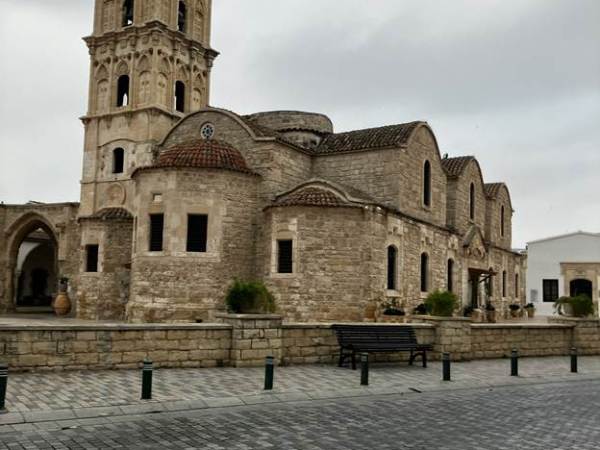
By: Arthur Pino Coming to the Old World is a new experience for me. I can say that, besides the luxuries and brands similar to those in America, it is quite different. This land has been inhabited for at least 4,000 years, according to the sign outside the Agio Lazaros (The Church of St. Lazarus).…

House of Dionysus
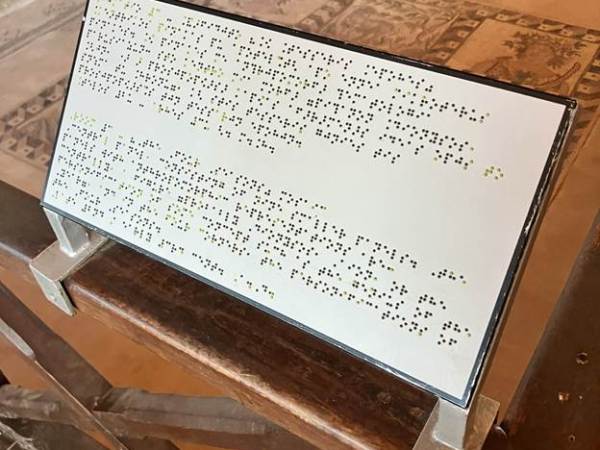
By: Arthur Pino On a field trip, we went to Paphos, where we were able to visit a “World Heritage Site.” This would be the second opportunity I have had to see one in my life within the last year; the other was Chichen Itza in Mexico. It was a very hot day, and walking…

A Big Discovery!
By: Arthur Pino Today was another hard but rewarding day. It was the first time I had worked in the trenches three days in a row, and I felt it. This day, in particular, revolved around hands. My hands themselves, and an accessory for hands. As usual, I did not wear gloves to start…

