For our last field trip we journeyed into the mountains on my favorite kind of pilgrimage: seeking cheese.
I hadn’t been in Cyprus more than six hours before I was scouring the internet for food tours, looking to soak up the local culture in the most interactive way possible. Let me eat your food to understand you, my soul cries out. Make me fat and happy, catapult me through time, give me a bite of your history, explain part of your culture through taste. Food is shaped by economics, by technology, by cultural pourousity, by migration, by religion, by class, by necessity. Foodways are intrinsic to the human experience, and I wanted to experience Cyprus by eating my way through it.
And every single search result was the same: go on a halloumi tour.
***
Halloumi is a Cypriot national treasure. It’s on every menu at every restaurant in Cyprus. I mean it. Just try finding a place that doesn’t include halloumi in some way. Halloumi can be eaten plain, fried, or grilled because it has a very high melting point. Unlike, for example, mozzerella or gruyere, which are chosen for dishes specifically because of their low melting point (hence “melty cheeses”), halloumi holds up in higher temperatures. The downside, if you consider it a downside, is that the heat tolerance and “squeaky” texture of halloumi makes it a poor cheese for including in sauces or crumbling on salads.
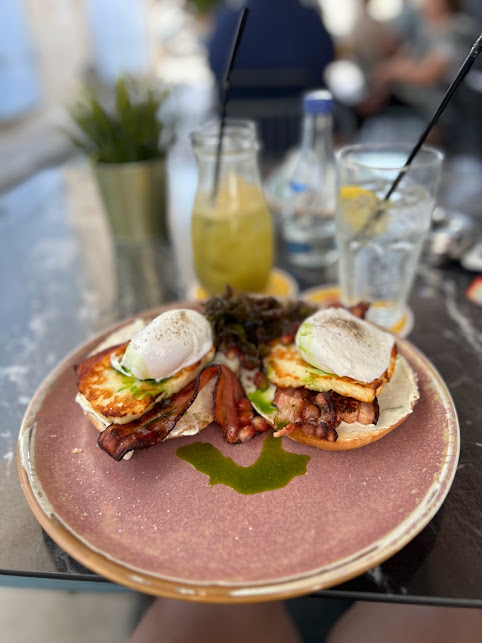
And to go even further, halloumi is the national cheese of Cyprus. According to Cypriots, it was invented there and legally, it can only be made in Cyprus. It’s protected in the EU as a “geographical indication,” or GI, meaning that it’s only made from certain ingredients in a certain place. Like champagne, which can only legally be called “champagne” if it comes from the French region of Champagne made according to specific appellations using chardonnay grapes, halloumi comes exclusively from Cyprus. There was some messy legal back and forth in the early 2000s about including cow milk in the production of halloumi, which traditionally can only be made from sheep or goat milk. The international demand for the cheese, however, made industrial production at scale nearly impossible without using the more readily available cow milk, so today halloumi can be made of any one of those three types of dairy. Whether made of sheep, goat, or cow milk, halloumi must be produced in Cyprus to carry the coveted title.
Cheesemaking in general is both a very primitive and yet very sophisticated scientific process. The basics are the same across the board: heat some dairy, introduce some enzymes via rennet, drain, heat some more, and shape. Voila: cheese. Age if desired, smoke or brine to increase longevity, add some herbs and spices to taste, and enjoy. But the science behind it is deep molecular biology: rennet is a complex enzyme that affects the protein chains in milk, essentially shifting the water molecules in the milk, which is itself a complicated mesh of molecules. There’s something about lactic acid. To be honest, I don’t entirely understand it, and I spent many days trying to wrap my head around anything more complicated than the kid-friendly videos. In simplest terms, the rennet acts in much the same way yeast does in bread and beer and wine; essentially, milk undergoes a kind of fermentation in order to become cheese.
But humans have been making cheese for a long time without understanding the science that underlies the process. The general consensus for the first cheeses sounds a lot like the general consensus for the first breads, beers, and other fermented foods: discovered by accident. Hunters probably caught a kid (baby goat) who still had some of its mother’s milk in it’s belly. The rennet naturally present in the stomach lining of the kid probably coagulated the milk into something like a soft cheese– and from there, we’ve been making cheese in seemingly endless varieties.
***
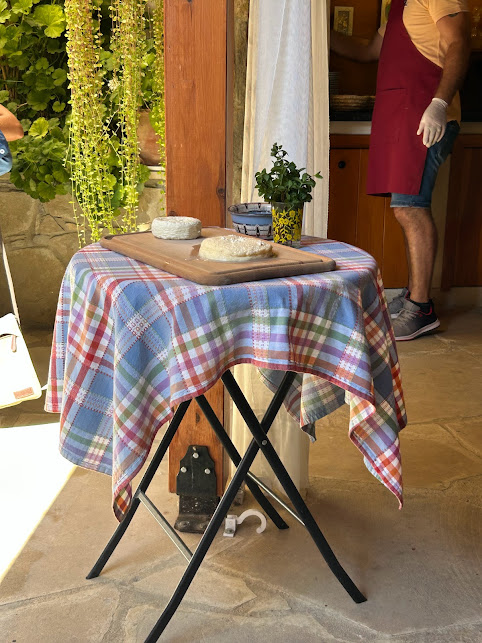
The halloumi made in Petros Nikolaou Basketry Workshop & Museum is made the old fashioned way. Petros is really, really into basketry, but produces halloumi from the milk of goats and sheep raised on his farm. First he heats the milk and introduces it to heated water for up to three hours. Then a vegetable derived rennet (from the cardoon flower, native to Spain) is added to the mix. The curds are strained, set for 30-45 minutes, and then broken up by hand before being put into a traditional basket mold, where the whey is pressed out. Then back into a pot of water to cook, where the shape of the halloumi firms up. The whole process concentrates the protein in the cheese, which is why halloumi (and other cheeses) have been prized throughout history as valuable sources of semi-stable (depending on the variety) little protein pouches. It’s also why halloumi is so popular as a meat replacement in things like sandwiches and kebabs.
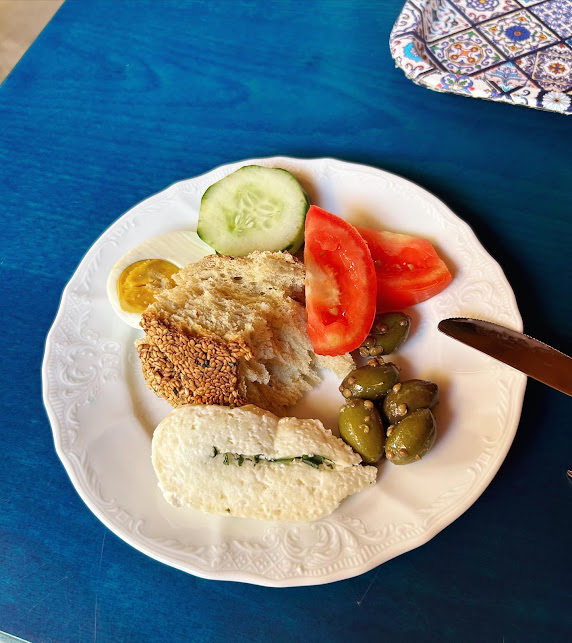
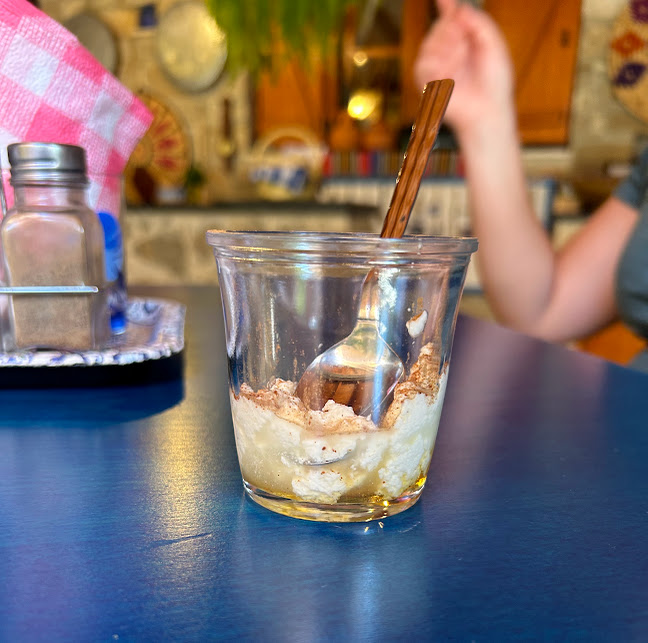
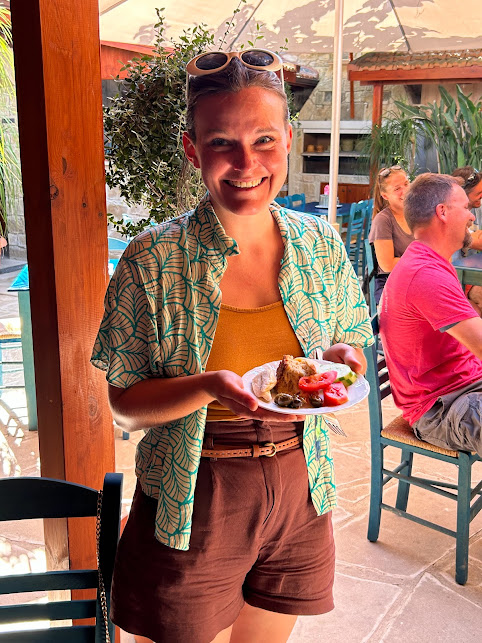
Once the halloumi is setting, Petros works fresh and dried mint into the cheese before folding it over and there it is: fresh halloumi, ready to eat. Mint, it turns out, is another particularly Cypriot flavor. From cheese to sausages to sweets, mint showed up in so many unexpected dishes. We were served this fresh halloumi with fresh sourdough bread crusted with sesame seeds, marinated olives, fresh tomatoes and cucumbers from Petros’ garden. We also got to taste Anari cheese, made from the whey byproduct of halloumi. It’s a lot like ricotta, and it was served to us with a dusting of cinnamon (another common Cyprus flavoring) and a generous drizzle of honey.
The fresh halloumi was, yeah, a little squeaky, kind of like mozzarella balls. It was slightly salty, slightly minty, and dreamy on the fresh sourdough. Of course I went back for seconds and, once surreptitiously checking to make sure that no one else was going back for more, thirds. It was wild to actually feel the change in texture as the cheese cooled, becoming firmer in between bites.
***
While not an exhaustive lesson in halloumi making– I would have leapt at the chance to make halloumi from start to finish, getting up early in the morning and dunking curds into boiling water for hours– it was still one of my most treasured experiences in Cyprus. It felt like a curtain had been pulled back and I got to take a peek at the soul of the place. Cringe, I know, but it made me bubble with happiness.
So for a taste of Cypriot history going back thousands of years, do yourself a favor and take the halloumi tour.
–Miki H
 Vigla Archaeological Project
Leave a comment