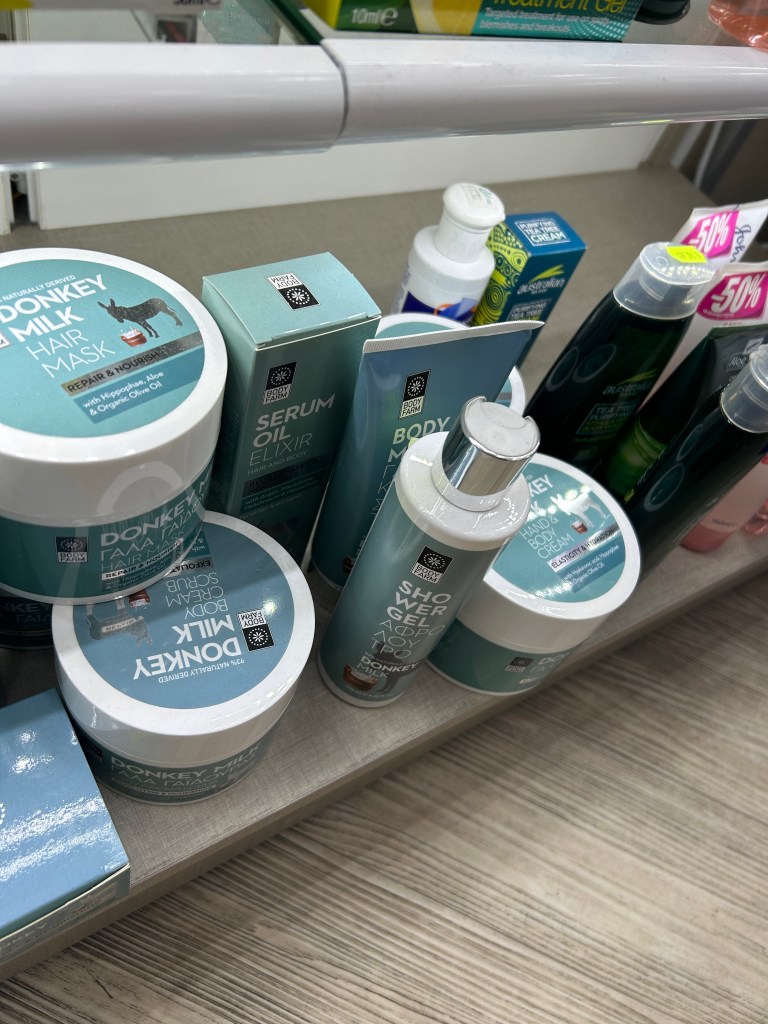
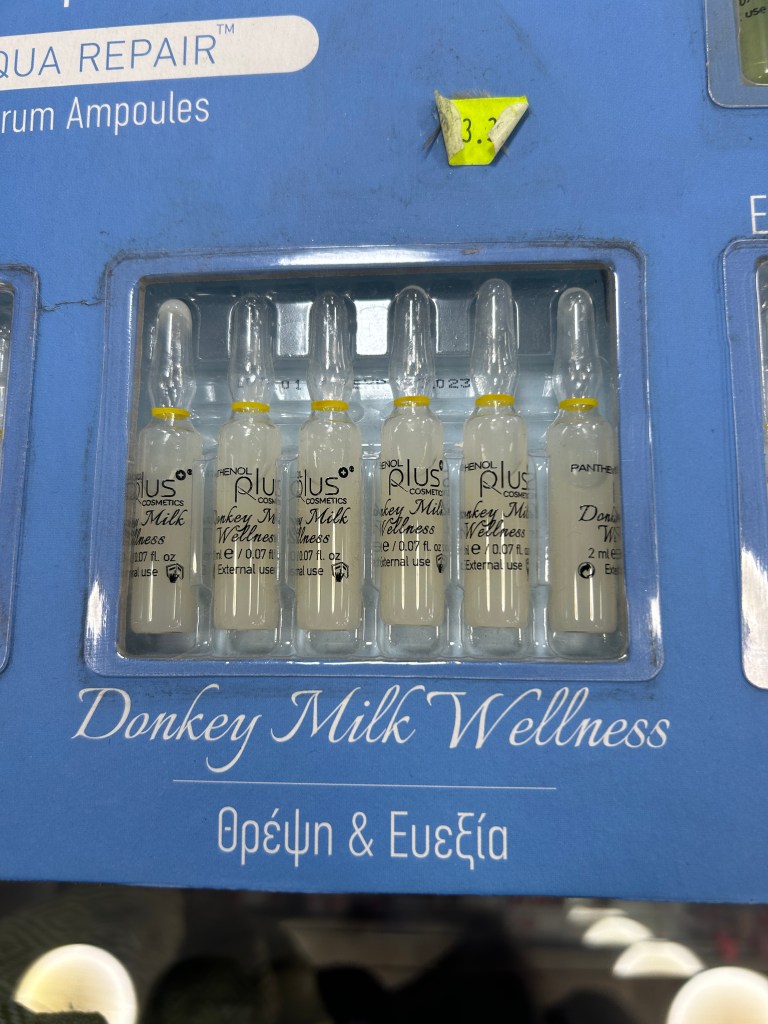
As I have explored Cyprus, something I have noticed all over is the prevalence of donkey milk products. The stuff is everywhere! At pharmacies and mini marts I notice it in soap, liquors, and hair products, the sheer quantity of it and how normal it seems to be is shocking. I wondered why there was so much of it, and what the historical context of this excess of donkey product could be.
According to my small bit of research, donkey milk is said to be antimicrobial, anti-aging, to boost your immune system, and seems to play a large part in the tourism of the island. In fact, donkeys have always been an important part of Cypriot life, from prehistoric times through the late 20th century. Traditionally, donkeys played an important role in agriculture on the Karpaz Peninsula, hauling olives from the groves and cereals from the fields to the mills. Even coming into more modern times, particularly in rural areas of Cyprus, households often had one or two donkeys.
Then, in 1974, the Turkish Invasion happened, and whole villages of Greek-Cypriot farmers fled the northern part of the island, leaving their donkeys behind. Now those hundreds of donkeys live in a feral state, abandoned and forced to live on their own after centuries of domestication. Experts estimate there must be around 2,000 of them today, roaming the hills of the remote Karpaz Peninsula. Since the 70s, various farms and sanctuaries have been founded to house and take care of the donkeys, and they have become a large part of tourism on the island now that they are no longer involved in agriculture.
Annika Schramm
 Vigla Archaeological Project
Leave a comment