-
Paphos Trip:
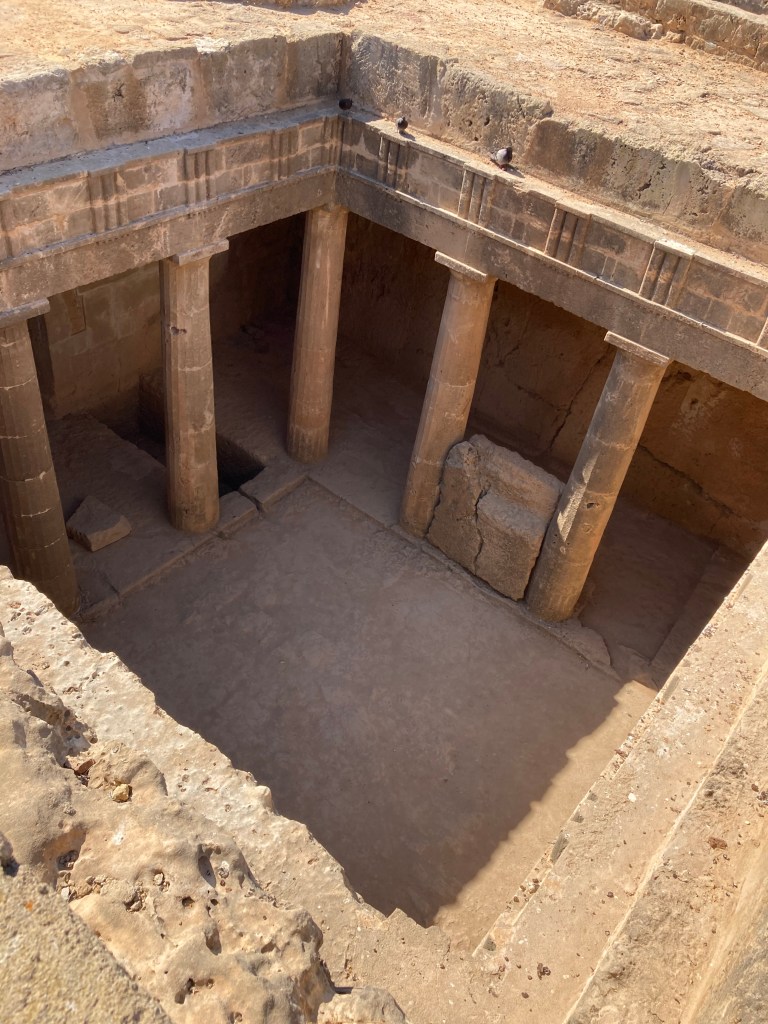
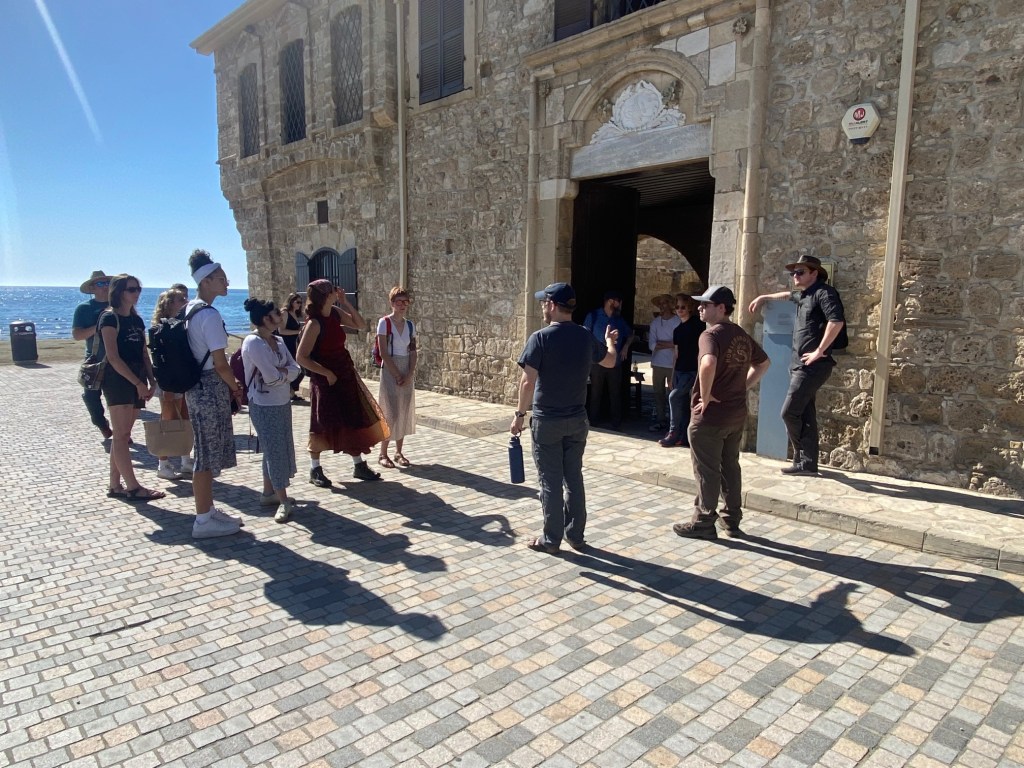
On Saturday the 16th we traveled to the city of Paphos and toured a number of archaeological sites throughout the city. Among the sites we toured were the Tomb of the Kings and the Roman mosaics in Nea Paphos. I really enjoyed our trip to Nea Paphos specifically, as I have only ever seen pictures and descriptions of Roman mosaics and they are truly amazing to experience in person. The mosaics found throughout the site are beautiful but the ones found in the House of Dionysus and the House of Aion are particularly interesting as they remain almost entirely intact and depict a number of scenes from Roman mythology including the Minotaur in the Labyrinth. Seeing the various tombs at the Tomb of the Kings site was also very interesting as some of them have remained largely intact and these largely intact tombs display a very interesting look into how important the burial process could be as many of these tombs feature large stone pillars and very intricate layouts. We were also able to visit the Sanctuary of Aphrodite in Palia Paphos, this site was very interesting as it contains a large black rock that was originally worshipped as the Goddess Aphrodite before the eventual personification of the goddess by the Romans and Greeks. I was a bit disappointed that road construction prevented us from visiting the Byzantine Museum but the sites we were able to visit largely made up for this.
Tristan F.

-
Vigilant at Vigla
The name Vigla comes originally from the Latin verb vigilare, meaning “to guard”, “to keep watch”, or “to monitor.” For English speakers today, it’s the root of our vigil and vigilant. Though much later than the Hellensitic period of the site’s occupation, the Byzantine Empire also borrowed the word from Late Latin and its Roman military usage, and in Greek, the word vigla went from meaning any type of guard detachment to denoting a formal, elite unit in the Byzanitine army.
But though the term came into Greek much later than the early Hellensitic period of the site in question, vigil and vigilant are fitting words to describe the site. Situated precisely on its high coastal hill, overlooking the narrow strip of land, possibly the coastal road, and the whole expanse of the bay of ancient Kition, the watchfulness of Vigla’s ancient defenders, day and night, comes immediately to mind.
Imagine the things its garrison of Vigla may have surveyed: maybe a fleet of their enemy Ptolemy or Antigonus, heavy quadrimes rolling menacingly into the bay with the light of dawn, well visible from the height. The large warships slice quick toward shore, carried in easily by the coastal wind. In the shallow surf, out of range of bowshot from the walls, smaller boats methodically unload hoplite infantry in their thick armor, then skilled slingers, and possibly even armored cavalry, all massing on the beach for an attack on the high fortifications those Vigla defenders watch from.
The methodical research we are conducting now at this site will help to answer questions about just how Vigla’s defenders spent those days and nights as they guarded this fortress, and possibly even the end that they came to, potentially after monitoring just such an image as this.
- Jeff H.
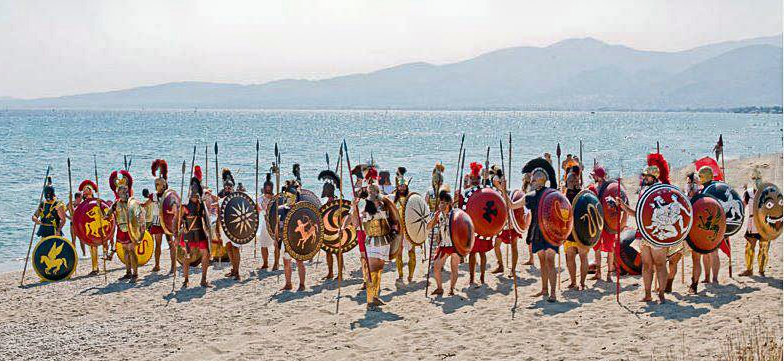
This is an artist’s depiction of the earlier Battle of Marathon, but Hellenistic hoplites preparing for a Battle of Vigla could have looked very similar. -
Church of St. Lazarus:
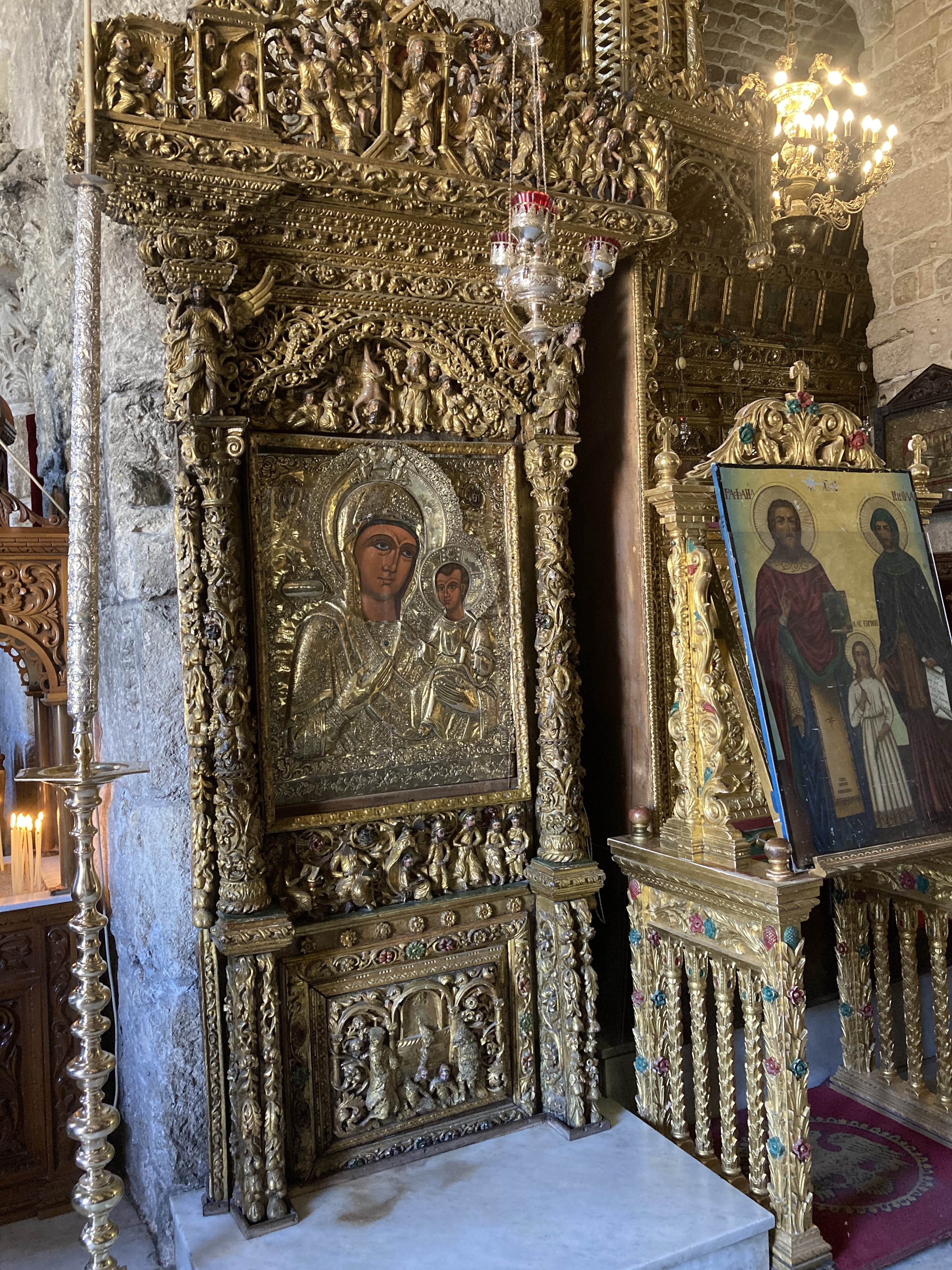
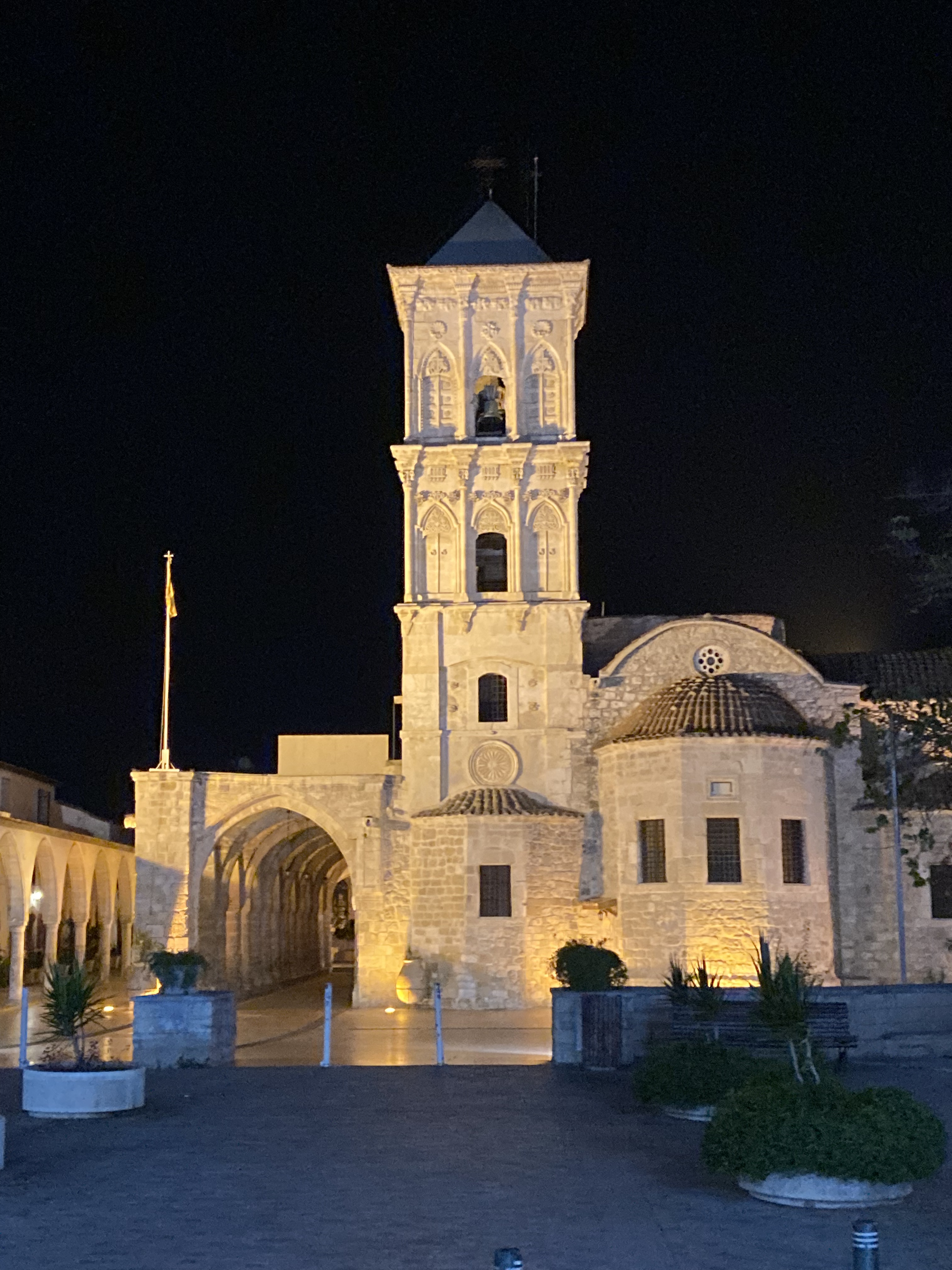
One of the most important historical/ religious sites on the entire island of Cyprus is the Church of Saint Lazarus which can be found in Larnaca. The church marks the supposed tomb of Lazarus of Bethany who Jesus Christ is alleged to have raised from the dead before his crucifixion. According to Orthodox tradition, after the death of Christ Lazarus was forced to flee to modern day Larnaca where he became the first bishop of the city and lived for a further 30 years. After his eventual death Lazarus was entombed in the city and a church dedicated to him was erected on top of this tomb in the early 800s. Although the church was able to survive a number of conflicts and renovations the alleged remains of Lazarus were looted from his tomb during the 4th Crusade and have since been lost. The Church still stands today as a dedication to Lazarus but during the Ottoman occupation of Cyprus beginning in the late 1500s the Church was converted to a mosque and remained an Islamic place of worship until the island was occupied by British over 300 hundreds years later in the late 1800s. In modern day Cyprus the Church of St. Lazarus has become one of if not the most important Christian/Orthodox holy site on the island and the Church has gone through a number of renovations to restore it to its former prestige and it remains a stunning display of the Orthodox Christian idolization of Saints as the Church features fantastic and extensive gold fixtures and architecture. The Church of Saint Lazarus is a must see for anyone interested in the history of Christianity and religious traditions as a whole.
-
Nicosia Trip:
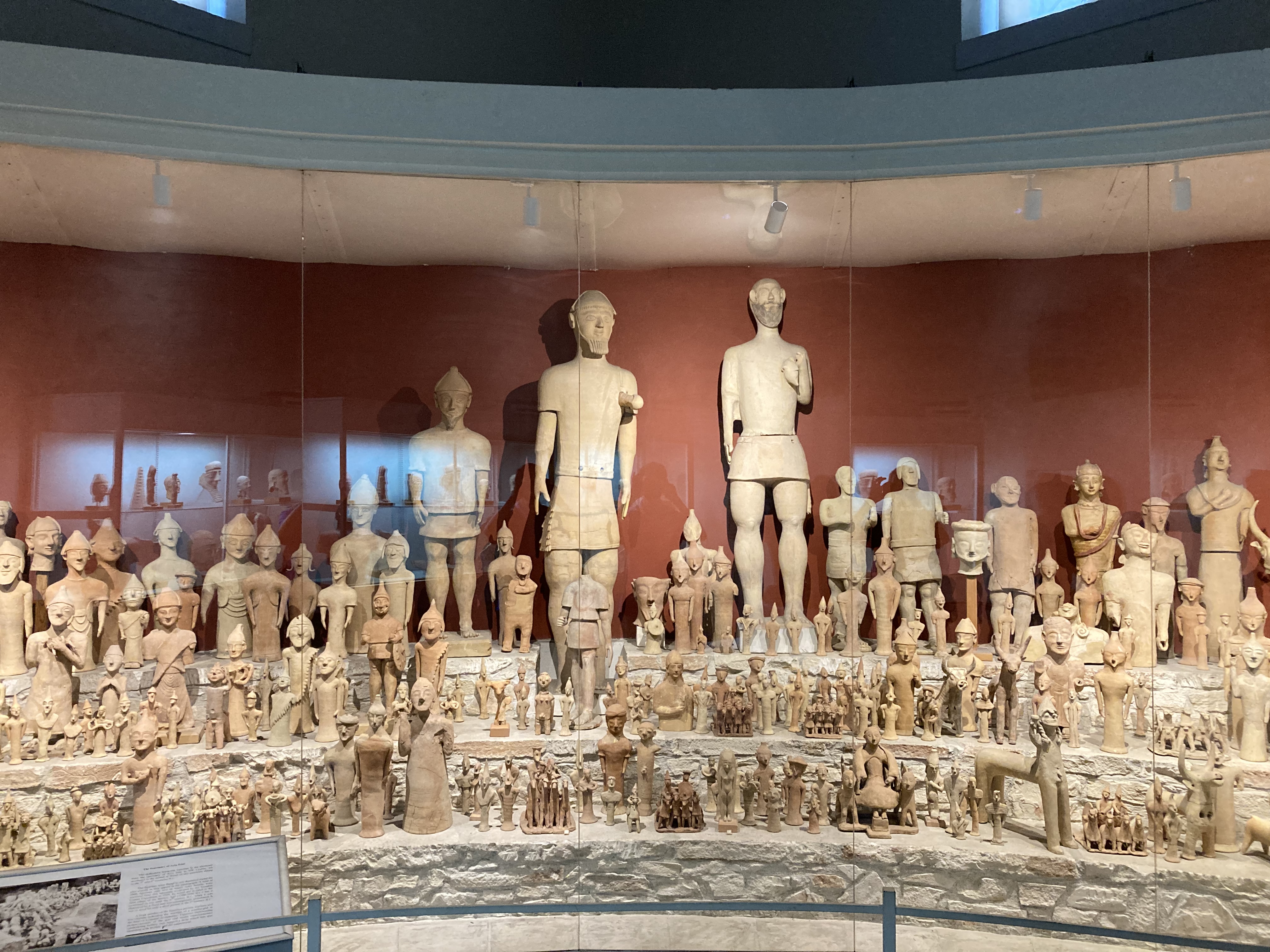
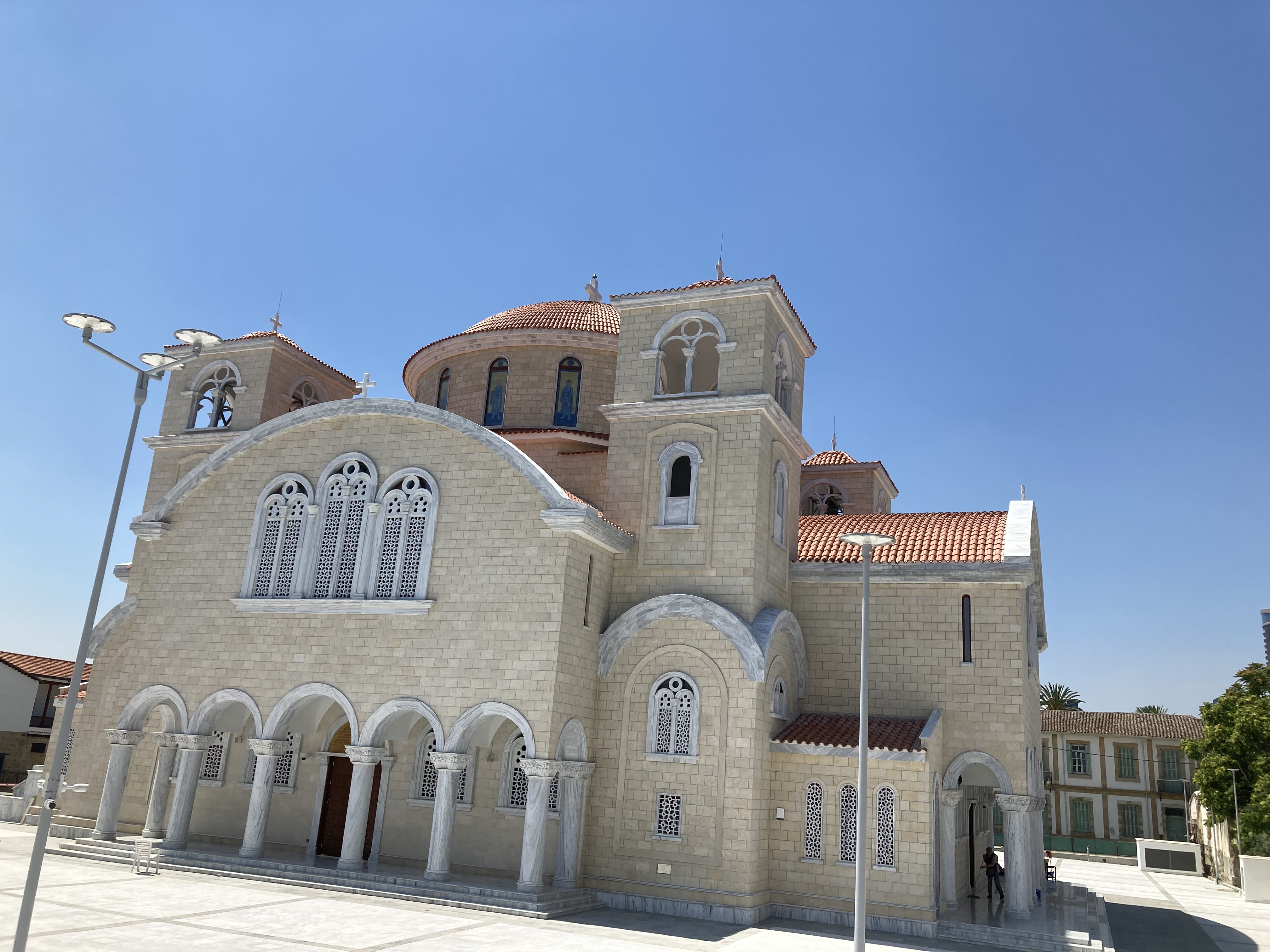
On Saturday the 9th we took a trip to the capital of Cyprus, Nicosia and visited the Cyprus Museum in the city. The museum has numerous exhibits that span across the entire history of human habitation on the island and many of the artifacts are in incredibly good condition. It was very interesting to see how civilization on the island went through numerous evolutions from the Neolithic Era all the way to the early Byzantine period. after we toured the museum we were allowed to briefly tour the city center and I tool the opportunity to visit some of the city’s prominent holy sites including the Cathedral of St. George. I was also fortunate enough to be able to visit a few mosques in the city and hear the islamic call to prayer for the first time in my life, which was a beautiful experience. I really enjoyed our trip to Nicosia and I am looking forward to our future trips and learning more about the history of Cyprus.
-
Ants
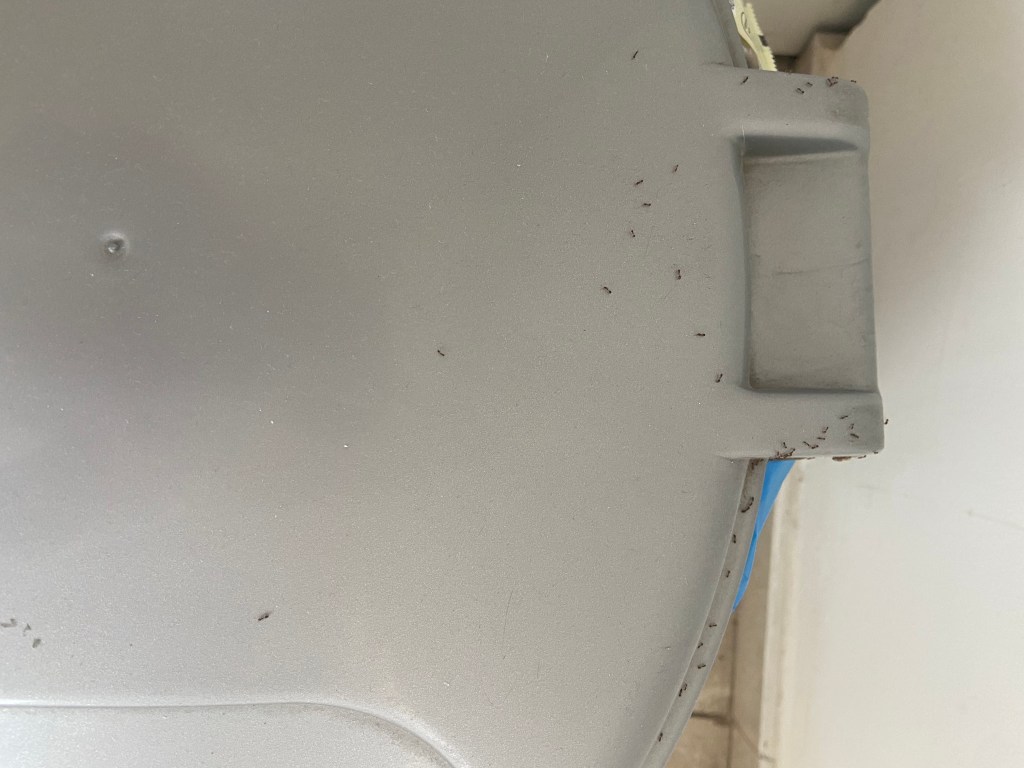
Hello! Our kitchen is infested with ants :))) Bugs have always scared me, so it was very disheartening when I came to the realization that I couldn’t escape from them inside. It started off as just a few ants here and there. One night, I accidentally left a fork in the sink and woke up the next morning to find ten ants on it. I drowned them. I warned all my roommates about the ants and, for the first three days, everything was fine. But then, we got a baguette. We left the baguette on the fridge in its original bag. The ants immediately seized the baguette. I tried tying up the baguette in a plastic bag, still leaving it on the fridge. The ants gathered around it. I threw the baguette in the trash can, still tied up in the bag. The ants invaded the trash can. I’ve now tied up the trash bag with the plastic bag with the baguette, and I proceeded to douse the remaining ants in nail polish remover. Fingers crossed.
*Update: Fingers uncrossed. The ants are back. They’ve managed to infiltrate plastic wrap, and we woke up to find roughly thirty of them on a, previously covered, half-eaten pastry. We were so disgusted, we decided to just throw away the entire plate (after tying it in a plastic bag). We’ve left out watermelon and sugar, but the ants continue to only go after the bread and baked goods. Unfortunately, bread and baked goods are very popular in our apartment.
-Olivia
-
Introduction:
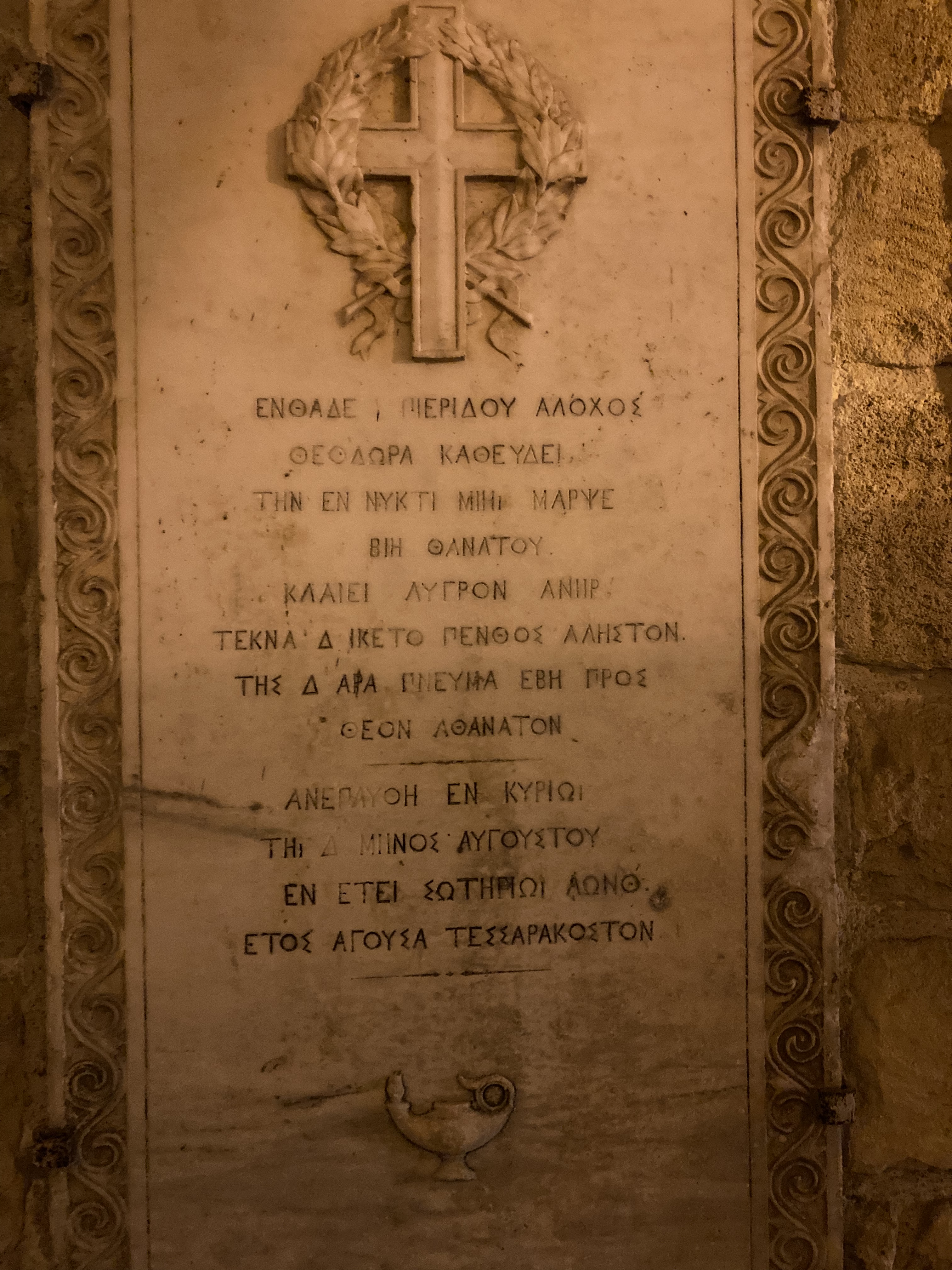
My name is Tristan Foreman and I am entering my senior year at MSU Denver. I am majoring in history with a minor in religious studies and I hope to use our time in Cyprus to learn about the religious history of the island while also hopefully gaining an appreciation for archeological work as well. The religious history of Cyprus is widely complex with numerous sites being converted throughout history and it is evident that many of the remaining orthodox/catholic churches on the island had at one point been converted to mosques and even after the split of Cyprus in 1974 a number of historical mosques are still visible in places such as Larnaca. I was very excited to visit the Church of Saint Lazarus on the 4th and I hope to visit similar influential mosques and churches in both Larnaca and Nicosia. I‘m also both grateful and excited to get experience in the field of archeology and I hope to learn more about the process of excavating these sites and sites like this around the world.

-
Introduction
Hello! My name is Olivia Robinson, and I’m one of the MSU Denver students working at Vigla this summer. This fall, I’ll be entering my senior year with a major in anthropology, and a double minor in history and art history. After I graduate next spring, I plan on taking two years off before returning to school to pursue my master’s degree either in archaeology or museum studies. Outside of school, my interests lie in reading, drawing, and painting. I currently work at a Starbucks near my house, but I don’t like my manager so I’ll probably quit when I get back from this trip 🙂 I’m a huge cat person and enjoy taking off-guard pictures of my cat, Snoopdog. I stole him and his sister from my best friend in fourth grade, and they’ve never been happier. Even though I’ve broken out into hives on my arm from one of the grasses at the site, I’m excited to see what this trip holds for me as well as everyone else involved!
-Olivia R.
-
Vigla: An Introduction
The Vigla Archaeological Project is a sub-project of the Pyla-Koutsopetria Archaeological Project, an archaeological survey begun in 2003 and which was sponsored by Indiana University of Pennsylvania, Messiah College, and the University of North Dakota. This survey project focused on the coastal region surrounding Pyla, Cyprus. The site of Vigla was discovered in the course of this survey. The current directors of the excavations are Brandon R. Olson (Metropolitan State University of Denver), Tom Landvatter (Reed College), and Education Director Justin Stephens (Metropolitan State University of Denver).
The site of Vigla was a short-lived military fortification site in the early Hellenistic period. The aim of the Vigla archaeological field school is to provide students an opportunity to gain significant experience in the basics of archaeological fieldwork. Vigla is ideal for this, given its straightforward stratigraphy and limited occupation, providing great conditions for those learning the basics of archaeological methodology.
This blog will provide a venue for students and staff to present their experiences and insights while actively working on Vigla. Our current MSU students include Adam Ellis, Tristan Foreman, and Olivia Robinson.
Study Abroad in Cyprus
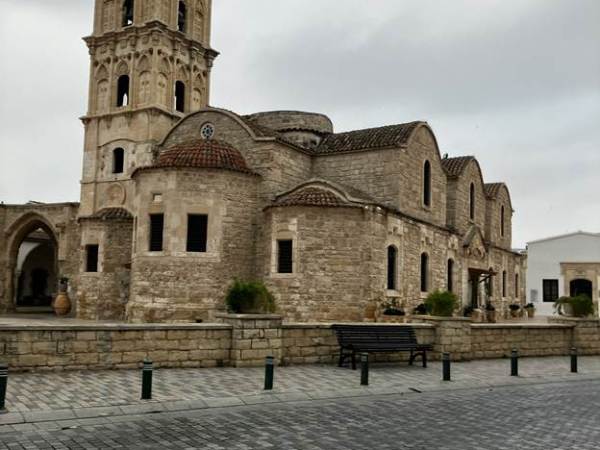
By: Arthur Pino Coming to the Old World is a new experience for me. I can say that, besides the luxuries and brands similar to those in America, it is quite different. This land has been inhabited for at least 4,000 years, according to the sign outside the Agio Lazaros (The Church of St. Lazarus).…

House of Dionysus
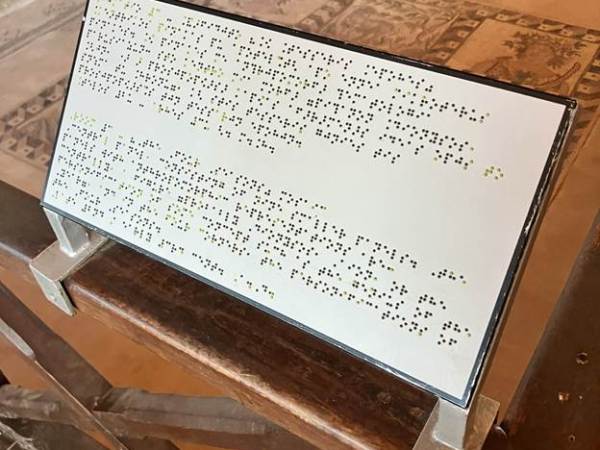
By: Arthur Pino On a field trip, we went to Paphos, where we were able to visit a “World Heritage Site.” This would be the second opportunity I have had to see one in my life within the last year; the other was Chichen Itza in Mexico. It was a very hot day, and walking…

A Big Discovery!
By: Arthur Pino Today was another hard but rewarding day. It was the first time I had worked in the trenches three days in a row, and I felt it. This day, in particular, revolved around hands. My hands themselves, and an accessory for hands. As usual, I did not wear gloves to start…

