-
Scorpion
When we arrived on site at Vigla the very first day, I was feeling ready and excited to get to excavating, but truthfully I was more nervous than anything. Despite my love for studying archaeology, I was unsure about my ability to show up and actually do the work as well as I wanted to be able to. My time in Europe thus far had been trying, and the thought of failing at the thing I had been dreaming of was overwhelming. Waking up at the crack of dawn, and throughout the drive to site, I was frankly terrified.
Upon arrival, we got to work taking care of the cover-ups from last year’s excavation and the growth that had taken over the site in the year it had been exposed. I worked through the nerves and spent the first hour or so as a link in the chain moving the piles of rocks that covered
I began feeling confident, or at least the very least like I was capable of doing what I came here to do, which was a good feeling. Almost immediately after that feeling started to settle in, I felt a sharp pang of pain on my ankle, almost like an intense bee sting, and thought I must have just swept a thorn or prick into the tongue of my shoe, only to look down and see a sand-colored scorpion scuttle out of my shoe, across the top of my foot, and into the dirt in front of me. My heart sank and the feeling of failure slapped me in the face. I wanted to keep digging, to pretend this hadn’t happened and prove to myself that I CAN do this. Despite that, the folks digging near me alerted our supervisors who quickly lifted me out of the trench telling me I had to go get checked out. I cried walking to the van, not because of the pain, (it truly wasn’t bad) but because I felt so disappointed in myself. The scorpion felt like a sign the world was sending me that I’m not cut out for this.
Bill, Dr. Stephens, and I started to the hospital but decided to stop at the first pharmacy we saw to see if I could get care quicker, Bill said that the pharmacists in Cyprus have more medical education than they do in the states. They asked to see a photo of the scorpion and asked how I felt, quickly checked my foot out and then gave me an antihistamine and a medicated gel. By that point, my foot was burning and I could feel the sting throbbing, but all I wanted was to act like it wasn’t happening and go back to site. Dr. Stephens was having absolutely none of that and told me to take the day so it could heal. The day turned slow, I soaked my foot alone and waited for the rest of the group to return. My mind, however, raced. I quieted it with a call to my parents and a lot of YouTube, but the fear crept up on me still. I felt all but certain that the next day on site would kill me. The fact that the next two days were spent pottery washing Spoiler alert: it didn’t. Neither did the next day or any day after that.
At the end of the trip now as I reflect back on this experience, all these fear feel silly, and I feel like a different person than the one who felt like she couldn’t do it, because I DID do it. No scorpion, no heat, no 4am wake up stopped me from persevering through this month. Every time I got scared or overheated or exhausted, I reminded myself that I got knocked down and got back up again.
Annika Schramm
-
Pottery: The Fabric of our Past Lives, Part III: Derpy Birds
Cypriot pottery is best described as playful. There’s a joy and wonder to look at the figures depicted along the rim of a vessel, or a vessel shaped a little like a dolphin, or warrior centaur men. So many examples of Cypriot pottery are whimsical.
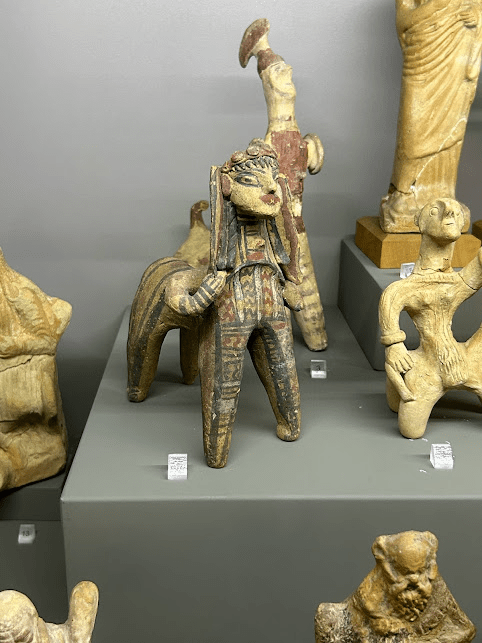
Cyprus Museum, Nicosia 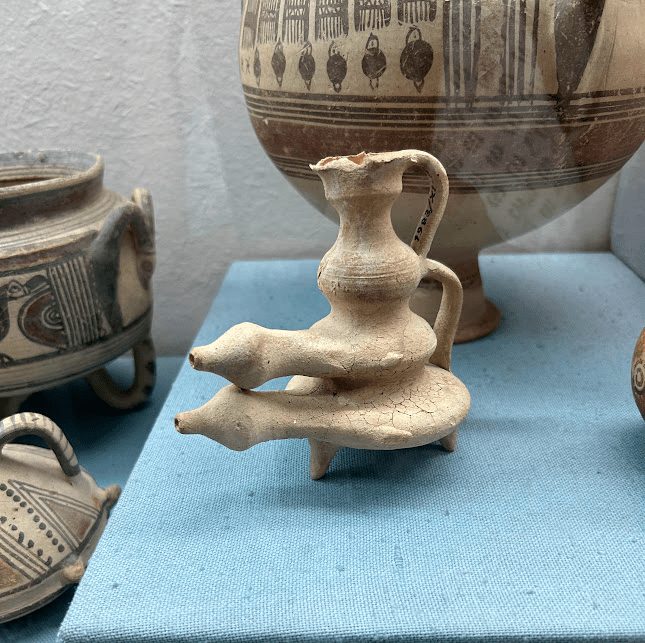
Cyprus Museum, Nicosia 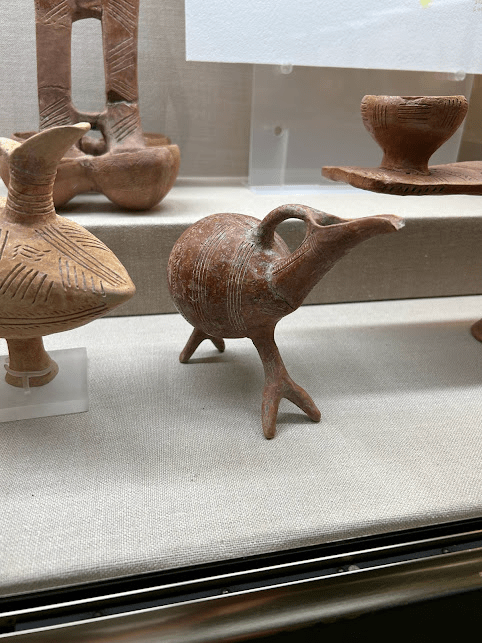
Cyprus Museum, Nicosia 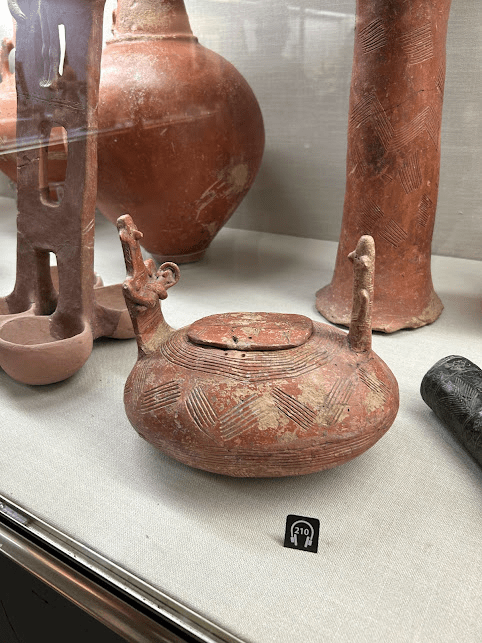
Cyprus Museum, Nicosia 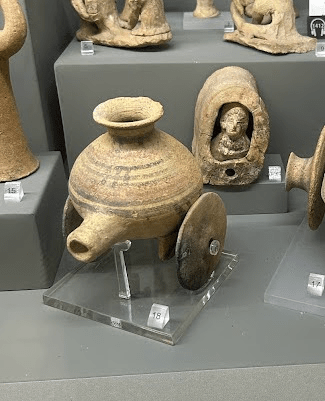
Cyprus Museum, Nicosia 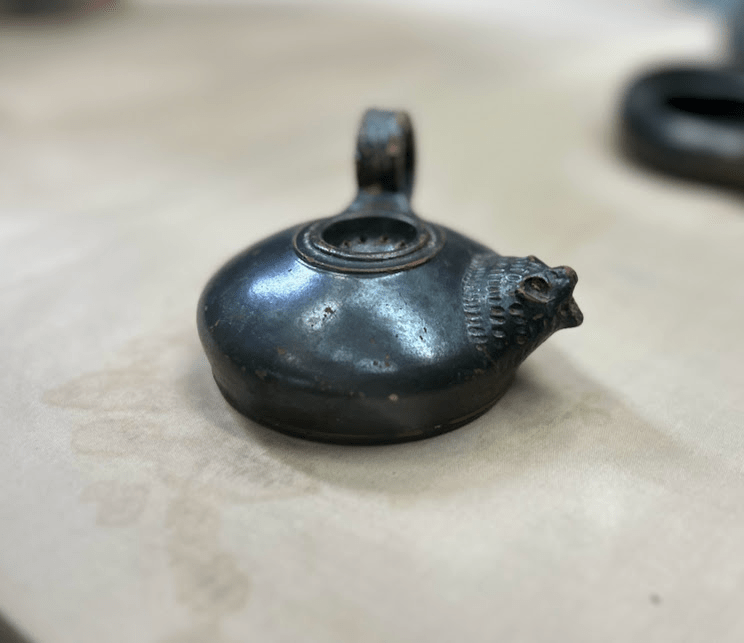
Cyprus Museum, Nicosia My favorite motif as we combed through museums in Larnaca, Nicosia, and Paphos, were the weird little birds. They’re cute. They’re suggestive. They’re a little derpy.

Larnaca Archaeological Museum 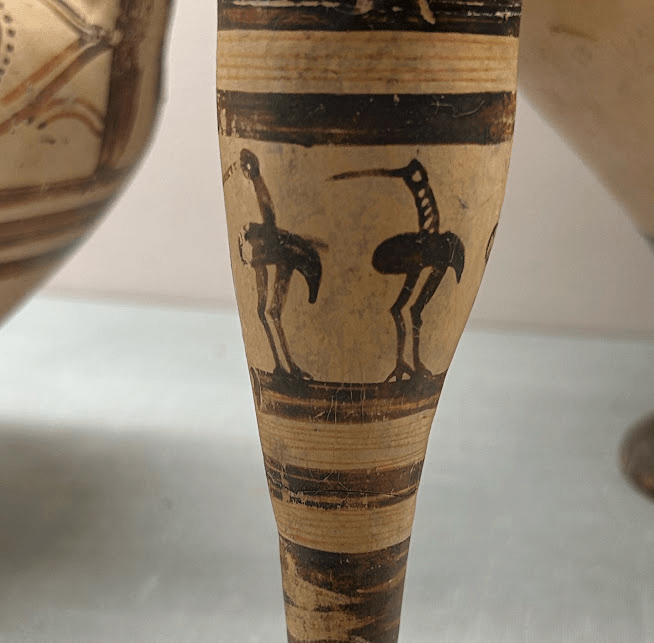
Cyprus Museum, Nicosia 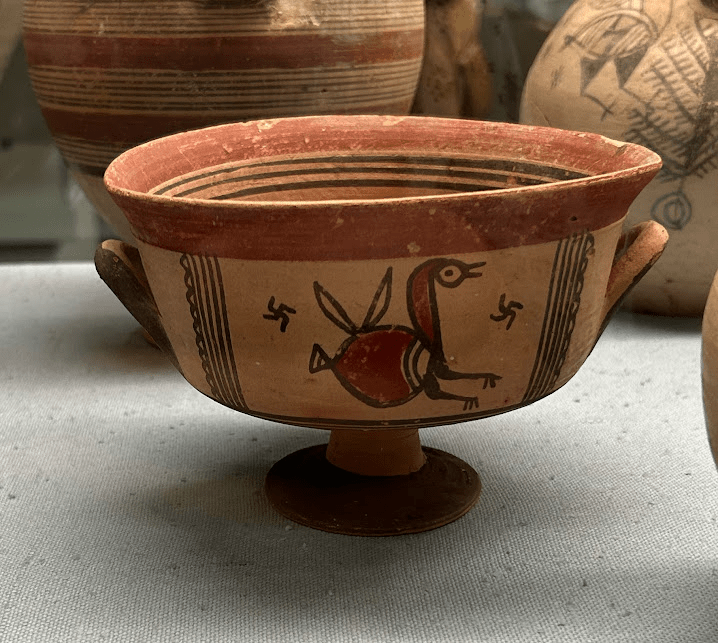
Cyprus Museum, Nicosia 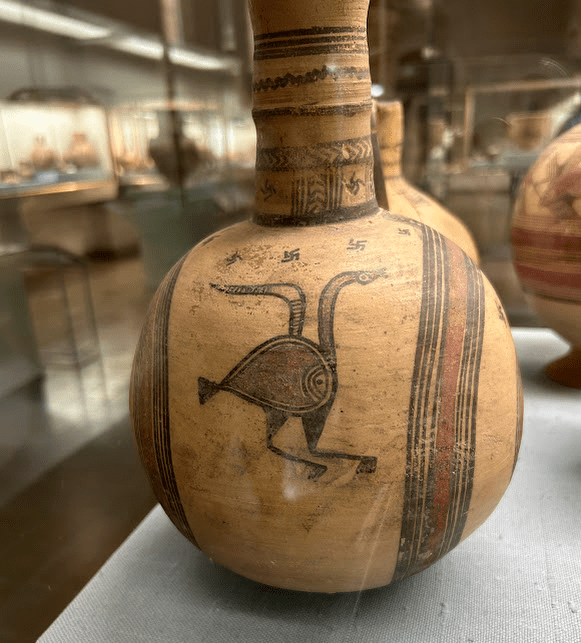
Cyprus Museum, Nicosia 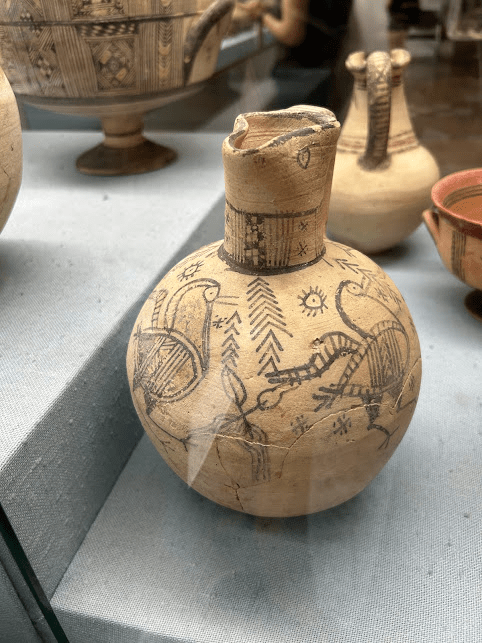
Cyprus Museum, Nicosia 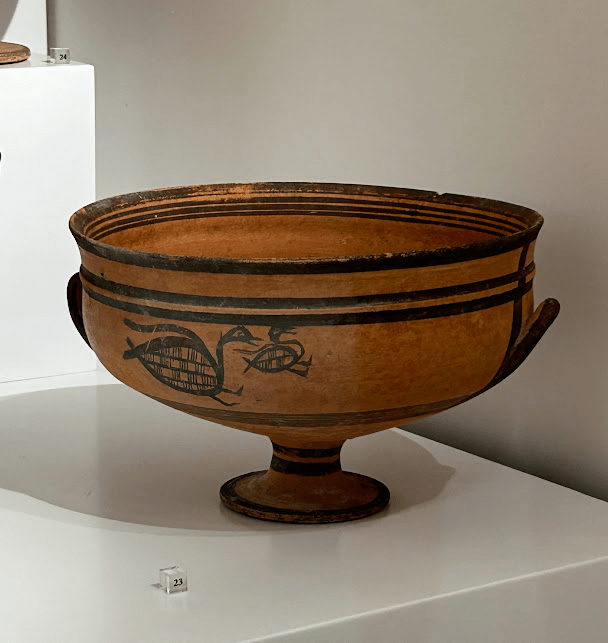
Paphos Museum 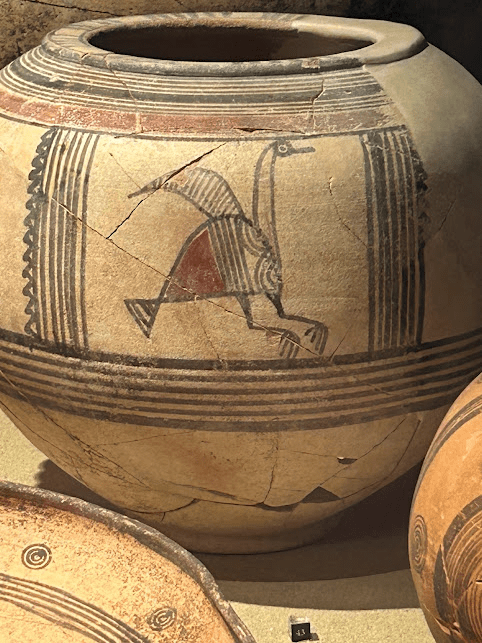
Paphos Museum 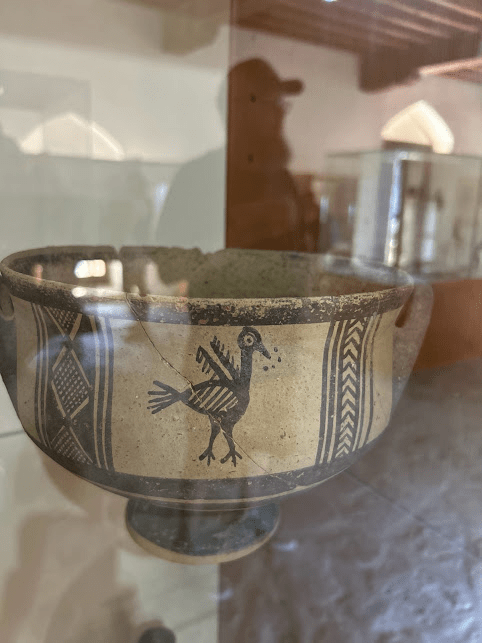
A bonus Dr. Stephens in the reflection. Sanctuary of Aphrodite We were lucky enough to find our own little fired clay derpy bird in the fill pit between EU 20 and EU 23!
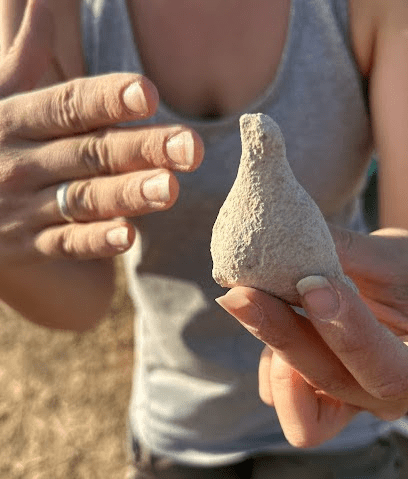
Supervisor Anna with Philomena Pottery, as the ubiquitous manufactured material of antiquity, doesn’t have to be staid. It can be functional and experimental, serving the purpose it was designed for while appealing to artistic, ritualistic, and personal sensibilities. I don’t want to make claims about understanding via pottery any specific cultural spirit, but I like to think that the people of the past who produced these items had a sense of humor, even in their appreciation and interpretation of the natural world.
I hope you enjoy discovering for yourself the quirky joy of Cypriot pottery.
-Miki H.
-
The Ashlar Block in EU23
I spent all my time at the Vigla site in EU23, and through this site I was able to learn about opening and closings SUs, and how to determine when something is special enough to open its own SU. While working in EU23, SU8501 we started to remove the layer of mud brick, plaster, and cobble from the wall collapse, and upon doing so, I discovered a cut rectangular ashlar block in the back southwest corner. This block was broken into three separate pieces. Around this block was an ashy layer of soil, and because of the soil change, we decided to open an SU specifically for this soil type. This was SU8505 and it was determined that this ash layer was only surrounding the block and had some association with leveling. This layer of ash was later measured to be about 7cm outside each side of the ashlar block and was removed is SU8509. The next SU relating to the ashlar block was SU8511, and in this layer the actual rock was removed, with some amazing finds underneath, all in the same corner. However one of the most exciting finds underneath the soil layer , and under the ashlar block, was a charred root fragment that can be carbon dated, very similar to the previous sample taken on the east side of the trench. We also took the ashy soil as a sample as well. We determined that the ash level of the soil indicates that this layer was purposefully sealed separately from the rest of the trench. I am very interested to see the results of the testing in the trench and hope to keep up on any updated of this block, and the finds underneath it.
-
Pottery: The Fabric of our Past Lives, Part II
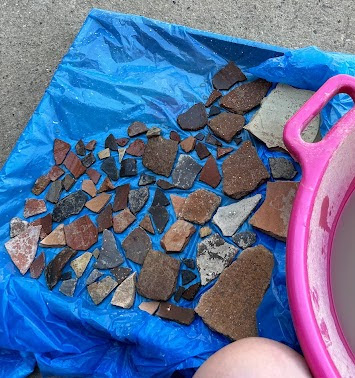
Since pottery is so important to chronology and periodization and is going to take up a lot of your life during your dig, let’s go over some technical jargon as an introduction to analysis:
- Potsherd: a pottery shard, or broken piece of pottery; also sherd.
- Diagnostic: sherds that reveal shape; handles; bases; toes; rims.
- These parts of the pot are more carefully made.
- Body sherds/ non-diagnostic: all the other kinds of sherds.
- Inclusions: stuff other than clay like tiny pebbles or organic matter
Once you’ve determined what kind of sherd you have, you look at the fabric. The fabric is the clay makeup of the pot– from the Latin fabrica, something skillfully produced (same root as the word “fabricate”; not just used in terms of textiles).
Fabric comes in four main categories:
- Fine or fineware: highest quality clay and surface treatment. Fewest inclusions in the clay itself, highly levigated, and fanciest. Thin, pretty, and delicate.
- Painted, glossed, or otherwise ornamented.
- Bowls, cups, decorative serving ware, things to bring out in social dining situations (like your grandma’s “fine china”).
- Cooking or cookware: ubiquitous across all class lines, like a modern cast iron pot.
- Thinner fabric with more small inorganic inclusions to help conduct heat.
- Kind of clinky when you tap on it.
- Often burned or blackened on the outside from being placed on a fire.
- Be very careful when washing this kind of pottery; you don’t want to scrub off this layer of burn.
- Coarseware: Everyday use pottery, usually connected to storage.
- Inclusions vary in size, but can be organic or inorganic and pretty obvious.
- Visibly less refined than fineware or cookware.
- Amphora: can be transport (the shipping vessel of antiquity) or storage, and often both. Everything from oil to wine to wheat was stored, carried, shipped, and otherwise moved in amphoras by land and sea.
- Finer made than courseware, a little “cleaner.”
- Very thick walls.
- Fired really hard.
- Distinctive handles.
- Toes!
- The handles and toes of amphoras indicate how an amphora was carried or stored. Could be stacked in hay, tilted on their sides, or the handles threaded with rope.
- If you’ve found something really big or thick, it’s probably an amphora.
Lamps get their own category because they are considered special use, or found in special use places like ritual sites. Lamps are also fired very hard and typically have a fine fabric.
Lastly, the level of levigation will determine exactly how fine the ware or fabric of a vessel is.
Levigation is the refinement process for clay.
- Water is added in a large pond to the clay and then the desired fineness is skimmed: finer from the top, where there are fewer inclusions, and coarser clay from the bottom of the pond with more inclusions.
- Very finely made clay fabric might go through levigation multiple times to achieve a uniform consistency with minimal, teeny tiny inclusions.
With that, you’ve got the basics of pottery analysis! There’s much more to learn, but having at least a passing familiarity with these terms and concepts will help get you going.
–Miki H.
-
Pottery: the Fabric of our Past Lives, Part I
Why does so much of archaeology revolve around pottery?
I’ll include the continuing caveat that I’m a history, rather than anthropology, major, so there were so many things I didn’t know when I arrived in Cyprus. I’d always wondered why so much of any history museum included rooms (and sometimes rooms and rooms) of pottery. Yes, ancient pottery can be beautiful or charming or impressive, but why, I couldn’t help but ask myself, was it so important to display so much? What was it about pottery that made it seemingly central to archaeology?
Pottery, it turns out, is the most commonly found thing on sites and is, if not essential, extremely helpful for establishing chronology. The typologies, or general classification of a type or kind, of ceramics change over time. This can happen because of technological, cultural, or environmental changes. A certain type of oil lamp, for example, might be very common for years before it becomes unfashionable or economically impractical. There are certain shapes that are, in reality, easier to work with than others when it comes to classification. This kind of chronological classification — Cypro- Geometric, Cypro- Archaic, Cypro-Classical, Hellenistic– helps with periodization and expands on the chronological context of the site. Cyprus has been inhabited since the Neolithic, which means there’s a wide range of pottery types. Because Cyprus is so rich with archaeological findings, there’s a pretty good chance that periodization through pottery will land you in the right time in history.
Pottery speaks to what people were up to. Pottery was used every day and reveals what activities people were engaged in. I’ve heard pottery described as the “plastic of the ancient world”: used to make everything from ornamentation to cookware to storage vessels to cookware. The function of a pot is directly (for the most part) revealed in the shape. A casserole dish looks different than a wine jug, which looks different than a storage amphora. Pottery typographies can be cross checked with other sites around Cyprus, indicating certain island-wide or even Mediterranean-wide trends.
Pottery made in Cyprus during the Late Bronze Age looks different than pottery made in Laconia, Greece, or in the Late New Kingdom in Egypt. If pottery from roughly the same time period but from very different regions or styles appear in the same archaeological context, then you can surmise that trade existed between the two areas. Very fine examples of pottery, either indigenous or imported, can indicate the wealth of an area or individual.
Pottery, it turns out, gives us a window into the lived experiences of past peoples. It allows us to understand what they were doing and how they did it.
-Miki Hollingsworth
-
Kition
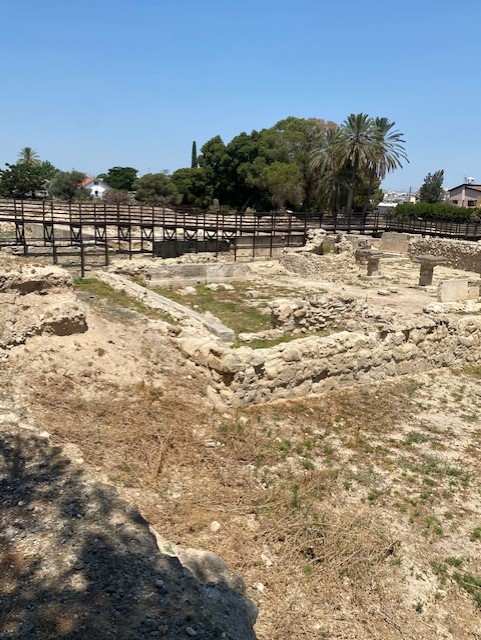
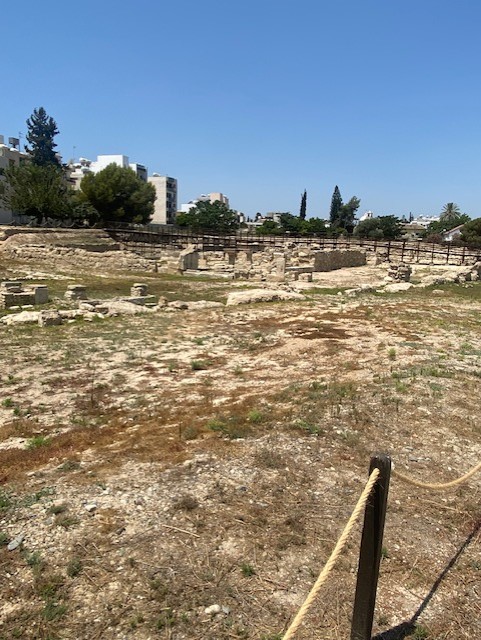
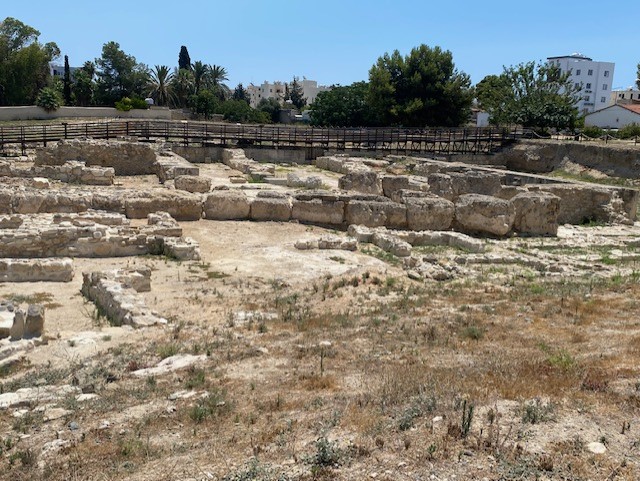
Near the Larnaca Archaeological Museum is the excavation of the site of Kition. This area is a breathtaking example of an ancient city-kingdom. It not only spans from behind the museum but also a block away where there is a more open space for you to view. The walls may not be as grand as some of the things you think about when viewing ancient places, but it is beautiful in its own right. The history of Ancient Kition begins back in the 13th century BC when the Mycenaean Achaeans inhabited this area of Southeastern Cyprus. It was occupied until the 11th century BC before the Phoenicians in the 9th century. The walls are made of large limestone. However, in the 10th century BC, this settlement was destroyed by a natural disaster. When the Phoenicians occupied this settlement a century later, they had built on top of the fortified walls and created a temple for their Goddess Astarte, the goddess of fertility. This temple would go on to be used until the 3rd century BC. However, five temples were built during this time of occupancy of Kition. During the Phoenician phase of occupation here at Kition, the area was widely used for exporting goods through the Mediterranean. Ptolemy I of Egypt would come through during the Phoenician era and conquer Cyprus diminishing the current occupancy of Kition.
The occupation phases at this site are remarkable and so it the view from the bridge that walks you through the excavated site.
-
Climate Change in the Mediterranean
When traveling around the town I was stopped when I noticed there were climate change books in the back of a man’s truck bed. Curious about the advances the Mediterranean may have in this global crisis I stopped to ask the man if I could view the booklet. To my surprise he allowed me to take home with me one of these booklets.
When reading through the Climate Change Initiative book I found it interesting that The Eastern Mediterranean and Middle East (EMME) is a hot area for this reform. They have created a task force that is broadening its efforts to educate the population about this crisis. They believe that this topic should be talked about in formal education and not just as a hobby topic. I found this intriguing as my minor is climate change back at MSU and it is starting to have a broader educational presence. The problem with making this a want for the general public is daunting. There is also a language barrier with information as a lot of people do not speak English so they are needing to translate a lot of studies on climate change to be able to make it accessible for this to work properly. The abstract for this is that they will need to include many parties to be able to achieve this in this area. I believe this is a great effort to be able to spread knowledge of what is happening and what may come about to people who are not yet knowledgeable in this area, just as any other forms of knowledge
-
Cruciform Figurine
I was amazed at the fact that there was one individual figurine I kept seeing all over the island. Not only is it on the currency but was in all the shops that I had visited as well. It was a cruciform figurine. This is a human-like figurine that was highly created in the Chalcolithic period. It is possible that these figures may have evolved over time from a Neolithic figurine that was more stumped. Puzzled at the fact that this figurine is actually made of two people. When you look directly at the figurine it appears to have the arms spread wide open but is said to be believed that it actually is not. The interpretation of the figure is unknown of the precise combination of people it includes. Some of the figures are primarily female while some variations have a more male figure. Typically this is found in women’s and children’s burials. Fertility is one of the spiritual properties to have within it as well as regenerating properties. This is said to be why it is buried with certain individuals. This was with the belief that another Goddess-like figure was associated with the island. This symbolizes the fact that they may have had fertility worship and could have been a way of offering as they were also worn as pendants. Most of these figurines have been found around Paphos. I was very curious why the color as well, they were made from picrolite which is what gives it the blue-green coloring.
-
Petra tou Romiou
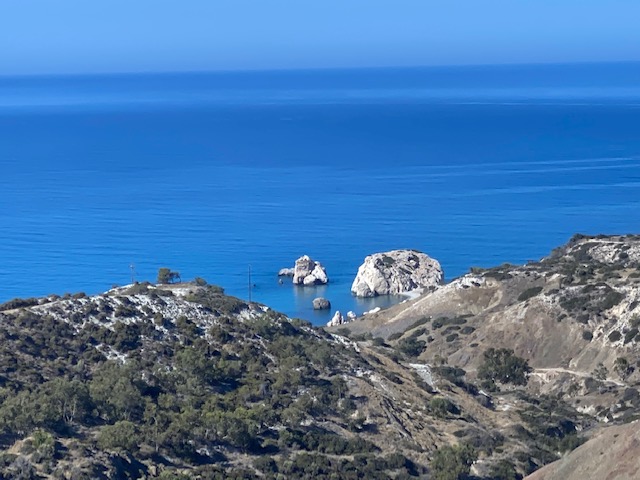
Driving along the coastline towards Paphos from Limassol, you will notice there is a beautiful rock laying in the sea. It’s not like any old rock that’s out in the water. When driving by it will catch your eye from a distance, or at least it did for me. Come to find out this beautiful rock structure is Petra tou Romiou, Rock of the Greek. It has had many different names, “Aphrodite’s Rock”, “Rock of the Roman” and even been known to be the lower half of Uranus. The rock is located in the birthplace of Aphrodite, the Goddess of love. Legend says that this birthplace is due to the foaminess of the sea as her name comes from “aphros” meaning sea-foam. The foam comes from the way that the rock catches the waves. The story of Uranus says that he was cut at the lower part of his body by his son Cronus and this rock is his lower half that Cronus has scattered into the sea. From the severed body a white foam began and Aphrodite was born. Some say that swimming near this area will bring you beauty.
From viewing out the window of our bus you would not have guessed such a pretty view would have such a great story and significance to the island history.
-
Sieving
You are going to have to get good at a game called “Is this a Rock or is this Pottery?”
You’re not going to be very good at it the first few buckets of dirt you sieve– and you will have to sieve. Whether you love it, hate it, or just accept the necessity of sieving, you’re going to have to prop up the legs of the sieve and shake a whole lot of dirt. It’s generally a two-person job: one person is the shaker and the other is the pourer. The frame of the sieve is wooden, and while there’s probably some duct tape for your hands, if you’re shaking I recommend wearing gloves. You’re going to get weird blisters in bizarre places anyway (mysterious calluses from cleaning pottery with a toothbrush, for example), so a little extra protection never hurts. One or two buckets of dirt freshly scooped from the trench are going to go right onto the mesh stretched across the frame. And then you shake. You’re going to get dirt on your face and in your eyes, so my second recommendation is sunglasses and a bandana. Pull that bandana right up to where your sunglasses meet on your nose, and shake. You’re going to shake a lot.
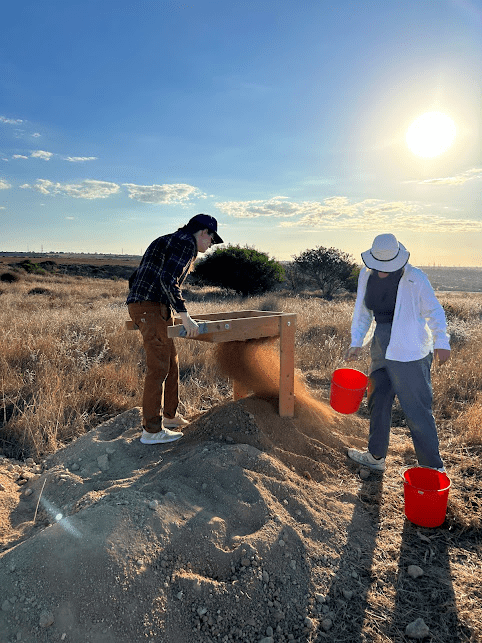
Dry Sieving And then the real part of the game begins. The finer particles have flown in your face and in a cloud away from you and chunks of plaster, dirt, mudbrick, and rocks will sit on the sieve. Take off your gloves for this part, because it’s easier to tell by feel what’s what. The big rocks will be obvious, and those get thrown out. Plaster will typically be white with hard edges and points where it’s been broken, or be a nice conglomerate of smaller stones clustered together. Mudbrick will be a soft and crumbling clump that falls apart easily in your hand. Keep your eyes peeled for small, round bluish stones about the size of a fingernail– these will look like coins, and every time you pick one up your heart will leap for a moment. But it’s just a rock.
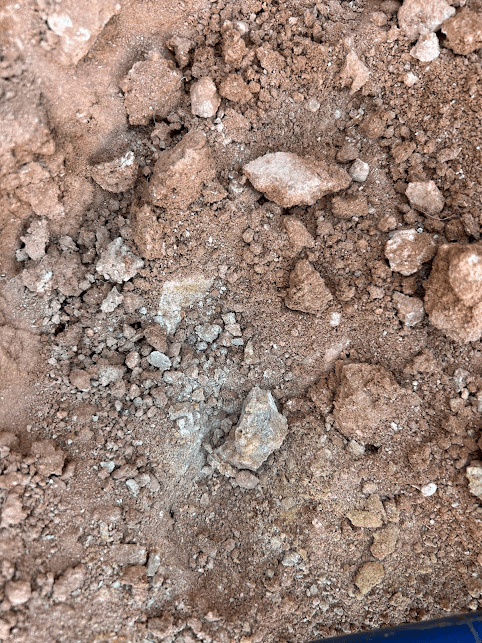
Two different colors of mudbrick. Notice the cluster in the bottom right corner– are those rocks, or are those potsherds? Pottery sherds, on the other hand, come in a few varieties. First, there’s diagnostic pottery. These sherds will be things like handles and rims, or, if you’re lucky, feet or bases. They’re called diagnostic because these pieces can be used to tell what kind of vessel you’re dealing with: a lamp, styles of cookwear, or great big amphora handles. Take a minute when you find an amphora handle to just enjoy holding it (nobody will mind if you pretend to be hefting up an amphora of oil or wine).
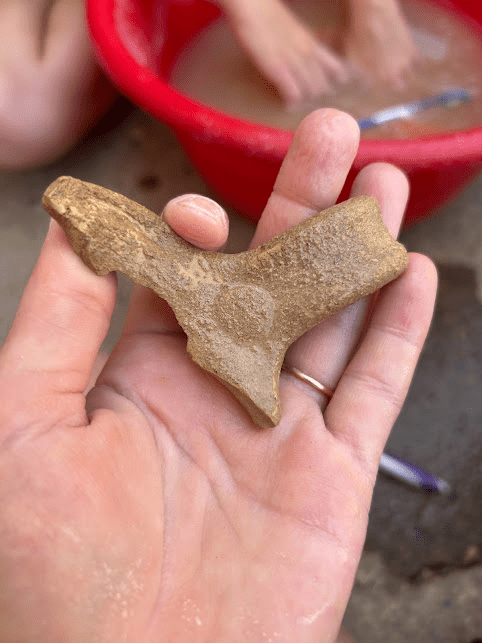
Diagnostic Pottery Then there’s non-diagnostic pottery, and these are all the other sherds that you’ll come across. The size of these sherds vary wildly. Some are the size of your hand and typically don’t even need to be sieved– you can just pluck those out and put them in the designated pottery bucket for your SU. Others are tiny, but typically anything smaller than a fingernail won’t be collected.
Thin sherds with visible fabric on at least one side are the easiest to spot. It’s the thicker coarsewear that requires skill in the Is this a Rock or is this Pottery. A nice chunk, maybe round, maybe not, will often be a dusty color that matches the dirt you’ve been sieving. You’ll pick it up and give it the once, and then twice, over, looking for telltale signs of pottery. Scrape a little of the dirt off what you think might be a broken end– do you see fabric below? Is the piece clearly curving in an intentional way? How heavy is it– is it lighter than you think a rock of that size should be? You’ll get the hang of it after a while.
But never, ever be afraid to ask your trench supervisor to double check your work. “Is this a rock?” was probably the most common question I asked my supervisor, at least a dozen times a day if I was doing a sieve-heavy dig day. With immense patience and a seemingly supernatural ability to discern rock from sherd, my supervisor would turn it in her hand, use her fingernail to give it a little scrape, and give the final prognosis.
Don’t be afraid to ask “is this weird?” or “is this something?” A lot of times it will be a rock. Maybe it will be an interesting rock, but still, alas, a rock. Sometimes, though, you’ll find a flaky piece of bone, a tiny perfect shell, a weird hunk of iron, or, if you’re very lucky, a small figurine.
As an MSU student on site, you won’t get the chance to try wet sieving, which is a specialized method of discovering floral or faunal remains. But by the end of your time on site, you will get really good at the game of Is this a Rock or is this Pottery?
–Miki H.
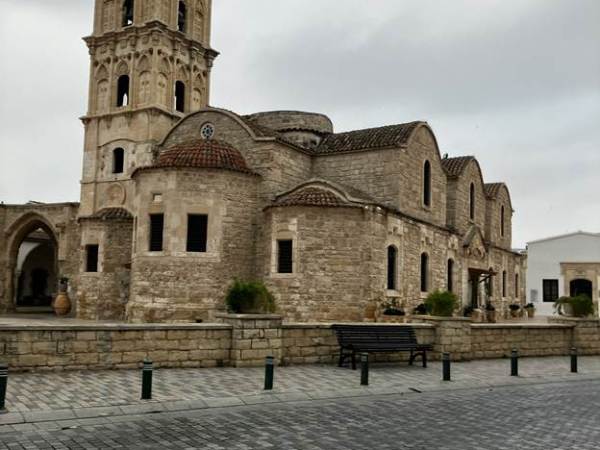
Study Abroad in Cyprus
By: Arthur Pino Coming to the Old World is a new experience for me. I can say that, besides the luxuries and brands similar to those in America, it is quite different. This land has been inhabited for at least 4,000 years, according to the sign outside the Agio Lazaros (The Church of St. Lazarus).…

House of Dionysus
By: Arthur Pino On a field trip, we went to Paphos, where we were able to visit a “World Heritage Site.” This would be the second opportunity I have had to see one in my life within the last year; the other was Chichen Itza in Mexico. It was a very hot day, and walking…

A Big Discovery!
By: Arthur Pino Today was another hard but rewarding day. It was the first time I had worked in the trenches three days in a row, and I felt it. This day, in particular, revolved around hands. My hands themselves, and an accessory for hands. As usual, I did not wear gloves to start…

