-
Study Abroad in Cyprus
By: Arthur Pino
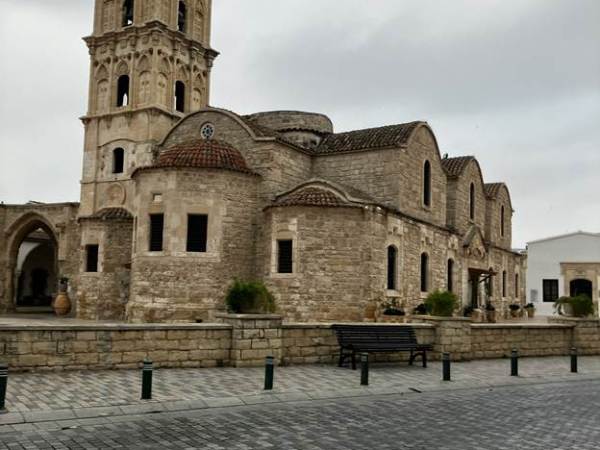
Coming to the Old World is a new experience for me. I can say that, besides the luxuries and brands similar to those in America, it is quite different. This land has been inhabited for at least 4,000 years, according to the sign outside the Agio Lazaros (The Church of St. Lazarus). My first experience occurred the morning after I arrived. The church opened at 6:30 AM, and I was there even slightly before. There was much more reverence than the masses in the States. A sign outside the door states that no shorts are allowed for men. I loved it, as it was a practice I had already followed and was prepared for. Unfamiliar with the chairs, I was hesitant to sit in any because they were so nice and different from the pews I was accustomed to. I took a seat near the back and observed.
The priest(s), the number changed from 1 to 6 throughout the service, chanted; the only word I was able to decipher was “Alleluia” (“praise the lord” / hallelujah). As Christians walked in, they each kissed the images that were displayed. Beautiful, ornate, gold images that I was afraid to touch. They kissed them. Images of the Holy Virgin Mary, Jesus Christ, St. Lazaros, and The Archangel Michael. If more than one of these were present within the depiction, both were kissed. I followed suit, appreciating each one in detail, then kissing them as the locals did. It felt like an honor; this was an incredible opportunity, and I had not even seen the tomb of the Saint yet. To the right of the altar was an entrance leading downstairs. Based on its appearance and my familiarity witho American notions of keeping out of places that do not seem intended for the public, I simply sat near it. Shortly after, a church worker approached me and instructed me to sit closer to the altar; I did. I noticed that a desk on the stairs of the altar was being leveled with various boo;s; it spoke volumes. While sitting, I was approached and asked if I wanted to go downstairs, and I was more than happy to. Here, I saw empty tombs, three if I recall correctly. Near one was the image of the Virgin Mary; I knelt down and said three “Hail Mary” prayers, and as I exited the area, I washed my hands with Holy Water. This is a place of worship dedicated to both St. Lazaros and Jesus Christ; the appearance was not important; the worship was. Again, I thought to myself, how lucky I am to be in this place, a place connected to a disciple of Our Lord and Savior, Jesus.
The church began to fill, not with tourists, but with elderly men and women participating in Sunday Mass. A man walked in shortly after, wearing shorts, a T-shirt, and sandals, accompanied by his son. Obviously, I had mistaken this man for a tourist, but in fact, he was a priest, who put on a robe and started chanting while his son played in the background. Eventually, the Father of the church came out from behind the golden altar. Holding a Bible, he stood as we all approached, first the men, then the women, and kissed the Bible. Some kissed the Father’s hand as well. Christianity is important to this town, and it was important for me to be here for this reason. America does not practice the same reverence; it is actually the opposite, where Christianity and its practices are often ridiculed, dismissed, and even blamed for various aspects of society. Americans speak of Christianity, particularly Catholicism, in a negative light by most. When asking someone from America not to use the name of Jesus in vain, which is quite common amongst Americans, you can expect to be guffawed at or told simply they don’t care.
In America, we are very privileged; we do not have the problems these people face; most of our problems are self-invented “first world problems,” forgetting that many people in the world do not have much more than their religion. This city is predominantly Christian, and and most businesses have an altar behind the register, similar to the predominantly Spanish-speaking areas of Denver. This would not be done in the United States. It would likely have the opposite effect than intended. In short, it just feels good to be in a place so different in regards to religion.
Additionally, the significance it holds for my religion is deeply meaningful to me. Not only was this one of the places where the Gospel was first spread, but it also holds significance in the importance of the Crusades, which were battles fought in the name of Christianity. Things impossible to find in the New World.

-
House of Dionysus
By: Arthur Pino
On a field trip, we went to Paphos, where we were able to visit a “World Heritage Site.” This would be the second opportunity I have had to see one in my life within the last year; the other was Chichen Itza in Mexico. It was a very hot day, and walking through the initial ruins and the first building was quite tricky, especially considering the lack of shade. I reached recluse in the House of Dionysus, and it was likely one of the most historically significant finds I have been witness to. The mosaic flooring that has been preserved over so many years was incredible to lay my eyes on.
The depictions of animals, people, and intricate patterns amazed me. There were images of hogs, bears, leopards, dogs (with collars), and various other animals that caused me to wonder how they accomplished this so long ago with such detail. They also had depictions of gods and goddesses. As I walked through the building’s lanes, each section became more impressive than the last. At the end, opposite the entrance, was the largest and most amazing section. A large, preserved area featuring various symbols is incorporated into the design. Among the symbols, it was interesting to see a star of David, as well as an ancient Swastika. I wondered about the significance of this area, what the meaning behind having all these symbols next to each other was, and what they represented. Possibly a roll call or depiction of the various groups conquered and under the governance of those that made these.
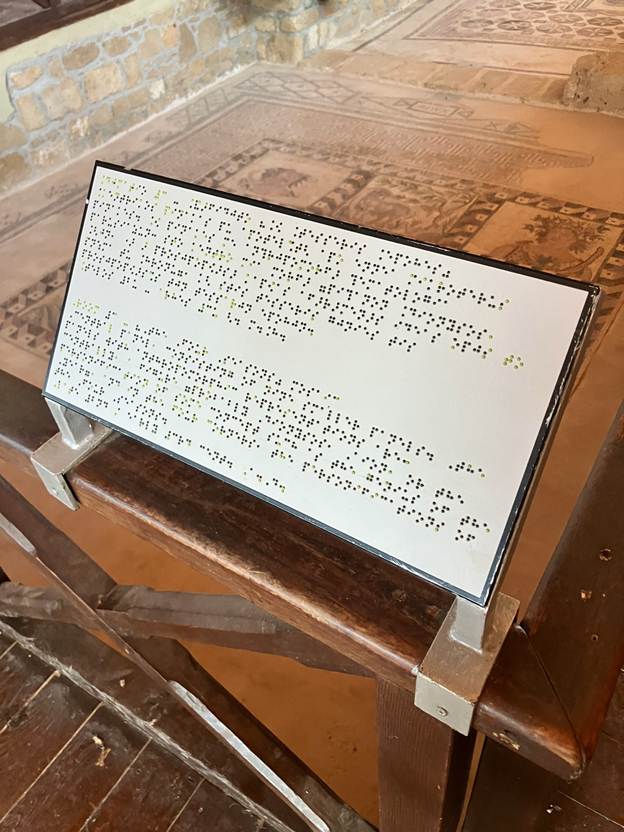
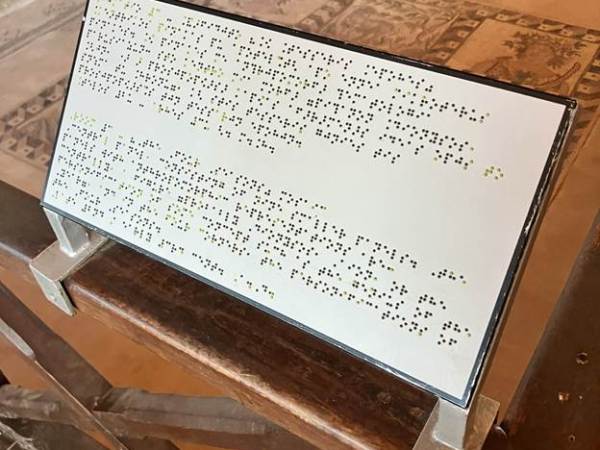
The most fascinating and meaningful thing I had seen in this building was not from the times of the ancient Romans or Greeks; it was a modern fixture that I had yet to see in Cyprus. Each section was accompanied by an explanation of its focus. However, next to that was a translation in braille. This was meaningful to me because my fiancé is blind and has no vision whatsoever. It allowed me the possibility of bringing her to Cyprus one day and having her enjoy each exhibit, something not common in America, despite the Americans with Disabilities Act being signed by George H.W. Bush in 1990. This would allow her to experience this with me. History is a highly visual field, particularly when it comes to artifacts and relics that lack writing or are inaccessible due to their fragile nature. Seeing these braille translations made my day; I immediately informed her, and she sounded just as impressed as I due to the rarity of it.
This, combined with the pure entertainment provided by the flooring itself, made this an extremely enjoyable field trip. Not only was I able to experience the history behind this, but I also saw something in this realm of artifacts for the first time. I was able to envision myself discovering the findings due to our experience in the field at the site. I know what they had to do to carefully discover and preserve these floors. Additionally, I was comforted by the thought that one day, I may be able to enjoy these with someone extremely important to me, who does not often get the chance to experience such remarkable and historically significant findings.
-
A Big Discovery!
By: Arthur Pino
Today was another hard but rewarding day. It was the first time I had worked in the trenches three days in a row, and I felt it. This day, in particular, revolved around hands. My hands themselves, and an accessory for hands.
As usual, I did not wear gloves to start with. However, over the last three days, my hands had become sore, calloused, and raw. With every scoop, every swing of the ax, every bucket lifted and emptied, my hand felt incredibly sore to the touch. Halfway through the first half of the morning, I cut my finger, and every time I hit a rock with my scoop, my hand slid forward, coming into contact with the tool and touching the open sore; it hurt quite a bit. After our morning lunch, I got some gloves, which helped tremendously. No longer did I feel pain with every touch; it was a relief, to say the least, even though I do not prefer to wear gloves. Although, my hands appreciated the assistance they provided. After all the swinging, scooping, and bucket carrying, and only one bucket remained, I made an incredible find.
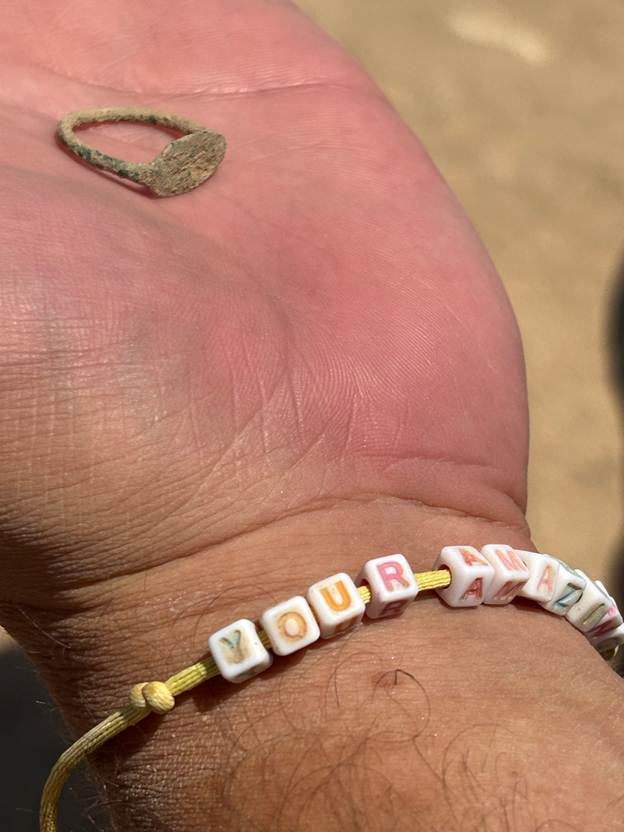
As the day drew to a close, we began cleaning the area, gathering tools, and sifting through the remaining buckets of dirt. In the last bucket, Hoyt and Brandon discovered a sling bullet, which turned out to be in great condition after some washing. As Hoyt ran with his find, Brandon and I finished the last bucket. That is when I saw, clear as day, a circular shape distinct from anything I had seen yet. I grabbed it, confirming that it was what I thought it could have been—a ring. I took my glove off, asked Brandon if I could put it on, and, with approval, proceeded to wear this day’s amazing find on my pinky finger. Both of the Brandon’s and Tom approached quickly, once again confirming this was a Hellenistic Age ring. The ring was not damaged and was in its complete state, including a bezel. They were unable to confirm whether there was engraving on the ring or if this bezel was meant to hold a jewel of some sort, but it was packed and ready to be cleaned properly. My inquiries began immediately.
Due to her ability to date and analyze the figurine head I had found earlier in the week, I went to Prof. Mel. She confirmed it was from the Hellenistic Age. Additionally, I asked whether ring-wearing was common among everyone or more fitting for those in positions of power, and she confirmed the latter. After hearing this, my immediate thought was of the photograph of the would-be president, Bill Clinton, shaking the then-president JFK’s hand, a meaningful and impactful moment in President Clinton’s life. I had worn the ring of someone who was likely a person of prestige and position; it felt amazing. When I got to the hotel, I researched a little information about Hellenistic rings. The article titled Hellenistic Jewelry in the “The Met” (short for Metropolitan Museum of Art) Magazine, authored by Collette and Sean Hemingway, informed me that typically, jewelry was passed down generationally, adding to the already present prestige I had felt.
On the car ride back to the hotel, I was ecstatic. Brandon, my trench director, had remarked that I was on a roll and wondered what could be the reason behind it. He stated that I had made as many significant discoveries as whole teams have, which felt great. What felt better was that another person in the van had the same instinct I had, and the reason for this may lie in the fact that I have been attending church services every week at Agio Lazaros’ Church. I genuinely believe that. Maybe it will encourage others to do so, and if that happens, I find that even more amazing than all of the discoveries I have made in the trench. As I said, this day and trip have been incredibly rewarding and fruitful. I wonder what the next “Arthurian discovery” will be, and if there are no more, I am grateful for all I have found.
-
Lefkara
By: Arthur Pino
Today, July 7, 2025, marks the last Monday I will be spending in Cyprus. The day’s agenda included a field trip to a small village that I cannot name, as well as another village called Lefkara. It was quite the experience and included many things I did not expect.
We arrived at a small village that offered a unique experience, featuring demonstrations of both cheese-making and basket weaving. The host was very welcoming and proud of his establishment and practice. He informed us that in the previous weeks, the Dutch Crown had visited them, and I was delighted to be informed we were getting the same experience as royalty. First, he showed us the process of basket making in detail, describing the materials used, the fact that they are locally sourced (minus the dye), and the method. These baskets he made also played a role in the cheese-making process, which he demonstrated for us next.
The process of making two different kinds of cheese was an interesting experience. He had explained to us how to make halloumi and another ricotta-like cheese, anari. Both used his goat’s milk to make, as well as a protein derived from vegetables. Others, he explained, used a product obtained from non-vegetarian sources. Still, he used this specific one so that his cheese could be enjoyed by those with dietary restrictions, religious or otherwise. While we were unable to see the entire process due to the time required, he did explain the steps of the days-long lengthy process. My favorite part was sampling these cheeses, accompanied by a spread of other foods, including salamis, vegetables, and bread. The halloumi, seasoned with salt and both dried and fresh mint, was amazing and obviously extremely fresh. It paired well with all the foods, tomatoes, cucumbers, and olives. My favorite item we were able to taste was the anari cheese. Served as a dessert with honey and cinnamon sprinkled on it, it tasted very similar to horchata or Mexican sweet rice, which I grew up eating. After the light brunch, we left and headed to Lefkara.
Once we arrived in the village, I came across a small shop selling silver and lace, the specialties of the village. What attracted me to this shop were these silver donkey statues. Once inside, I was greeted by a woman who spoke perfect English; due. Due to her accent, I inquired about her origins, and she informed me that she was half-Cypriot and half-English and had been operating this business for thirty years. An old picture in the cases confirmed this. To be honest, this comforted me in making the purchase from her. I informed her that I was looking for a necklace with a cross. She had helped me find one and even offered to find a longer necklace that would fit me, which took some time, but we did find one. She assisted me in trying them on, which I appreciated. I concluded the interaction by asking her for directions to the church, which Prof. Mel had informed me was in the town. I had not known of the important relic this church held, but nonetheless, I wanted to go to see if a priest was available to bless my new necklace.
On the walk, I felt a little lost, and I asked the men standing outside a business for some assistance. “Donde esta es iglesia?” I don’t know why I asked in Spanish. Even more surprisingly, they responded in Spanish and pointed me in the right direction. Once I arrived, since I was wearing shorts, I grabbed one of the skirts available to visitors who were not dressed appropriately. There was no staff present except for an old woman near the front who did not speak a lick of English. However, I was familiar with the process due to my visits to Agios Lazaros in Larnaca. Similarly, this church had amazing icons on display. I approached each, bent my knee, performed the cross, and, as Orthodox Christians do, I lightly kissed each icon. It felt appropriate and genuinely endearing to the people depicted in these images. At the back wall, there was a small room, distinct from the rest of the wall. As I got closer, I saw it was a cross icon depicting Jesus in the center; I repeated what I had done with the other icons. As I exited the church, I saw a sign to the left of the entrance that provided tourists with a description of the church and its contents. I was extremely pleased to discover, however unlikely it may be, that the cross at the back of the church had contained a piece of what was said to be a tile that Jesus himself had stepped on, in addition to a piece of the Holy Cross. Despite everything, such as the idiom that there are enough claimed pieces of the cross to have made it in multitudes, it was amazing to think of the possibilities. I was happy I had gone in unaware of this and had paid respects regardless. It was now time to begin walking back to the bus, although I didn’t really want to. I could no longer stand the heat and just wanted to be as close as possible when the time came.
On my way back, I got a little lost, but I was able to enjoy the scenic route through this beautiful village, something I had only seen in movies. I wondered to myself what it was like to live in such a place. As I contemplated, I stopped in a small shop and had one of the most delicious lemonades in my life. I had a conversation with the owner, who happened to be half-South African and also spoke perfect English. He was happy to hear I was from America and wanted to discuss US politics, which was interesting but enjoyable. This conversation had caused me to lose track of time and had taken up the time allotted; it was 1:39 PM. Time to go; I finished my lemonade, thanked him, took the card he offered me, and made my way to the bus.

-
Last Thursday
By: Arthur Pino
Today is the last Thursday I will be spending in Cyprus; I cannot wait to be home to my family. This trip was incredible in so many ways. It brought me closer to my family, my friends, myself, my country, and my religion. What more can a person ask for in anything they do?
This was the first time in my life I have been this far from my family, especially my kids, and especially for this long. It allowed me to grow faith in my family and my children’s mother. I was always so stressed about anything happening and me not being able to be in a position to fix it. Being six-thousand miles away, there was nothing I could do. However, my kids stayed safe, nothing bad happened, and everything worked out for me and them. This will allow me to relax home and abroad in the future. It eased my mind and grew my heart, and I owe it to being here.
While being here I have spent quite a bit of time alone. This, combined with the ability to think to myself has allowed quite a bit of self-reflection. Most importantly, it has allowed me to consider that my friends are extremely important to me, because they have been friends to me, as me. Not everyone will be your friend, and that’s okay.
As stated above it has also brought me closer to my country. America has flaws, politically, nutritionally, societal issues, and the list goes on. But it also has all of my favorite things; politically, nutritionally, and societal. While yes, the Mediterranean food is better here, by leagues, everything else is better in America. I cannot wait to get home and eat a burger from Jim’s Burger Haven, Five Guys, or Grandpa’s Burger Haven, I cannot decide which yet. Then there’s Mexican food. Being Mexican and not having had any of their cuisine for a month now has been the worst challenge. In addition to the complete lack of spicy food here. I miss driving even, something I loathed doing in America. Not being able to drive anywhere has left a hole in my heart that only Denver traffic will fill, I am kidding, sort of. Most of all I miss the Rocky Mountains. We are truly blessed to have such a landscape in Denver. Makes me appreciate the efforts of my ancestors coming from Spain.
Speaking of my ancestors, this trip brought me closer to their religion, my religion, Christianity. When bored, I take walks to the Holy Church of Saint Lazaros, sometimes its open, sometimes its not. But regardless, I bask in its beauty, inside or out, and pray. Seeing a whole community with such reverence for our shared religion has been truly meaningful to me. I really think going to the church so often has been the source of my finds at the site. I genuinely came with no expectation of finding anything, besides pottery of course. I have horrible luck, I can’t even find my keys most days. However, here I have found what I can only describe as buried treasures. A ring, a figurine head, a spear head, a coin, a sling bullet, I know there are more, but I cannot recall. All more than two-thousand years old, waiting there for me to come across them. Would I have found them without going to the church so often, maybe, maybe not. But being in the land where St. Lazaros, The Virgin Mary, and St. Helena, who I have learned is the patron saint of archaeology, has been awe inspiring.
I have many people to thank for everything that has taken place here. My mother and the mother of my children for making sure my kids were taken care of while here and being there when needing someone to talk to. Professor Justin Stephens for inviting me, the information he has taught me that I have used here and at home and guidance he has given me on and before the trip. Professor Brandon Olson for his part in discovering this site and making all this happen. Professor Brandon Baker for being the trench supervisor, teaching me all I have learned in the field, and his patience with me and my jokes. I also have God to thank for everything as always, as well as keeping everyone safe while here, and all my finds. The artifacts discovered this month will one day be displayed in a museum, and that alone is a dream come true for any student of history.
-
Lafkara and Lace
By: Douglas Pearce
Nestled at the southern foot of the Troodos Mountains in Cyprus, Pano Lafkara is a small, charming village with cobbled limestone streets, red clay roof tiles, and a history dating back to the 14th century. The town derives its name from the Greek words for “white, “Lefka,” and “mountain, “ori,” due to the white silica and limestone hills that characterize the surrounding landscape. The village of Lefkara is so cozy and quaint it could easily be known for its preservation of old-world Cypriot charm. However, that is not what drives thousands of tourists there each year. Lefkara is primarily known worldwide for one thing: lace. While silver filigree work is also something the town is known for, it is a distant second in importance.
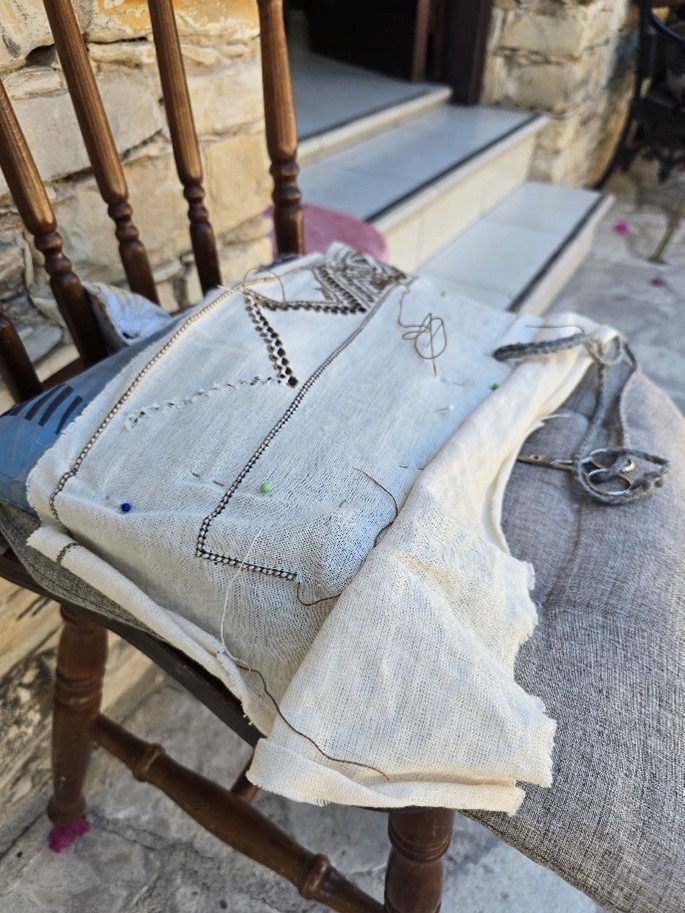
The town is filled with shops offering lace and silver; From the moment you get off the bus and walk down the narrow, cobbled streets, you will be inundated with offerings of both. The more high-end shops require just a bit more walking than the touristy ones near the bus stop, but it’s well worth the extra steps. Near the heart of town lies Rouvis Lace and Silver. Themis Rouvis operates this shop alongside his parents, who have made it what it is today. Themis’ mother, Viola, can still be seen most days seated out in front of their shop, doing the needlework that she inherited from her mother and grandmother. The Rouvis family is always pleased to show guests around their store while explaining the history and process of lacemaking and silversmithing.
Lacemaking in Cyprus dates to at least the 15th century, when Venetian influence brought the practice to the island. Tradition holds that in 1481, Leonardo da Vinci visited Lefkara and purchased a lace cloth to bring back with him, which now decorates the main altar of the Duomo di Milano. While lacework did become popular in most of the small villages of Cyprus, Lefkara was by far the most associated with the craft. In 1889, a local lace school was established, which once again made Pano Lefkara lace renowned.
Lefkara’s signature design can be seen on the tablecloth of The Last Supper painting, as well as in the mosaics of the bathhouse at Kourion. The defining characteristics of Lefkaritika include hemstitch, satin stitch fillings, needlepoint edgings, and intricate geometric patterns, as well as colors such as white, brown, and ecru. The quality of Lefkaritika is attributed to its competitive origins. When money was scarce, dowry sometimes came in the form of lace. Women were expected to have several clothes to present to their husbands. This expectation challenged women to produce high-quality lace that would stand apart from the others.
A tourism boom in Cyprus in the mid-20th century brought many foreigners seeking out the fine Lefkara lace. To satisfy this demand, young women were recruited from small villages on the island to train in the production of Lefkaritika articles. Until recently, groups of women could be viewed sitting in the narrow village streets working on their fine embroidery, just as they had for centuries. Today, the Lefkaritika tradition is in danger of extinction. The fine lacework is very time-consuming. For example, a small piece of less than one square foot can take two or three days to produce. As the women are paid by the unit, not per hour, it is simply not a profitable endeavor. According to Themis, the days of authentic Lefkara lace are numbered and will likely die off within a decade.
Only a small fraction of the lace sold today is handmade, with most being produced on machines. To meet the demand of tourists, Themis and others are actively seeking out and purchasing vintage Lefkaritika for resale. This is why Lefkaritika was added to the UNESCO Representative List of Intangible Cultural Heritage of Humanity in 2009. As Lafkara is only a 24-mile drive from Larnaca, it is a must-see destination for anyone visiting the island of Cyprus. Do not miss an opportunity to experience this lovely town with its rich traditions.
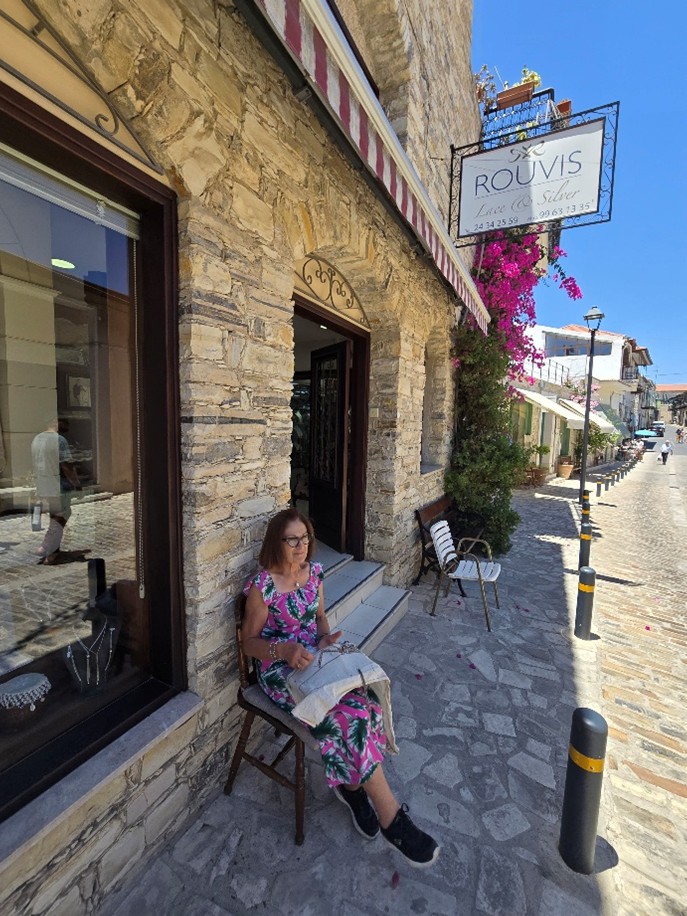
Viola in front of the family store
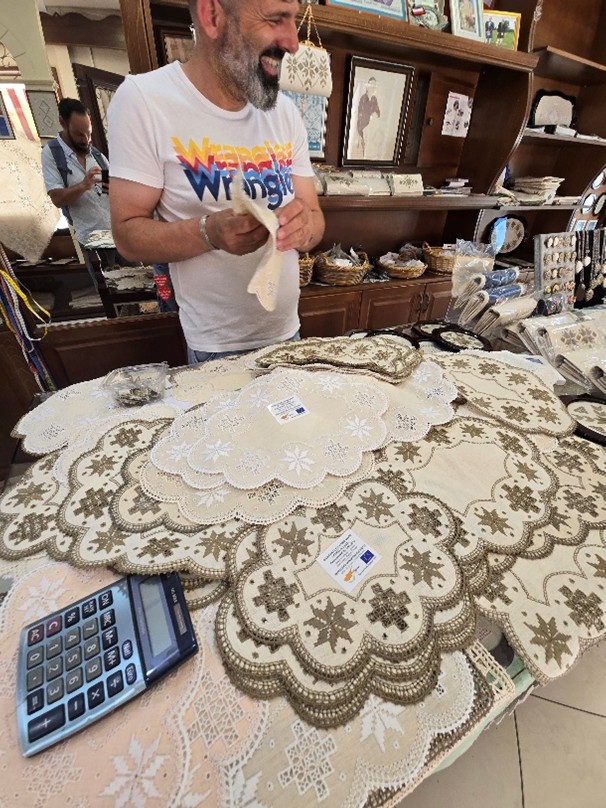
Themis explaining the process
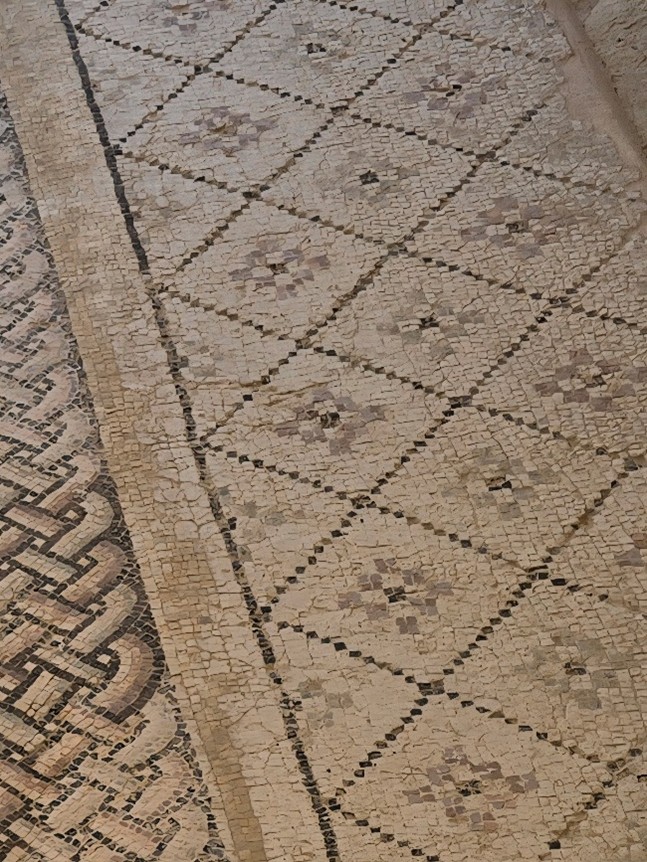
Lefkaritika signature pattern seen on mosaic at Kourion
-
Eating on a budget in Cyprus
By: Douglas Pearce
Eating out in Cyprus is an enjoyable experience, but it can add up throughout a month-long visit. I have compiled some of the ways I was able to keep costs down while still maintaining a regional culinary experience. Here’s a brief list of where to shop, what to buy, and how to prepare it.
Where to shop:
Mini markets are plentiful on the island, especially in the cities. They offer a limited selection of food and beverage options, which is suitable for a few items, although they provide little in the way of fresh food. Their convenience also comes with a markup that is proportional to their proximity to tourist attractions and the beach.
Grocery stores are also numerous in Larnaca. They offer a wider selection of products and fresh food at a lower cost than at minimarkets. Some even offer home goods, which is a better option for items like beach towels and clothes. Many bakeries offer a variety of different loaves and will slice them for you. They also offer butchery in-house, which is a great alternative to specialty shops. A wide variety of meat cuts are available for purchase, some of which are even pre-seasoned. There is one very large concern with the meat department, however: sanitation. On multiple occasions, I witnessed cross-contamination between chicken and pork products. For this reason, I would urge you to use extreme caution and thoroughly cook any meats purchased there.
Butcher shops are also scattered throughout the city, offering a wider range of fresh meat than the chain grocery stores. They also seem to be more knowledgeable about proper food handling and sanitation practices.
Produce stands and fruit trucks are a great way to experience fresh fruits and vegetables. They may be slightly more expensive than grocery stores, but the freshness of the produce makes it a must-try at least once during your visit. Additionally, the colorful stacks of produce are visually pleasing.
Juice shops are a relatively inexpensive splurge and worth trying after a long day in the heat. The fruit is cut and blended right before your eyes, and the flavor is incredible.
Spoilage is a real issue. Because of the hot and humid climate, food spoils much faster than in Colorado’s arid climate. Most foods in other countries are not as processed as in the US and don’t contain preservatives; This is another reason food will spoil much faster. Bread left out at room temperature will begin to mold after just a few days. However, the solution is straightforward – simply buy a few days’ worth of food and make additional trips to the store.
Simple cooking:
Even if your apartment has limited cooking devices, great meals can still be quickly and easily prepared. I have listed some of the ways I was able to work around cooking with an oven or stovetop. If your room has any combination of a microwave, electric kettle, or grill, then cooking delicious meals is easy.
Hot water kettles are perfect for coffee and tea. If you’re bougie like me and can’t do instant coffee, a French press can be purchased for around € 10. They are also great for quick meals, such as ramen noodles. Pasta is a bit trickier, but can be accomplished with a little effort. Simply pour boiling water over the noodles, cover them, and then microwave until tender. This also works with traditional ramen bricks.
Griddles are my new favorite multitasking kitchen appliance. I was able to do so much with this little wonder that I had never thought of before. Here’s a list of my favorites:
Meats: Pork chops, chicken and pork kebabs, chicken wings, chicken breasts, sausages, steak, etc. If it’s not too thick, any type of meat can be grilled to perfection. Seafood cooks perfectly on a griddle, but it’s not advisable if you’re sharing a room with others. The smell may linger much longer than a good favor with your roomies.
Vegetables: Potatoes, zucchini squash, eggplant, carrots, spinach, peppers, mushrooms, tomatoes, cabbage, etc. Dense vegetables, such as carrots and potatoes, should be cut thinner and grilled at a lower temperature to cook thoroughly and avoid burning. More delicate vegetables, such as eggplant and squash, can be cooked at higher temperatures to achieve nice grill marks and prevent them from becoming soggy. Potatoes were one of my favorite foods to cook on the griddle. Cut longways into ¾” sections, butter and salt, then griddle slowly to perfection.
Sandwiches are a no-brainer since that’s what these griddles are intended to cook. I mostly made sandwiches with salami, mortadella, and cheese, accompanied by some type of spread, giardiniera, and fresh chiles. Sandwiches are a very personal matter, though, so any combination of meat and cheese will suffice. I recommend adding a spread, such as basil pesto, olive tapenade, or giardiniera, which will add extra flavor to the sandwiches. There are numerous cheeses to experiment with, and nearly all will work beautifully – except haloumi, which has a high melting point. Fresh veggies are also a great addition to any grilled sandwich.
Microwave: Not my favorite cooking option, but good for reheating things.
Hopefully, this will prove helpful when considering your options for eating well while also spending wisely.
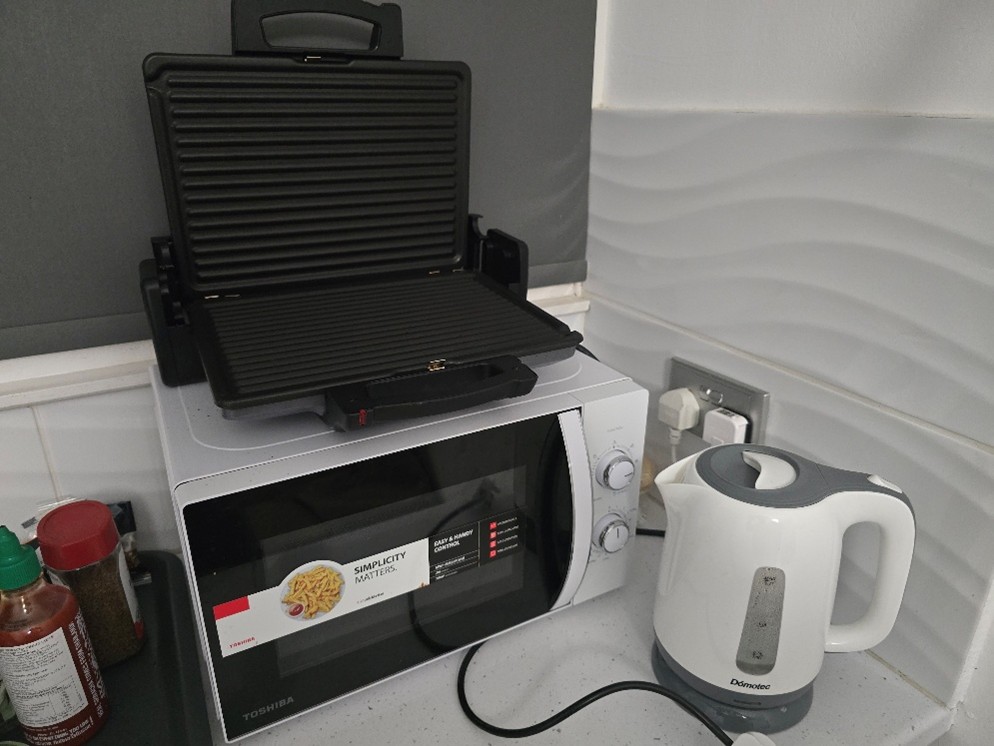
The holy trinity of apartment cooking
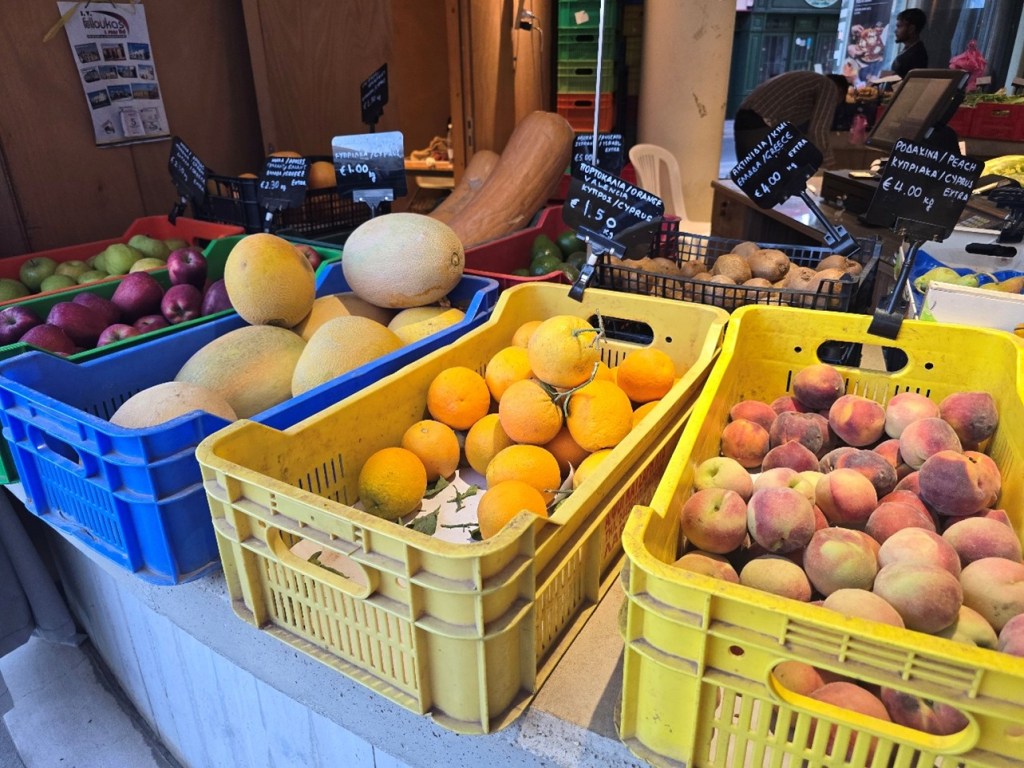
Produce stands are scattered throughout the city.
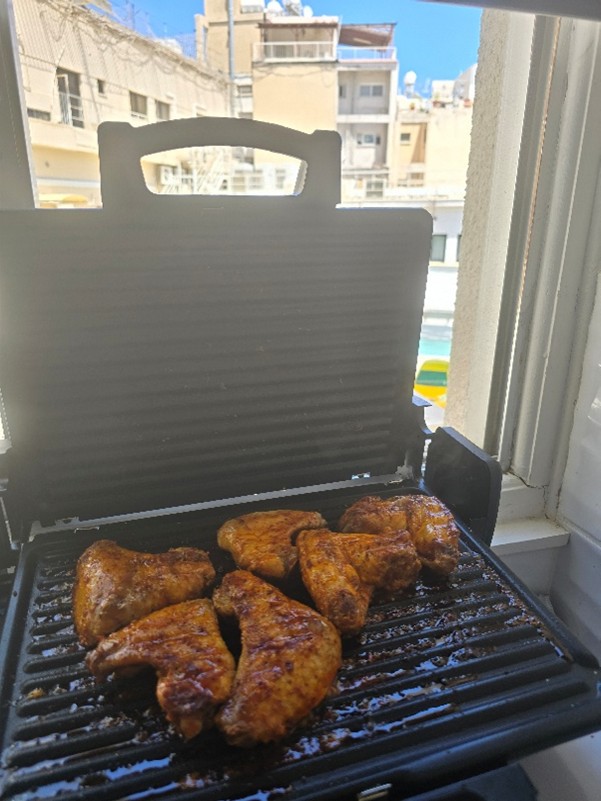
Yes, chicken wings!!
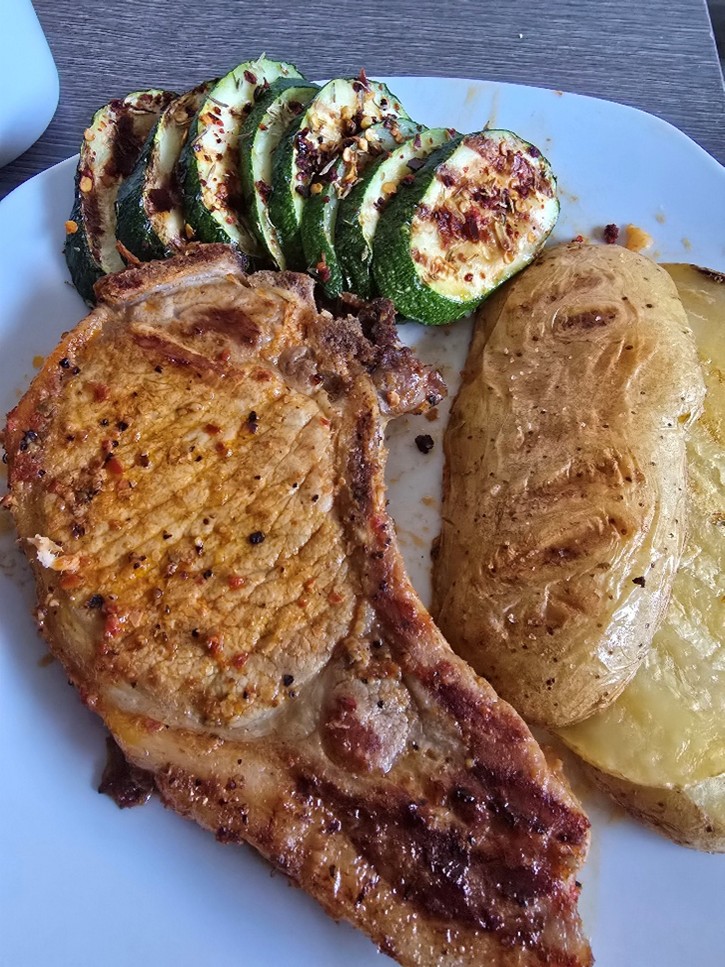
Griddle gourmet
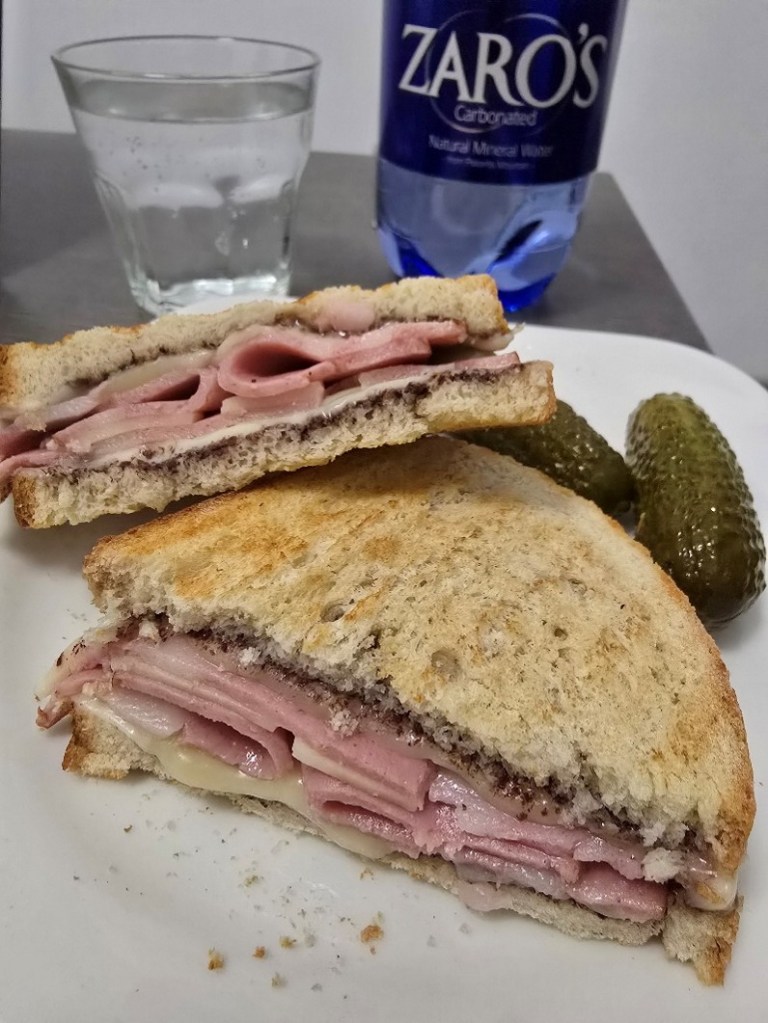
Panini with Mortadella, Edam cheese, olive tapenade
-
Hala Sultan Tekke
By: Douglas Pearce
If you’re looking for a unique experience to fill a free day in Cyprus and want to visit a mosque, Hala Sultan Tekke is the perfect destination. Located on the west bank of Larnaca Salt Lake, it is about 6 kilometers west of central Larnaca. The Mosque has great significance in Islam, and it is a nice walk that offers other points of interest along the way.
Hala Sultan Tekke (also known as the Mosque of Umm Haram) is an Islamic worship place located on the bank of the Larnaca Salt Lake, built during the Ottoman period. Hala Sultan is the Turkish equivalent of Umm Haram, and a tekke is a monastery of dervishes, especially in Ottoman Turkey.
Hala Sultan Tekke is not just the most significant mosque for Muslims in Cyprus; it has also been called the third-holiest place in Islam, outside of Mecca. This distinction is due to Umm Haram, known as Hala Sultan in Turkish tradition. She was the wife of Ubada bin al-Samit, one of Muhammad’s companions. She was also a foster sister of Muhammad’s mother, Amina, and Muhammad often visited their house. Her brothers, Haram bin Milhan and Sulaym bin Milhan, participated in the Battle of Badr and Uhud, where she served as one of the wartime nurses who cared for wounded soldiers during the battles of Uhud and Hunayn. She was married to ‘Ubadah ibn al-Samit, a companion of Muhammad, who was one of the first Ansari men to take part in the Pledge of al-Aqabah. She was one of the Muslims during the Cyprus expedition, when she sailed on the sea under Mu’awiya in the caliphate of Uthman (r. 644–656. According to accounts, Umm Haram had fallen from her mule and had died during a siege of Larnaca. She was later buried where she died. According to Shia belief, her grave lies within Jannatul Baqi cemetery in Madinah, Saudi Arabia.
Most accounts establish a connection between the site and the death of Umm Haram during the first Arab conquest of Cyprus under the Caliph Muawiyah, between 647 and 649, which was later pursued throughout the Umayyad and Abbasid periods. During the Ottoman administration of Cyprus, a mosque complex was built in stages around the tomb. In another account, Giovanni Mariti, who visited Cyprus between 1760 and 1767, wrote that the Cyprus governor built the shrine he names as Ali Agha. According to Mariti, until 1760, they used the stones from a standing church in a nearby ruined village as construction materials. According to another source, the construction of the mosque was initiated by the Cyprus governor, in the classical Ottoman style, and it was completed in November 1817.
The entry gate to the Tekke garden displays an Ottoman inscription from March 4, 1813. The inscription reads: “Hala Sultan Tekke was built by God’s beloved, the great Ottoman governor of Cyprus.” The garden was designed by a “pasha,” which is a high-ranking official in the Ottoman military and political system, such as a general or governor. Thus, it came to be known as “Pasha garden”. The grounds also contain buildings that served as guesthouses for both men and women. It was a custom for visitors to take the oath of dedication to serve the Hala Sultan Tekke, promising to fulfill their wishes.
There is a courtyard with an ablution area, where cats will gather for water and food. Dozens of cats roam freely, and the people at the mosque ensure that they are well cared for.
The mosque was constructed in a square shape with yellow stone blocks. The mosque features a single minaret, which was repaired in 1959. Upon entering the prayer area, visitors are met with a simple yet elegant space. The rugs are burgundy with tan leaves that match the stone of the building, and the wooden fixtures are painted green. Opposite the mosque, there is an octagonal fountain, which was built around 1796-1797 by the governor of Cyprus, Silahtar Kaptanbaşı Mustafa Agha.
Umm Haram’s tomb is located behind the mosque wall of the qibla (in the direction of Mecca). A further inscription dated 1760 is found here. Aside from her, there are four other tombs, two of them former sheikhs. Another important tomb is a two-level marble sarcophagus, carrying the date 12 July 1929. The tomb belongs to Adile Hüseyin Ali, the Turkish wife of and a member of the Hashemite House, himself a grandson of the Ottoman grand vizier Koca Mustafa Reşid Pasha and a descendant of Muhammad. At the eastern corner of the mosque and the Tekke, a cemetery is located, which was closed to burials around 1899. Several past Turkish administrators are buried here.
While Hala Suktan Tekke is acknowledged as a holy site for Turkish Cypriot Muslims, contemporary sources have also described the mosque as revered by all Muslims. As a result of the site being in the Greek non-Muslim sector of the divided island, pilgrimage visits to the site are infrequent.
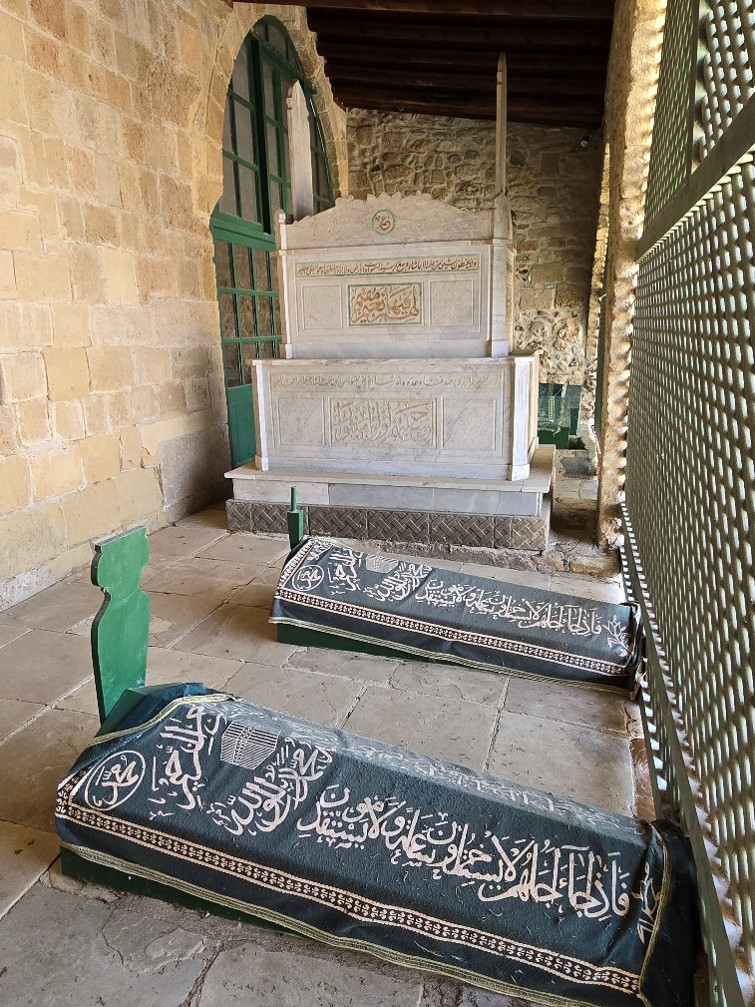
Umm Haram’s tomb
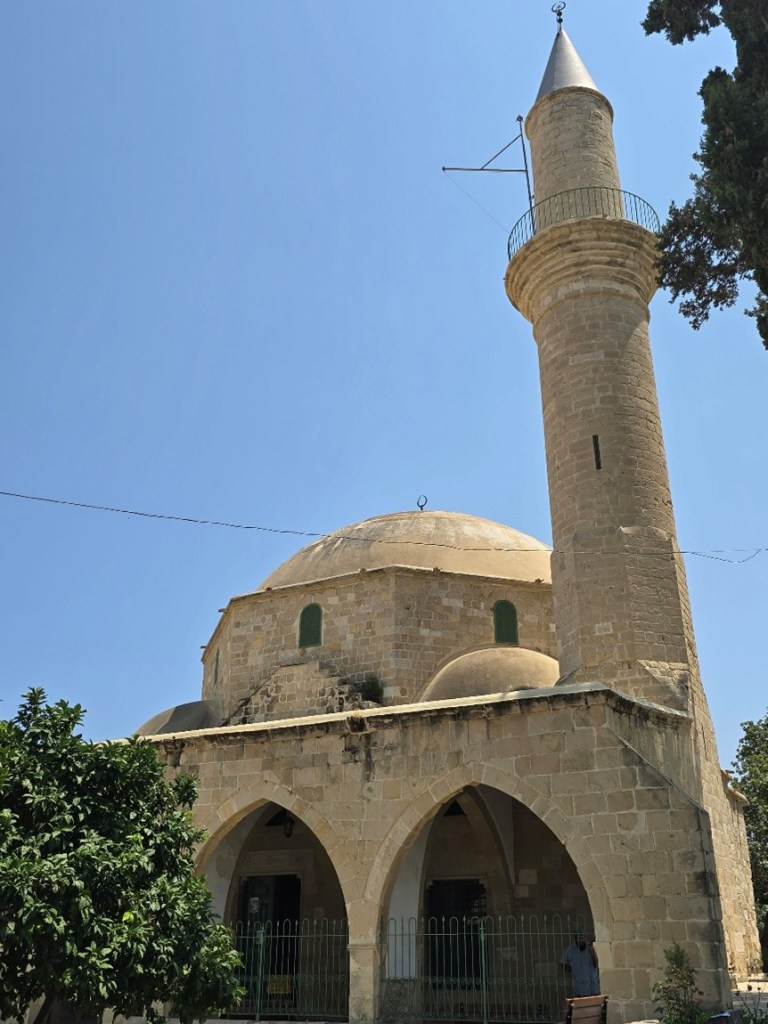
View from inside mosque walls.

More tombs
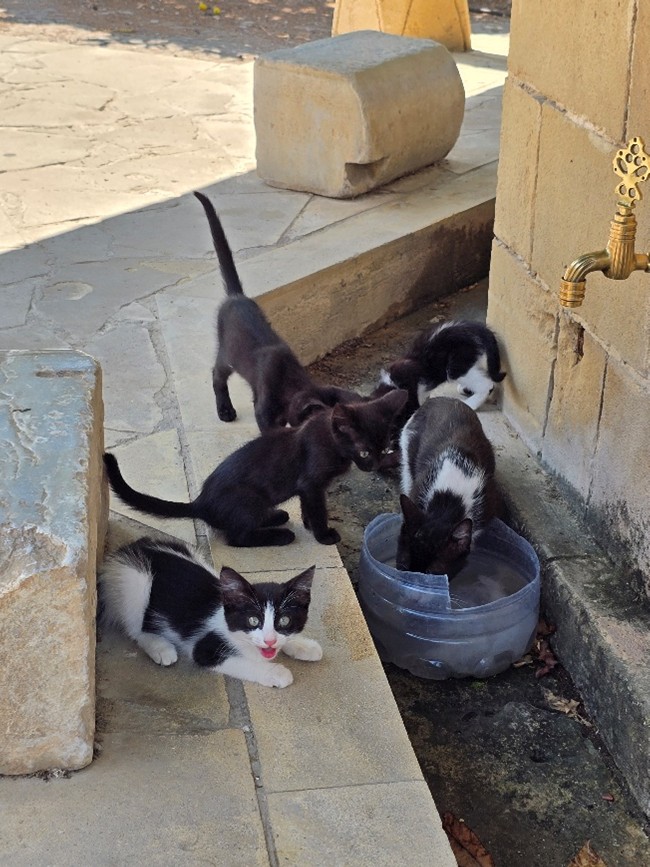
Some of the many mosque cats

Cemetery behind the mosque
-
Cats of Cyprus: History and Legend
By: Douglas Pearce
Cats will greet visitors to the island of Cyprus within a short order of their arrival, as cats outnumber people on Cyprus by a ratio of nearly 2:1. An estimated 2 million cats inhabit the island. In contrast, only 1.3 million people call Cyprus home. The felines can be seen everywhere in the cities and towns throughout the island: lounging on walls, taking up residence at places of worship, begging at restaurants, scrounging for food, or just doing typical cat things.
But how and when did domesticated cats first arrive in Cyprus?
It has been speculated that cat domestication in the Levant region began around 10,000 years ago. It is believed that this occurred around the time humans began forming permanent settlements in the region, adopting an agricultural lifestyle. With an abundance of stored grain came rodents, which in turn, attracted wild cats. The benefit of cats’ natural rodent control made their presence desirable to humans. Over time, cats and humans developed a symbiotic relationship that greatly benefited both.
A Neolithic excavation at Shillourokambos, near Khirokitia, in 2004 revealed a cat buried with a human. The proximity in burial suggests a deep bond between cats and humans by this time. The site has been dated to 9,500 years ago, which predates the known domestication of cats in Egypt by nearly 4,000 years. Other Neolithic sites on the island have also yielded skeletal remains of cats. While there isn’t enough evidence to prove the domestication of cats, skeletal remains found at various Neolithic sites on the island provide irrefutable evidence of their presence and a beneficial relationship. Moreover, because Cyprus is an island with no known native feline species, we also know that people had to bring them there.
Although we now have archaeological evidence of cats in Cyprus during the Neolithic period, popular legend still prevails. The lore holds that cats were brought over by Saint Helena, mother of Constantine, in the 4th century to control a snake infestation at a monastery. As the legend goes, St. Helena was on her way back to Constantinople after finding the True Cross in Jerusalem, when she stopped in Cyprus. She had intended to fund a monastery there and leave them a piece of the true cross, but she encountered an island in crisis.
The island had been experiencing drought for many years and was suffering from the externalities of the drought. Not only were people starving, but they also had to tend to starving snakes. As water became scarcer, the snakes that inhabited the island converged on populated areas, where water was more readily available. These venomous snakes became such a problem that many residents fled the island, which further exacerbated its woes. Seeing a monastery, as well as an entire island teeming with venomous snakes and a declining human population, St. Helena felt compelled to act. She consulted with the locals, who may have included St. Nicholas, who founded a monastery on the island before he went to Myra. St. Helena then ordered one thousand cats to be sent from Palestine and Egypt. The monks at the monastery took care of the cats, feeding them twice a day. They would ring a bell to call the cats to supper. When mealtime was over, they rang the bell again to send the cats out to engage with the snakes. The cats proved to be equal to the task, quickly bringing the snake population under control, which prompted people to return to Cyprus.
The monastery, later known as the Holy Monastery of St. Nicholas of the Cats, continued to care for the cats for over a thousand years. Their neighbors, who mostly worked as fishermen, helped support the cats of Cyprus by donating their entire catch on the Feast of St. Nicholas to the monastery. Even when the monastery was destroyed and rebuilt, the monks and the people never failed to care for their cats. Not until 1570, when the Ottomans destroyed the monastery and killed or enslaved all the monks, did the cats lose their human companions and providers. Once this happened, the cats were dispersed, and the snakes returned.
In 1960, the Department of Antiquities renovated the Holy Monastery of St. Nicholas of the Cats, restoring sections of the original fourth-century monastery that remained, as well as parts dating back to the thirteenth century. A small group of nuns took up residence at the monastery in 1983, bringing cats with them. Once again, the cats drove the snakes away. Nuns who live at the monastery today still take care of their cats.
The cats of Cyprus today have migrated throughout the island, making them an inseparable part of the Cyprus experience. Cypriots and cats share a symbiotic relationship, just as their ancestors did thousands of years ago. Tourists who seek a unique souvenir are welcome to adopt a cat to take home with them.
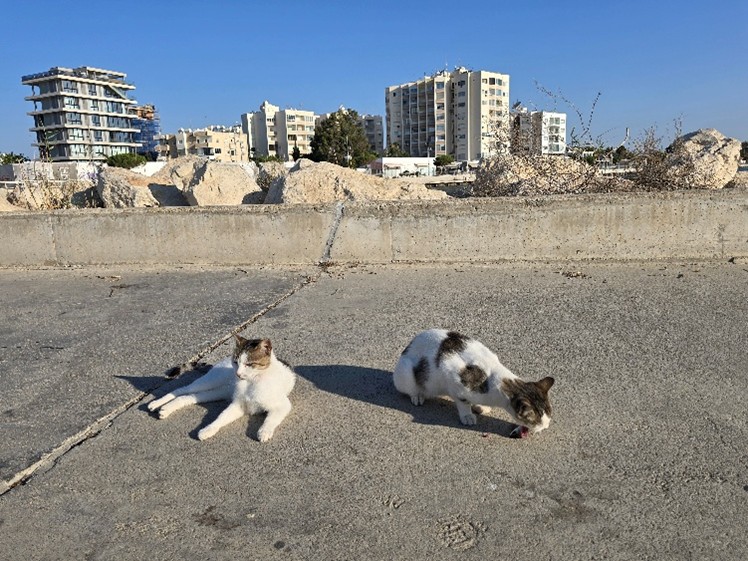
Cats on the pier receive fish heads from the local fishermen.
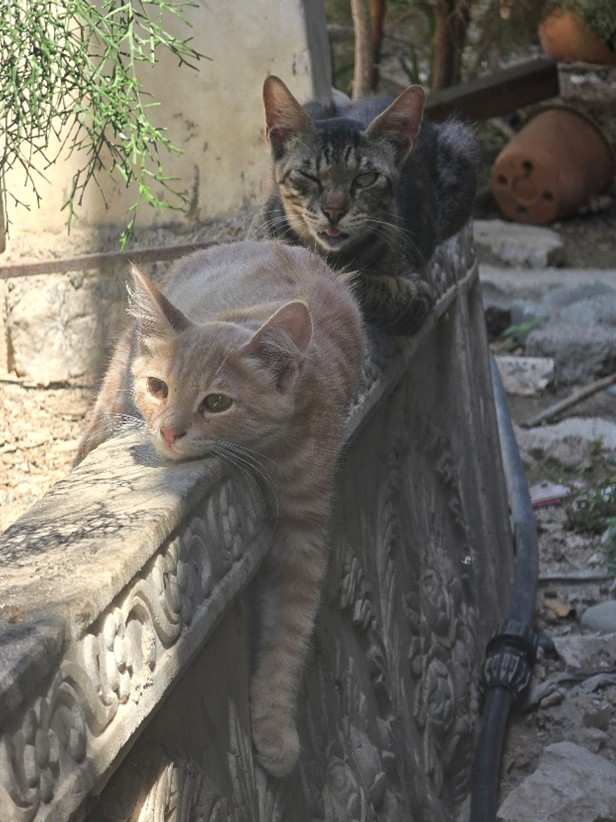
Cats lounging on a tomb at a mosque: Peak Cyprus.
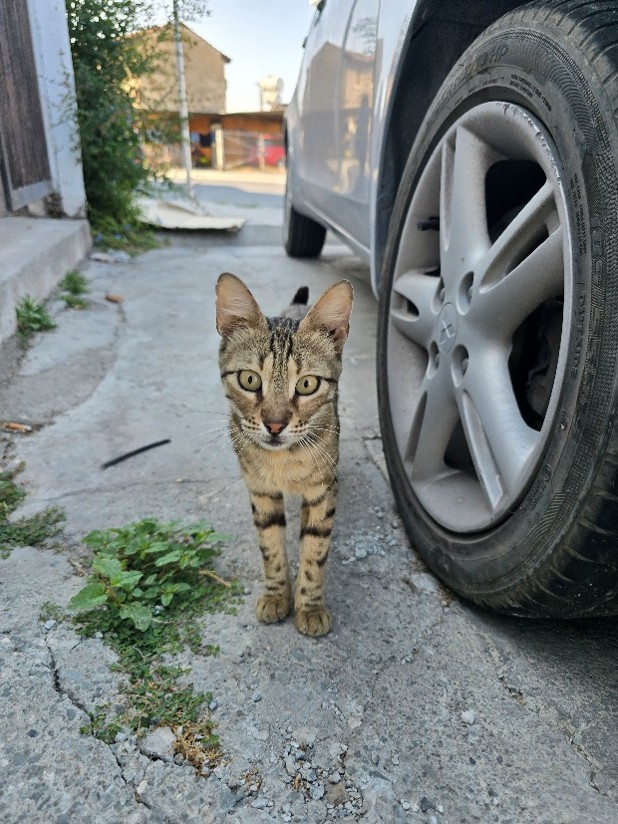
Many cats are friendly and approachable, often seeking human interaction.
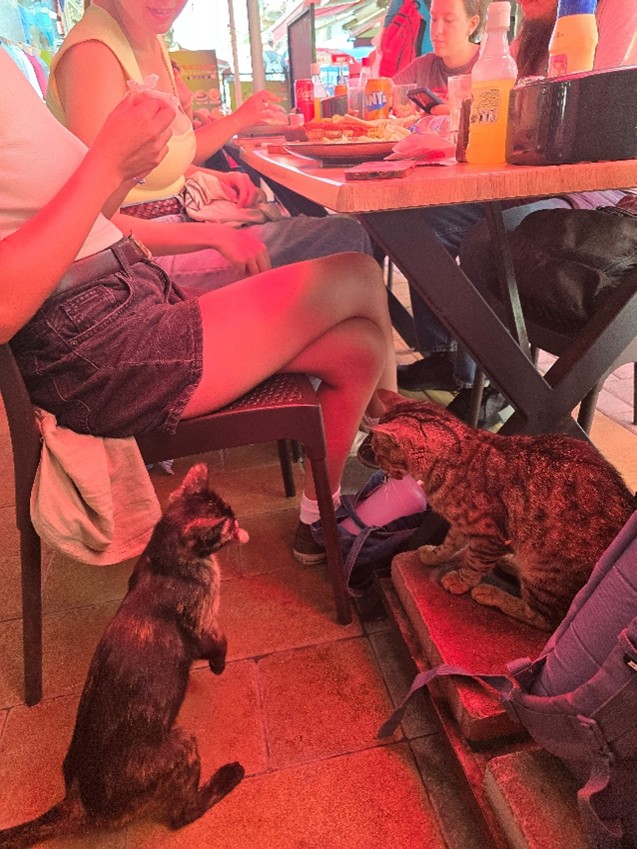
Cats are a common fixture of the Cyprus restaurant experience.
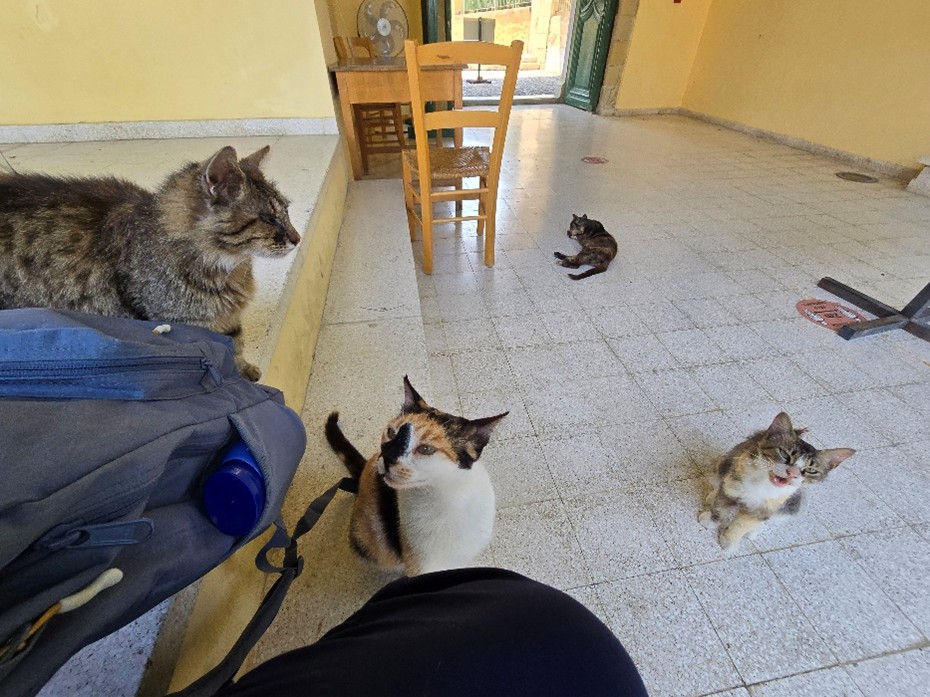
Hala Sultan Tekke welcoming committee
-
Halloumi Choirokotia: Traditional Haloumi and Basket WeavingHalloumi
By: Douglas Pearce
Just 30 minutes northwest of downtown Larnaca sits the picturesque village of Choirokotia. Nestled at the southern end of the Troodos Mountains in the White Mountains area, the village is home to one of the most unique experiences in Cyprus. A brief walk up winding cobbled streets leads to the Petros Nikolaou Basketry Workshop & Museum. Here, visitors are given a front-row seat to demonstrations of two of Cyprus’s most renowned traditions: halloumi and basket weaving.
Upon entering the museum, guests are greeted with an array of traditional, colorful baskets lining the walls of the foyer. After surveying the baskets, guests will cross a narrow bridge with blue wrought iron railings that straddles a small pool with large coy fish. Now visitors will be in an open courtyard with small dining tables, surrounded by greenery and flowers, with a natural canopy of grapevines above.
The true treasure of the museum, however, is not the baskets and beautiful courtyard, but Petrous himself. Petrous Nikolaou is a modern-day renaissance man. He has been able to combine his passions to create something truly special for himself, his village, tourists, and his home country. Each day, Petrous plays many roles; He is a skilled farmer, chef, basket weaver, and entrepreneur. Petrous is one of only three people left in Cyprus who still do traditional basket weaving. He believes the practice will become extinct within the decade.
Petrous begins with an explanation of the long history of traditional basketry in Cyprus, handed down for generations, just as he acquired the skill from his grandparents. He displays the various reeds and straws used by skilled artisans to create these functional yet artistic pieces, describing the process of how they are softened and dyed. He notes that the museum contains two original baskets from his grandparents, which demonstrate the old way of adding color to baskets before the dying of reeds: they would weave thin strips of fabric from old clothing into the baskets. Traditional baskets had no color as they were more utilitarian. Common uses were for carrying vegetables from the field, such as potatoes and watermelons. He also showcases a small basket called a “talari,” which is used in the haloumi-making process.
Then it’s time for a traditional basket weaving demonstration. Petrous methodically exhibits the steps in creating the layered rings, showing how they are secured to each other and how color accents are added. He explains it so thoroughly that visitors may think they can easily replicate it at home.
After the basket demonstration, it’s time to make haloumi. Although legend attributes the origin of halloumi to Cyprus, it is unclear if it was first produced there; records of it on the island date to around 1554. Whether haloumi originated in Cyprus is debatable, but its inextricable connection to the island’s identity is not. Haloumi is one of Cyprus’ major industries, accounting for over 13% of its exports and $500 million in global sales. Trademark law ensures that cheese produced in Cyprus must be called “haloumi.” Its high melting point allows grilling, making it a popular protein alternative for vegetarians.
Petrous explains the process of milking the goats in the morning, then heating the milk to body temperature after adding rennet. He uses vegetable rennet in his cheese to accommodate religious traditions that prohibit the mixing of animal products. Next, the milk coagulates and turns into cheese curds, which are then cut into pieces and placed in the talari basket. The curds are pressed to strain, and the liquid that comes out separates the whey. Then it is reheated with the addition of more milk, which will be congealed again, and anari will be formed. When it is dried, anari is stored. To separate the anari from the whey, he uses the talari basket to press it and strain it. The whey is heated, and the halloumi is cooked on low heat for about an hour. For the finishing touch, Petrous adds salt and fresh mint before folding in two, which resembles an omelet.
A small brunch buffet is then presented to guests, offering traditional Cyprus delights, including the haloumi used in the presentation. There is also Koulouri, a traditional Cyprus village bread covered in sesame seeds, and soutzoukos, a traditional Cyprus sweet which Petrous makes with carob syrup and mixed berries, rather than the traditional boiled grape juice. Olives marinated with coriander seeds, cucumber, tomato, ham, and hard-boiled eggs are also available, accompanied by tableside coffee service.
After brunch, guests are encouraged to explore the museum, which features traditional baskets from the island as well as a traditionally furnished Cyprus home, dating back to the 1850s. Visitors can also purchase haloumi and baskets to take a bit of Cyprus tradition home with them, thereby supporting traditional basketry and hopefully keeping the tradition alive.
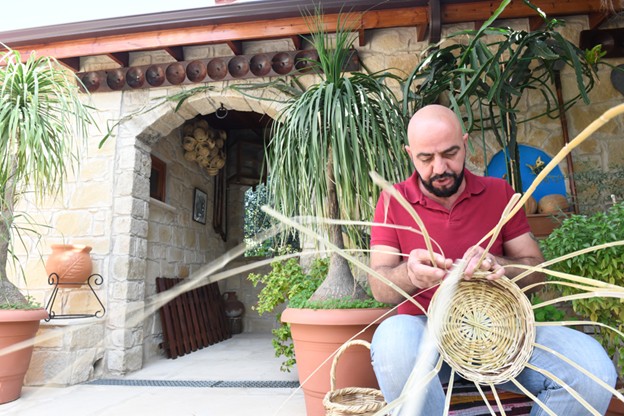
Petrous is demonstrating a weaving technique.
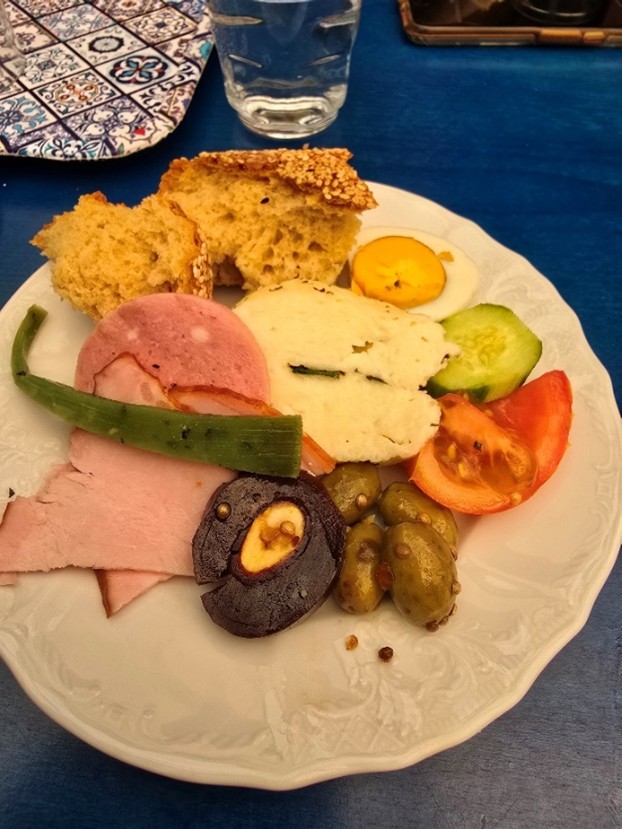
Brunch offerings
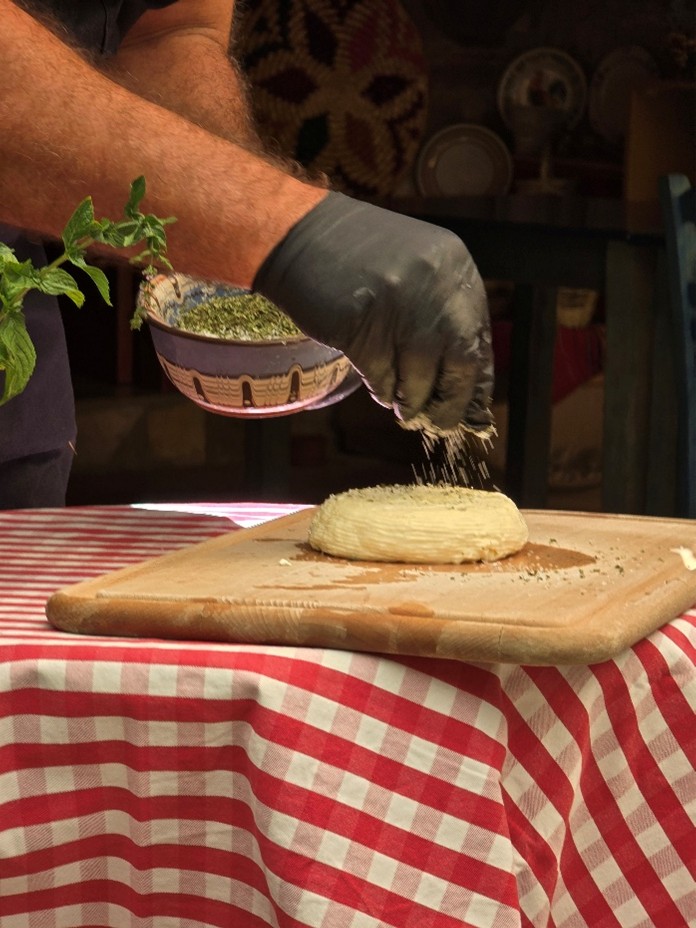
Petrous is applying the finishing touches to fresh haloumi

Coy pond in the courtyard
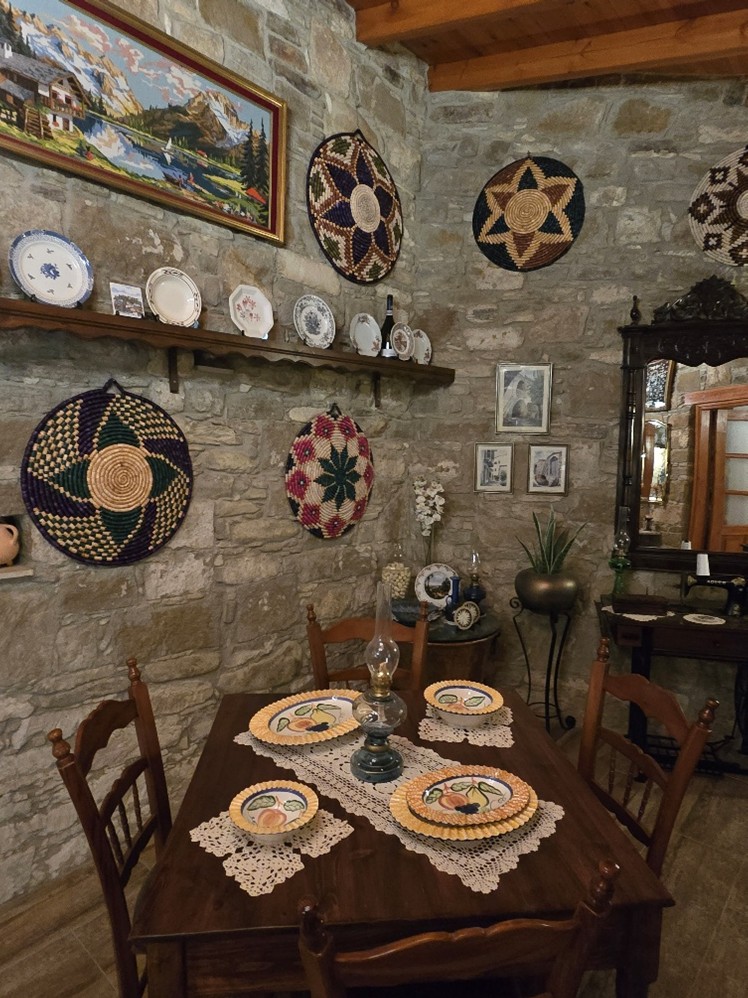
A traditionally furnished Cyprus home in a museum
Study Abroad in Cyprus
By: Arthur Pino Coming to the Old World is a new experience for me. I can say that, besides the luxuries and brands similar to those in America, it is quite different. This land has been inhabited for at least 4,000 years, according to the sign outside the Agio Lazaros (The Church of St. Lazarus).…

House of Dionysus
By: Arthur Pino On a field trip, we went to Paphos, where we were able to visit a “World Heritage Site.” This would be the second opportunity I have had to see one in my life within the last year; the other was Chichen Itza in Mexico. It was a very hot day, and walking…

A Big Discovery!
By: Arthur Pino Today was another hard but rewarding day. It was the first time I had worked in the trenches three days in a row, and I felt it. This day, in particular, revolved around hands. My hands themselves, and an accessory for hands. As usual, I did not wear gloves to start…
 Vigla Archaeological Project