-
The Driving
By: Teddy Espinosa
One of the first things you will notice the first few days you arrive here in Cyprus is the crazy driving. If you’re like me and come from a small town in the Colorado boonies, this will likely be a bit of a culture shock for you as well. Firstly, let’s talk about the roads. All around the apartments that we stay in are roads just big enough for a typical one-way street. The issue is that they are not one-way streets. They are, in fact, 2-way streets with cars parked on the side of the roads as well. This means that everything is essentially chaotic. I have seen numerous shouting matches and altercations, as well as cars honking their horns at 11 pm because they are driving right at each other on these roads. Usually, one of them must pull over to the side as much as possible (if there is room) for the other car to get past them. If there isn’t room to pull over, then one of them must back up enough to create room for the other car to pass. This is where the shouting matches and honking come from. I have seen a single car make a whole row of 4 or so cars move backward just so that the single car could get to the turn it wanted.
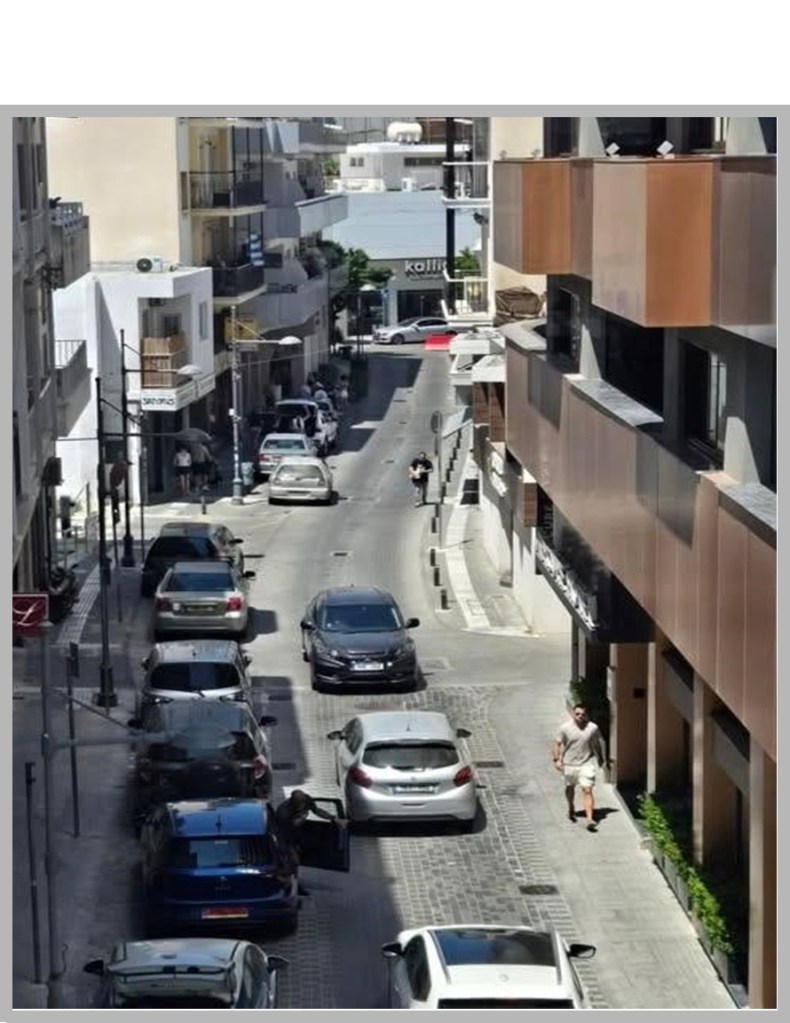
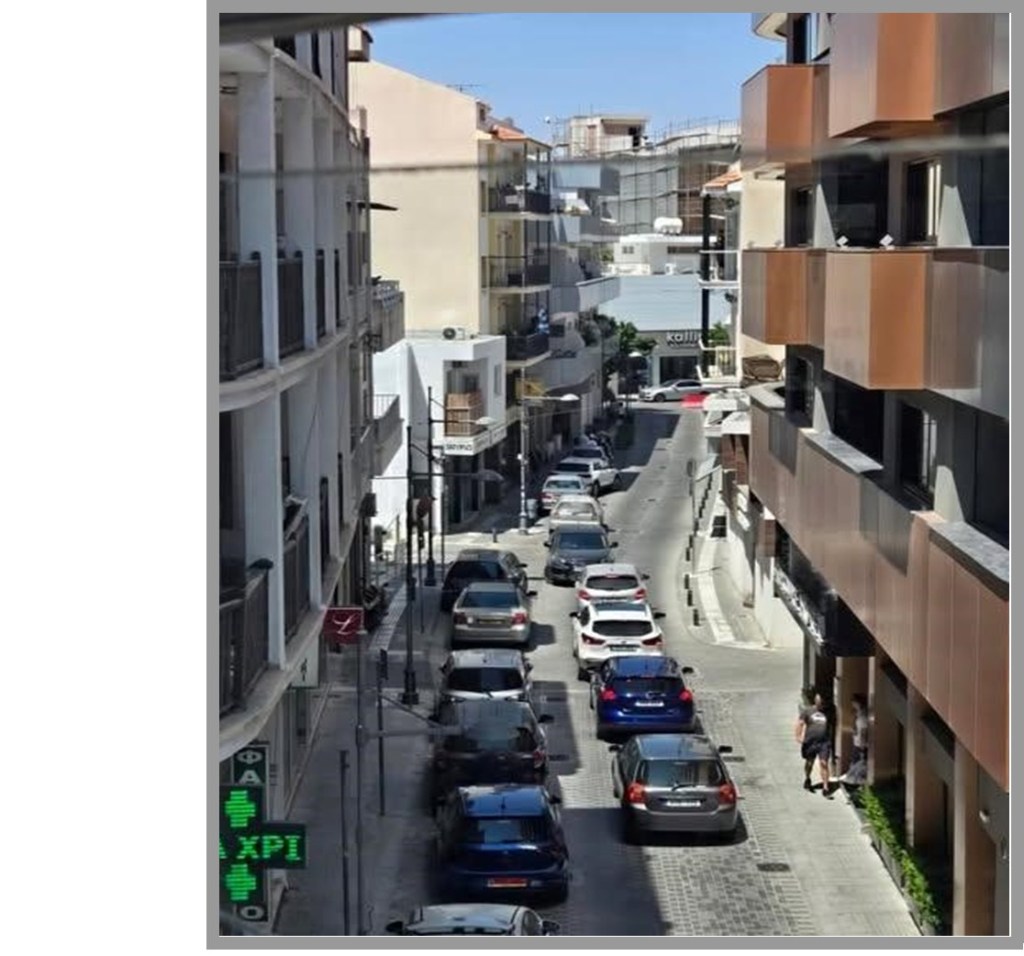
What is there to stop this from happening? Honestly, I have no idea if there’s anything that can stop this. There are street signs around; most of them feature a red circle with a white line going horizontally across, but I am unsure what they are supposed to represent. However, even if I did know, I don’t think anybody follows them anyway. It’s a weird and wacky free-for-all as well as an extreme game of chicken.
So be careful walking around the apartments and pretty much anywhere else you go in Cyprus on this trip that has roads. There are not any stop signs, yield signs, or anything like that if you are going for a leisurely walk down to the beach. My best advice is to wait for all the cars to pass before walking across the street, or run across quickly and hope for the best. There is an unspoken road rule here. It seems that if you just go for it and walk across the street, the drivers will slow down and not hit you. Or, if you are standing on the sidewalk and appear to be waiting to cross the street, drivers will slow down and allow you to cross. Every now and then on this trip, you will have the opportunity to use an actual crosswalk at a traffic light, but you better pay attention because it only gives you about 10 seconds to cross the street before that light turns green again for the driver.
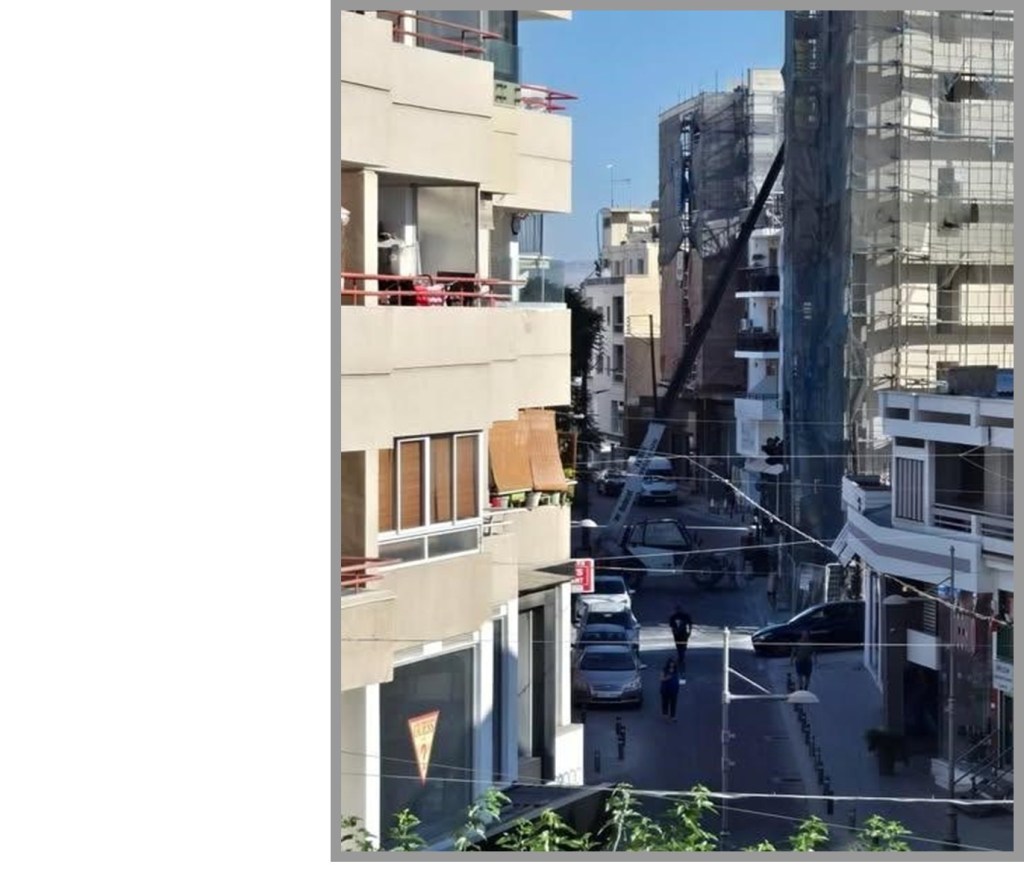
Overall, you should certainly be cautious when walking in Cyprus, but you will quickly become aware of the risks and be able to stay safe. You also needn’t worry about going on field trips; the bus drivers out here are experts at their craft. Lastly, riding with the professors up to the dig site is quite relaxing. You will be in good hands and don’t need to worry! Except, if you are riding with Professor Stephens…you might need to worry a little bit!
-
The Blazer Residence
By: Teddy Espinosa
The staff at the Blazer residence in Cyprus do an excellent job of keeping us all comfortable and happy in our home away from home. Of course, with us living here for a whole month, there are bound to be some interesting things that happen while we are living here at the Blazer. It is just as strange to us as it is for the cleaning staff to see us here for such a long time.
The following are some of the funny and strange happenings that happened at the Blazer Residence, and some tips to possibly keep you from facing these circumstances when you are here.
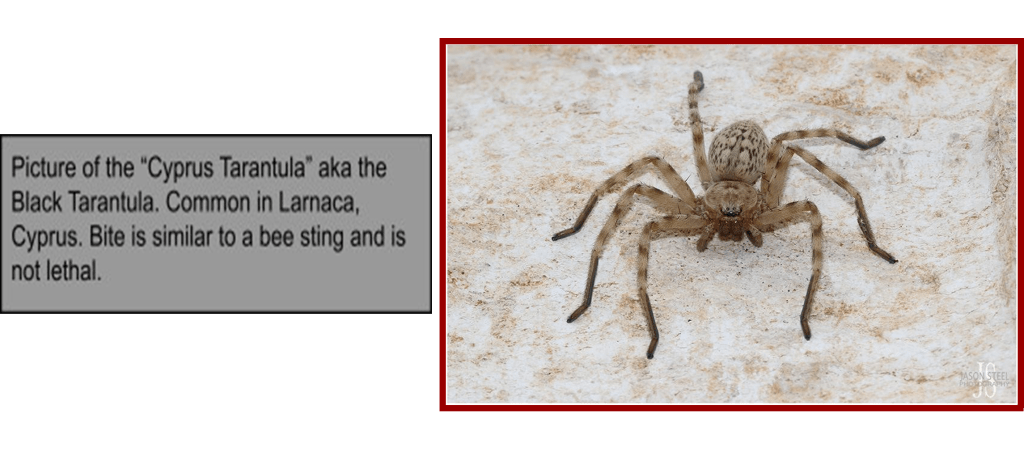
Within the first week of living at the Blazer, I had already found myself as a sort of savior to a couple of the front desk ladies. Kyna, Sarah, Jackson, and I all went out to eat one night, and when we got back, the front desk ladies asked me and Jackson if we were strong men. We had thought that they wanted us to move something heavy for them, and we did not mind helping them, so we obliged. I was not expecting what I was to face, and it was probably the scariest moment of my life living in Cyprus. A big ass spider. This sucker was massive, I mean just absolutely massive and terrifying. My heart skipped a couple of beats when I was handed a broom and asked to go toe to toe with this spider that was around the size of the palm of my hand. The front desk ladies were telling me that it was super dangerous, which immediately made me think that this thing would very easily kill me if it bit me, and this 6’ man with a thick country accent and a sturdy pair of boots decided, “why the hell not?” Thus, I and this spider had a showdown that was recorded by Kyna and Sarah of me successfully defending against the onslaught of evil and quelling the beast in 2 hefty boot smashes. I felt like a hero, and the front desk ladies sure treated me like one, too. However, you should know that the spiders here in Cyprus, albeit venomous, are not deadly to humans. If anything, these spiders help fend off other ugly critters like roaches from the Blazer Residence. They are big and scary-looking, but you do not have to worry about them killing you.
Some of the other strange occurrences have always happened with the cleaning staff. They are fantastic! Although they can be somewhat intrusive at times. Normally, when they are cleaning your room, you will not be there. They usually will clean around 10am, and get done with your room in about 20 minutes. However, if you are having a day off or got off early at Terra Ombra, you may have an unexpected visitor begin cleaning everything. You can simply close the door to your room and they won’t bother cleaning it, or you can go elsewhere for a bit while they clean. The only thing that you should not do is try to take a shower when they decide to clean your room. I had gotten off early from the dig one day and was filthy, so I decided to take a shower. I cannot tell you how unbecoming it is to start enjoying your shower and have someone begin incessantly knocking on the bathroom door. I ignored it the first time, thinking it was one of my roommates, and made sure to voice my presence in the shower. A few minutes later, louder banging. I quickly finished my shower and got out to see which one of my roommates was bothering me. Turns out, the cleaning lady was the one bothering me while I was trying to take a nice, relaxing shower. The best thing you can do if you do not want this to happen is to put the “Do Not Disturb” sign on your door, and they will not clean your room that day. If there is no sign on the door at all, they will clean your room. Enjoy your stay at the Blazer Residence!
-
Ayia Napa
By: Zander Weinberger
On my first free day, I decided to go to Ayia Napa, a tourist town located around 30 miles east of Larnaca. I was originally planning to go to Nicosia first on my own, but Matthew recommended going to Ayia Napa instead. Since I was a bit tired that day, I heeded his advice. There is an inter-city bus running between Larnaca and Ayia Napa, and I decided to take it for 5 euros at 3 pm. It was only a 45-minute drive, and I got off a little early because I saw a Zorbas and was quite hungry. After getting my Zorbas, I started walking up the main street, which was about a quarter mile off the coast. Ayia Napa has a different vibe compared to Larnaca, where it is a slower-paced beach city; Ayia Napa is definitely meant to be a party beach town.
There were fewer restaurants and many more clubs and bars. Most of the people were British, as it is a prominent British tourist destination, similar to Florida for Americans. There were a few places where you could rent quad bikes, and many people took these up and down the streets, mainly big groups of men. As I kept walking, I seemed to reach almost a red-light district, as there was a half-mile stretch of almost nothing but strip clubs. So, I imagine the town had a very different vibe at night. I walked a little farther and took a turn more inland into the center of the city, where I found a 15th-century monastery with a quaint courtyard and garden. The inside was closed to the public due to construction, but the outside was nice to lounge around in and observe. It was noticeably quieter than the surrounding areas; I only saw one other person in the courtyard.
Going a little further up into the plaza, I saw around 15 cats and multiple food bowls scattered around. Someone must have been feeding them, but I didn’t see anyone doing so. The cats were all friendly, and I sat there for around 20 minutes before making my way back down to the main road. I looked at the map and saw something called “Secret Bridge” on a rocky part of the coast. I made my way over there and changed into my bathing suit in a porta-potty on the way. You had to walk around 200 feet of sharp rocks before reaching the coast and a small arch above a cove. I didn’t see any way down there as the arch was about 12 feet above the water until I found a path on the other side that led down to the water. I set my bag down and started hugging the rocks before realizing they were submerged below the water, allowing me to enter the cove. I then took the picture below and took my phone back to my bag. The wind was decently strong, and the waves were crashing against the rocks pretty hard, so I had to be a little careful when I got in the water. I thought it was around 4-5 feet deep, but after getting in, I saw it was closer to 8-10 feet deep. It was so clear that I could still see the bottom perfectly. I made my way to the cove, where it was shaded, and there was a small outcrop to sit on. I would describe the atmosphere as reminiscent of a Windows 10 background. There wasn’t a soul in sight, and it stayed that way for the 2 hours I was there. It was around 7 pm at this point, and I decided to go to the more popular beach. It was a 20-minute walk west to Nissi Beach, a point where a super-thin sandbar led to an island. The beach was extremely crowded, and I didn’t feel comfortable leaving my bag unattended without a towel or chair, so I walked across the sandbar to the island.
There were people of all ages here, but it definitely felt more chaotic than the beaches of Larnaca, and it wasn’t really my vibe. I saw on the schedule that the next bus was leaving at 7:30, so I went up to the closest bus stop and waited until 7:40 when the bus simply passed the stop as it was full. The next one wasn’t for another hour and a half, so I made my way up to the first stop by the monastery, where my phone promptly died. I still had an hour, so I walked around the old part of the city until the bus came 20 minutes late, when it was already almost full. Halfway back on the way, the bus driver stopped the bus to yell at a lady in Greek who had been going up and down the bus frantically speaking gibberish. She didn’t appear to be in a sane state of mind, but she calmed down after that. I got back to Larnaca around 10 pm and immediately went to bed.
-
Questions in my trench
By: Zander Weinberger
I was given two trenches to choose from, and I selected EU 37, which was located on the eastern end of the complex, where I was looking for the eastern wall. There are several questions that kept arising as we gradually dug deeper into our trench, and these remain unanswered. During the first few stratigraphy units, we were new to digging, and every time I saw a large rock, I thought it might be part of a wall, especially if there were 2 of them. However, even though we had 3 or more large rocks lined up in a diagonal line twice, every single one of these was just resting on soil and ended up being rubble, except for one. On the northern side, and running north to south through the middle, there are two lines of rock. However, our trench lead believes that they are not walls, as they are poorly built and not made of the same stone as the other walls. Once we had dug around 18 inches into the soil on the western half of our trench, we decided to take down the bulk, where we found a poorly constructed outer wall. The current theory of what is in our trench is dependent on two things: the outer wall and the drain. In the middle of my trench, there is a drain approximately 18 inches across and 3 feet long. There wasn’t anything in the drain itself, but its presence alone is puzzling. There is scattered plaster flooring all around the trench, particularly near the drain, indicating that water was flowing out of the main building for some reason. The issue with this is that we initially thought the two fake walls were intended to be borders to contain the water, but since they are not actually walls, this cannot be the case. There is also a large, flat piece of plaster on the completely opposite side of the trench, but it is encased in the bulk, so we will not know what that is until next year. It could also just be a drain to dump liquid out, but then the plaster around the drain wouldn’t make sense. Another thing is that all the artifacts we have found have been unrelated. If this area is outside the main complex, it could have been used as a trash pile. Especially since there is evidence in other areas of the site suggesting that they left the site in a hurry, it would make sense to dump things here, but it would still be strange with the drain right there. Overall, digging this trench has been very confusing, and we will not have any answers on what our trench looks like in the greater scope of the site for years. It has been really interesting to discover things alongside professors and to be among the first people analyzing what we uncover. It really makes me want to return to the site in the future, just because I’m so curious about what my trench and the site in general will become when fully uncovered.
-
The Salt Lake
By: Zander Weinberger
Before this trip, when I looked at the map of Larnaca and saw this huge salt lake on the southwestern edge of the city, I was intrigued and wanted to at least swim in it. However, I became more interested once I learned that in the summer months, it is actually a completely dry salt bed. I’ve made two trips out there, one at night and one during the day. From the Blazer Hotel, it’s only a 30-minute walk, so on the 3rd night of the trip, I walked down there, getting some souvlaki first. Near the lake on the northern side, there is a park that preserves some of the natural environment, and at night, it was quite eerie due to the lack of any noise except for the insects. I was scared of being a snake when walking through the bushes, but thankfully, there wasn’t one. I came across a wooden lookout area right before the lake that looked a little decrepit, but it was nice enough for me to eat my souvlaki there. I then headed to the lake, which at night looked like a normal lake, but when you walked onto it, it was obvious that the salt was present. You could see all the way to the airport, and I saw planes landing around every 10 minutes or so. The texture of the lake was very interesting, as it was pretty obvious it had dried up quickly. The ground composition began as just sand and gradually became increasingly salty until it was a complete salt bed. Then, going further, it started to get wetter, until in the middle, it was basically a salt marsh. I saw a cliff on the other end and walked to it, around half a mile from where I had started. There were tire tracks here in circles, showing that people had come out here to drift at some point. I started making my way back and saw a small viper making its way over the salt. I wish I had taken a photo, but I’m terrified of snakes, so I didn’t.
On the second trip, I decided to go during the day, and it was a very different experience. I went to the same spot, but I noticed that there was actually a makeshift straight path with rocks on both sides leading to the other side of the lake, approximately 200 feet to the left. At this point, it was around three weeks later, and the salt was noticeably drier, even though in the middle, it was still a little mushy. I had some extra energy and decided to do some sprints up and down the lake. It was interesting running on that surface, as I was sore the next day in a way I’d never been before, having never had to grip onto a surface like that while running before. Near the cliff on the other side, I saw someone had propped a broken beach chair up on a rock. I took a quick photo of it and ran back on the path, this time seeing around 5 other people out walking on the lake. I would recommend that anyone go see the lake, as it’s pretty close to the hotel and is really the closest “nature” you can walk to from Larnaca. Being from Colorado, I’ve never seen a salt bed before, so it was a fun experience.
-
The Turkish side of Nicosia
By: Zander Weinberger
Nicosia is the capital of the Republic of Cyprus, and the United Nations border zone separating it from the Turkish Republic of Northern Cyprus goes right through the center of the city. On our field trip to Nicosia, I was excited to cross this border, as I had heard so much about it, and was curious to see the change in culture. The inner old city is walled in on both sides of the border. I went over with a few friends, and pretty much everyone on the trip crossed over at some point. Crossing the border was very simple and involved showing your passport to a Cypriot official in the first zone, walking approximately 100 feet, and then showing your passport to a Turkish Cypriot official in the second zone. As soon as you passed the border, it was apparent that you were essentially in a different country. It had a clear Turkish influence, and the city got noticeably denser. There was an eloquent 13th-century mosque nearby, but we decided to explore the city a little further first. What we saw was mainly comprised of restaurants and shops, as this area is close to the border, and it was clearly intended to be a tourist destination. We came across a huge indoor bazaar, with many shops lined up close together. They had many traditionally Turkish items in the shops, such as fez hats. We came across a traditional Cypriot flute shop, with the shop owner making all of them herself. They were all very intricate and expensive, but there was a box labeled “damaged flutes” for only 6 euros. I tried a few of these damaged ones, and they played perfectly fine, just having a crack on the bottom end. It played similarly to a recorder, but not on a traditional Western 12-note octave. We spent around 30 minutes in the bazaar overall, but I only bought the flute. I noticed while looking through the shops that around half of them had no shopkeeper present. I saw only a few cameras as well, meaning they had a trust system in place to prevent theft from occurring. I just found it interesting, as this situation would be basically impossible in most places in America. We then returned to the mosque, but only one of us could go in, as they required visitors to have their legs covered, and there were no wraps available. As we had only a few hours left, we sat down for a quick lunch, where almost all of us had a mixed doner. It was quick to pass back through the border again. This wasn’t on the Turkish side, but there is an observatory near the main plaza on the 11th floor, and from above, you can see the clear division between the two sides of the city. It’s only $2.50 to get in, and there’s a tiny museum at the top as well, so I would recommend it just to get a view of the city and take a few photos. I wish I had more time on the Turkish side, but the fact that tourists are allowed to go over there without any hassle is great.
-
Eating pigeon for the first time
By: Zander Weinberger
Two friends and I were walking around after doing some shopping, and we wanted to find something to eat, so I went on Google Maps to find something nearby. I found a place called “To Magkali,” a 3-minute walk away, but it only had a few photos of a garden and a couple of dishes listed on Google Maps. We walked over there and saw a couple of dozen tables and chairs laid out, surrounded by a small canopy of trees. There was a small indoor building, but it didn’t appear to have any seating. An older man slowly approached and asked, “Food?” We said yes, and he sat us at our table. His English wasn’t amazing, but we could understand the gist of what he was trying to say. It was around 6 pm, so it was surprising to see that we were the only people being served at the moment. It was very quiet with all the trees, and it had an overall calming atmosphere. We didn’t see any employees for around 5 minutes until another lady, looking the same age as the man, came out with some laminated menus for us. The menu was only 2 pages, but it instantly caught my interest with some of the stranger items they had on it. They had things such as octopus, squid, pigeon, and rabbit. Everything was at an affordable price as well. When the man came by, I ordered a pigeon for the table and a rabbit for myself. I never order any drinks at restaurants here because they charge even for water, and I just take the tap water in my water bottle everywhere. It took around 30 minutes, but the pigeon emerged, looking very similar to a chicken, albeit with a darker brown color. However, I’m not sure if that’s just due to the way it was grilled. I had a wing and a thigh; they tasted similar to chicken, but noticeably leaner. When the man came over next, we asked how he got the pigeon, and he said he had a pigeon farm out in the countryside. He propped up a chair and sat on his phone, pulling up a picture of a pigeon as well. I suppose he wanted to ensure we knew what a pigeon was. My rabbit then came out, which consisted of two leg pieces and two breast pieces, and also came with fries and a small salad. It too looked like chicken, but tasted much richer. I was pretty full by the end, so it was hard to finish all the food. While we were eating, 3 other people came out of the building and sat outside near us. The restaurant was owned by a family, which the man said had bought the land around 20 years ago. I forget his name, but it might have been Alexander. The bill between the 3 of us only ended up being around 50 euros, with my 2 friends also ordering drinks. I would definitely recommend this place for students, as it felt like an authentic Cypriot dining experience, and is only a 15-minute walk from the Blazer.
-
Pafos Archaeological Park
The Roman Archaeological Park was the site of the ancient Roman village of Pafos. I only saw a small fraction of this very large site, however one of the most impressive parts I did see were the mosaic floors of the “House of Dionysus”. Which was so named because the Roman god of wine was featured in some of the floor motifs.
All but one of the mosaics are Roman and are colorful with tesserae which shade the mythological figures, plants and animals to show their volume. (A few of the figures are labeled.) One mosaic in particular, which features five figures and four natural scenes in a grid, utilizes three-dimensionality in the depiction of square columns which separate the scenes.
There are also more purely decorative mosaic motifs. Some of which look like quilts or patterned rugs.
The one mosaic that is not Roman, is Hellenistic and the style of construction is quite different from the others. It predates all of the other mosaics and is made of grey and white natural river rock, rather than the cut tesserae.
Chrystyna Banks
-
Tombs of the Kings
Found in Paphos/Pafos (on the Southwest coast of Cyprus), the Tombs of the Kings is a remnant of yet another fascinating facet of Cypriot history. The site dates to a time when the Ptolemaic Dynasty ruled the island of Cyprus, so they are in the Egyptian style (more or less).
The name is the site is something of a misnomer, as it unlikely to be the site of royal burials, but was so named as the tombs were somewhat grand (some more than others). There are eight large tombs and many smaller burial niches carved into the rocks around the complex. The most extravagant of which is the third tomb, however, as the tombs were placed in such a way to discourage tomb robbers (and I only had a short time to explore the site) I missed seeing that tomb. I did see, however, the other five tombs and many niche burials. Many of which appeared to have been used by small families, rather than individuals. Some with colonnades of columns, and antechambers.
Chrystyna Banks
-
Nicosia
“Nicosia” (also known as “Lefkosa”) is more or less in the center of the island of Cyprus. The city (like the rest of the island) is split into two parts, the Southern Greek Cypriots refer to it as “Nicosia” while the Northern Turkish Cypriots call the city “Lefkosa”. A passport is needed to cross the boarder into the other side of the city, just as it is to visit the other side of the island. I decided to just tour the south-side, where I walked along the ancient Venetian fortified wall. I also wound my way through the labyrinthine streets, which seemed to be mostly full of restaurants and shops of one kind or another. As I was taking pictures of a shop window that was devoted to lacework (one of the specialities of the island), I got to chatting with the shop owner, who had made the work herself. She was originally from England, but had lived in Cyprus much of her life. Her shop also sold silver jewelry and religious icons (two other notable specialties of the island).
Chrystyna Banks
Study Abroad in Cyprus
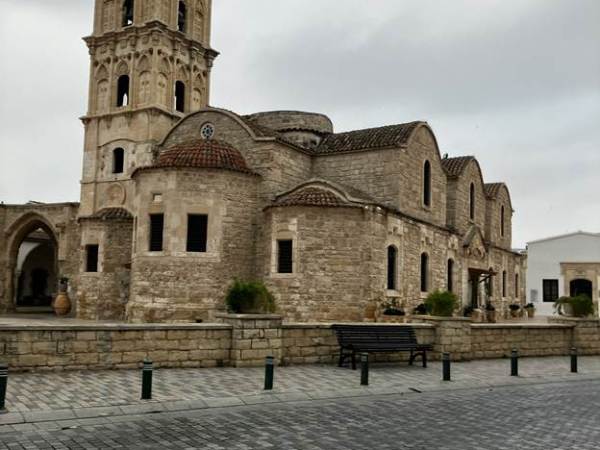
By: Arthur Pino Coming to the Old World is a new experience for me. I can say that, besides the luxuries and brands similar to those in America, it is quite different. This land has been inhabited for at least 4,000 years, according to the sign outside the Agio Lazaros (The Church of St. Lazarus).…

House of Dionysus
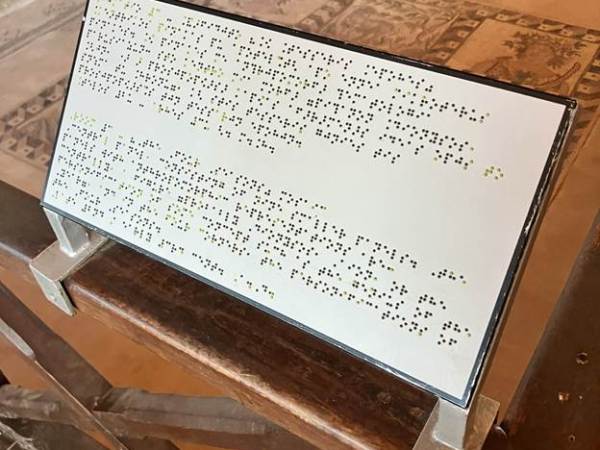
By: Arthur Pino On a field trip, we went to Paphos, where we were able to visit a “World Heritage Site.” This would be the second opportunity I have had to see one in my life within the last year; the other was Chichen Itza in Mexico. It was a very hot day, and walking…

A Big Discovery!
By: Arthur Pino Today was another hard but rewarding day. It was the first time I had worked in the trenches three days in a row, and I felt it. This day, in particular, revolved around hands. My hands themselves, and an accessory for hands. As usual, I did not wear gloves to start…

