By: Sarah Healy
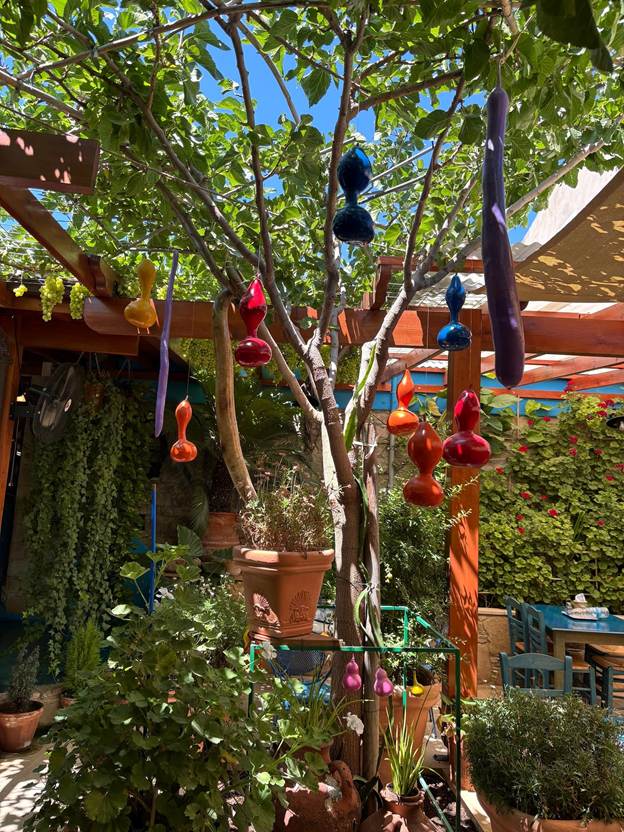
For the last field trip, we visited a basketry workshop and museum in Choirokoitia. The field trip was optional, so not everyone decided to join; however, I am very glad I chose to participate. The bus drive over was shorter than any of the other field trips, lasting only about 45 minutes. Once we got there, we walked through small, narrow streets. The town is situated on a mountain, so reaching the location involved walking up a few hills. Our first stop on the field trip was ‘Petros Nikolaou Basketry Workshop and Museum.’ When you first enter the museum, a long hallway is decorated with woven baskets. The owner explained that some of the baskets in the hall were woven by his parents, who used to add color to the baskets by dyeing the cloth instead of using it. After you walk through the hall, you’ll cross a small bridge that lies over a small pond. The pond had several large koi fishes swimming around. The small bridge leads into a small dining area with several small tables that accommodate around four people. In the center of the dining area was a small tree with hanging ornaments. The entire place felt very relaxing as soon as you walked in. The owner was very welcoming and clearly very passionate about his work. He started with a demonstration of how he makes halloumi cheese. Halloumi cheese originated in Cyprus and is typically made from a mixture of goat and sheep’s milk. The owner stated that at 5:00 a.m., he gets up to milk the goats. He then mixes the milk with rennet that he obtains from Spain. The owner also clarified that the rennet is vegetable-based rather than the traditional method of obtaining rennet from animal organs. This ensures that vegetarians and people of certain faiths can still enjoy the cheese. After he mixes the milk and rennet, he would let the mixture sit covered for about 40 minutes. After he lets the mixture rest, he extracts the whey and begins to form the cheese. In this step, the mixture is cheese but not halloumi. It’s another type of cheese similar to Italian ricotta. He then takes the cheese and starts to form it in his handmade baskets. He then lets it rest a little longer since it would be too soft and melty if they didn’t, and then you have halloumi cheese. The owner then showed us how he makes baskets. There are several different materials he used. However, the most interesting was the sweet grass he used. This material is only available in Cyprus once a year, around May. He also mentioned the dyeing process of the materials he used, saying that all the dyes were from Thailand. I also learned that before you can weave baskets, you have to let the material soak in water for a few hours; if you don’t, the material will be too brittle and break.
After the demonstration, they provided us with a meal. They provided sourdough bread sprinkled with sesame seeds, along with cut tomatoes, cucumber, and olives in a garlic and oil mixture. There were also cut meats, including mortadella and some of the best ham I’ve ever had. They also provided us with fresh halloumi cheese to accompany our meal. They coated the halloumi in dried mint and oil, with fresh mint leaves stuffed inside. For dessert, they served the ricotta-like cheese with cinnamon and honey, which was surprisingly very light and sweet. They also gave us coffee, which was very strong, or you could opt for some homemade lemonade. After you eat your lunch, you’re free to explore the small gift shop they have. They sell baskets, coasters, and small charms. All the baskets and coasters they sell are handmade using the same material used in the demonstration. The baskets come in various shapes and sizes, each with its own unique design. I picked myself up an oval, shallow basket with a green rim. All the baskets were priced at around fifteen euros, making them very affordable for such a unique souvenir. The entire experience at Petros Nikolaou Basketry Workshop and Museum was delightful, and I highly recommend it to everyone who has the chance.
 Vigla Archaeological Project
Leave a comment