By: Douglas Pearce
Nestled at the southern foot of the Troodos Mountains in Cyprus, Pano Lafkara is a small, charming village with cobbled limestone streets, red clay roof tiles, and a history dating back to the 14th century. The town derives its name from the Greek words for “white, “Lefka,” and “mountain, “ori,” due to the white silica and limestone hills that characterize the surrounding landscape. The village of Lefkara is so cozy and quaint it could easily be known for its preservation of old-world Cypriot charm. However, that is not what drives thousands of tourists there each year. Lefkara is primarily known worldwide for one thing: lace. While silver filigree work is also something the town is known for, it is a distant second in importance.
The town is filled with shops offering lace and silver; From the moment you get off the bus and walk down the narrow, cobbled streets, you will be inundated with offerings of both. The more high-end shops require just a bit more walking than the touristy ones near the bus stop, but it’s well worth the extra steps. Near the heart of town lies Rouvis Lace and Silver. Themis Rouvis operates this shop alongside his parents, who have made it what it is today. Themis’ mother, Viola, can still be seen most days seated out in front of their shop, doing the needlework that she inherited from her mother and grandmother. The Rouvis family is always pleased to show guests around their store while explaining the history and process of lacemaking and silversmithing.
Lacemaking in Cyprus dates to at least the 15th century, when Venetian influence brought the practice to the island. Tradition holds that in 1481, Leonardo da Vinci visited Lefkara and purchased a lace cloth to bring back with him, which now decorates the main altar of the Duomo di Milano. While lacework did become popular in most of the small villages of Cyprus, Lefkara was by far the most associated with the craft. In 1889, a local lace school was established, which once again made Pano Lefkara lace renowned.
Lefkara’s signature design can be seen on the tablecloth of The Last Supper painting, as well as in the mosaics of the bathhouse at Kourion. The defining characteristics of Lefkaritika include hemstitch, satin stitch fillings, needlepoint edgings, and intricate geometric patterns, as well as colors such as white, brown, and ecru. The quality of Lefkaritika is attributed to its competitive origins. When money was scarce, dowry sometimes came in the form of lace. Women were expected to have several clothes to present to their husbands. This expectation challenged women to produce high-quality lace that would stand apart from the others.
A tourism boom in Cyprus in the mid-20th century brought many foreigners seeking out the fine Lefkara lace. To satisfy this demand, young women were recruited from small villages on the island to train in the production of Lefkaritika articles. Until recently, groups of women could be viewed sitting in the narrow village streets working on their fine embroidery, just as they had for centuries. Today, the Lefkaritika tradition is in danger of extinction. The fine lacework is very time-consuming. For example, a small piece of less than one square foot can take two or three days to produce. As the women are paid by the unit, not per hour, it is simply not a profitable endeavor. According to Themis, the days of authentic Lefkara lace are numbered and will likely die off within a decade.
Only a small fraction of the lace sold today is handmade, with most being produced on machines. To meet the demand of tourists, Themis and others are actively seeking out and purchasing vintage Lefkaritika for resale. This is why Lefkaritika was added to the UNESCO Representative List of Intangible Cultural Heritage of Humanity in 2009. As Lafkara is only a 24-mile drive from Larnaca, it is a must-see destination for anyone visiting the island of Cyprus. Do not miss an opportunity to experience this lovely town with its rich traditions.
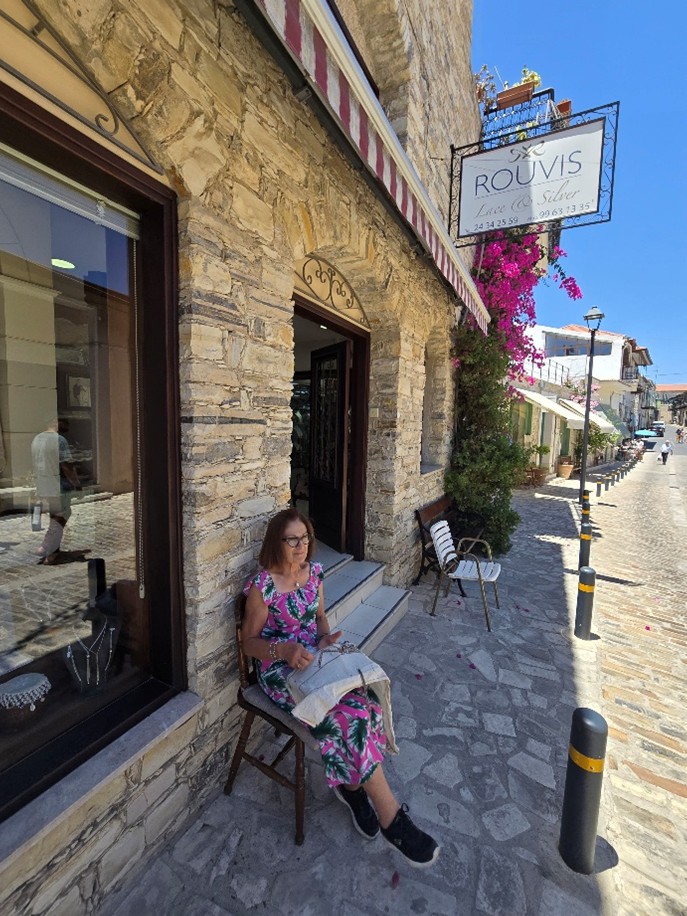
Viola in front of the family store
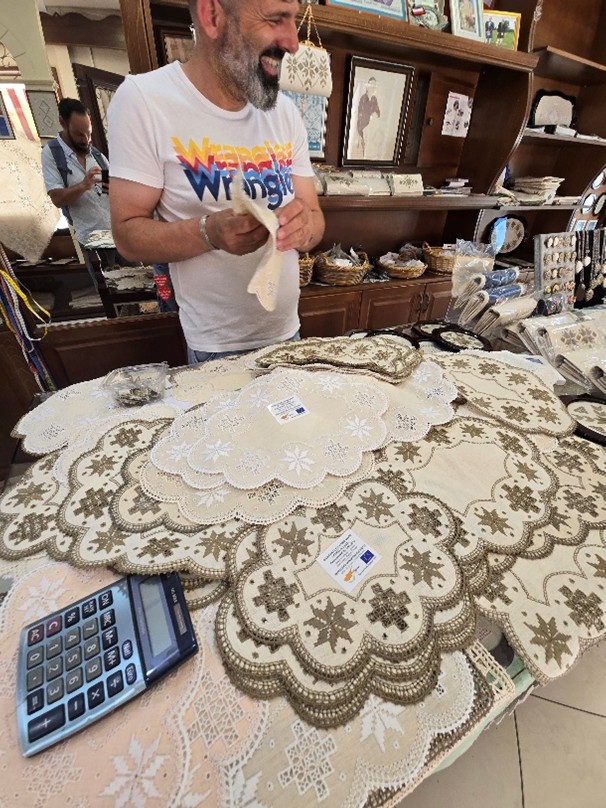
Themis explaining the process
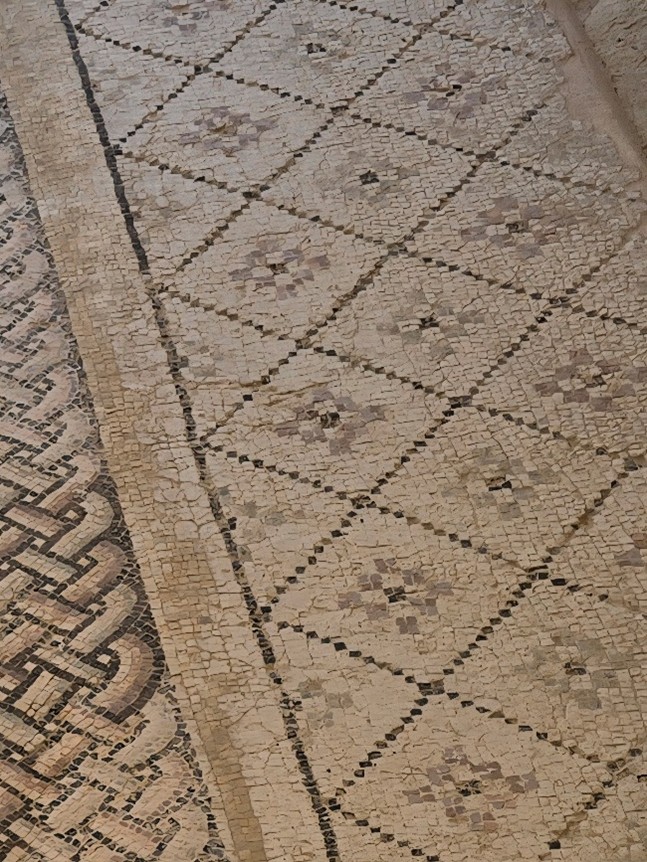
Lefkaritika signature pattern seen on mosaic at Kourion
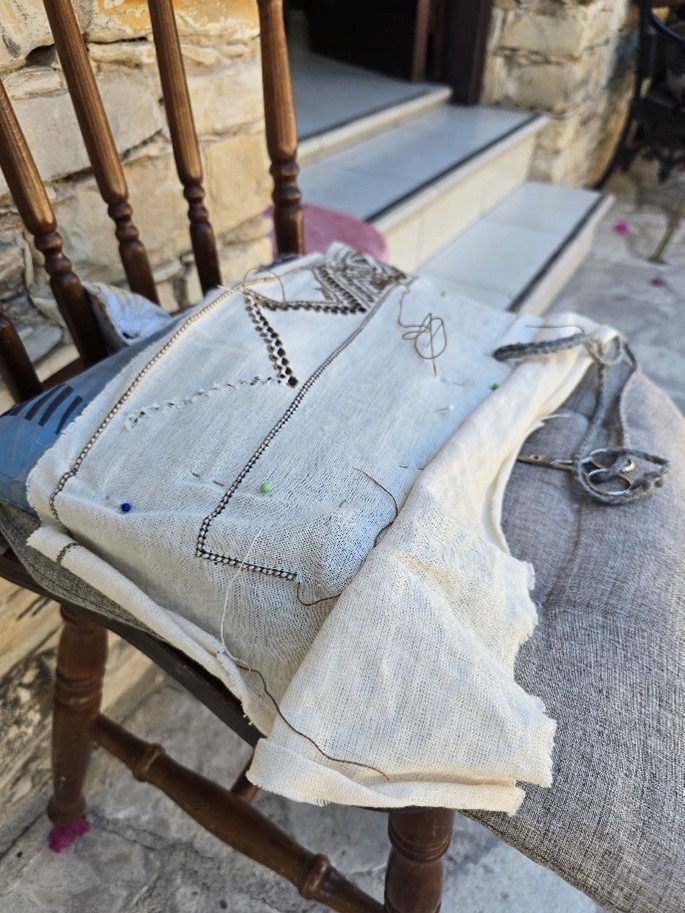
 Vigla Archaeological Project
Leave a comment