By: Arthur Pino
On a field trip, we went to Paphos, where we were able to visit a “World Heritage Site.” This would be the second opportunity I have had to see one in my life within the last year; the other was Chichen Itza in Mexico. It was a very hot day, and walking through the initial ruins and the first building was quite tricky, especially considering the lack of shade. I reached recluse in the House of Dionysus, and it was likely one of the most historically significant finds I have been witness to. The mosaic flooring that has been preserved over so many years was incredible to lay my eyes on.
The depictions of animals, people, and intricate patterns amazed me. There were images of hogs, bears, leopards, dogs (with collars), and various other animals that caused me to wonder how they accomplished this so long ago with such detail. They also had depictions of gods and goddesses. As I walked through the building’s lanes, each section became more impressive than the last. At the end, opposite the entrance, was the largest and most amazing section. A large, preserved area featuring various symbols is incorporated into the design. Among the symbols, it was interesting to see a star of David, as well as an ancient Swastika. I wondered about the significance of this area, what the meaning behind having all these symbols next to each other was, and what they represented. Possibly a roll call or depiction of the various groups conquered and under the governance of those that made these.
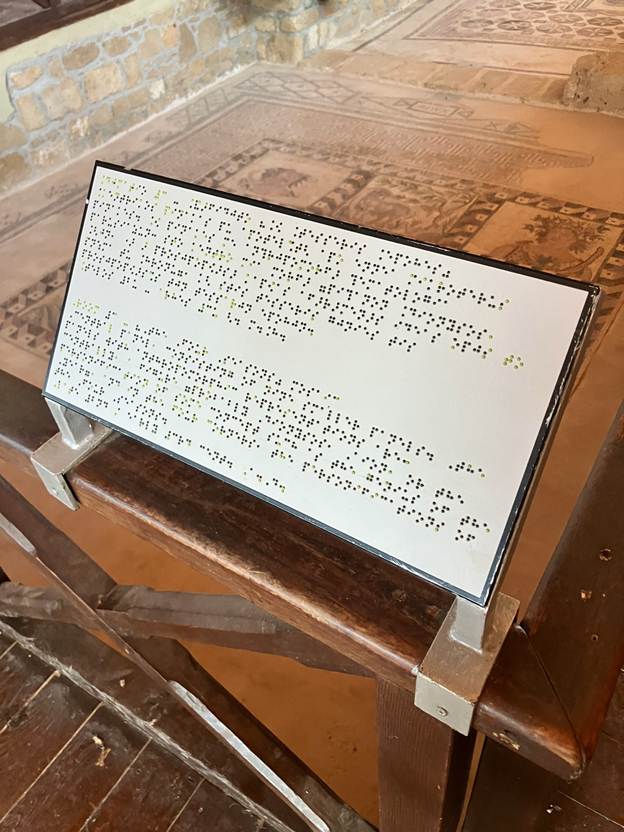
The most fascinating and meaningful thing I had seen in this building was not from the times of the ancient Romans or Greeks; it was a modern fixture that I had yet to see in Cyprus. Each section was accompanied by an explanation of its focus. However, next to that was a translation in braille. This was meaningful to me because my fiancé is blind and has no vision whatsoever. It allowed me the possibility of bringing her to Cyprus one day and having her enjoy each exhibit, something not common in America, despite the Americans with Disabilities Act being signed by George H.W. Bush in 1990. This would allow her to experience this with me. History is a highly visual field, particularly when it comes to artifacts and relics that lack writing or are inaccessible due to their fragile nature. Seeing these braille translations made my day; I immediately informed her, and she sounded just as impressed as I due to the rarity of it.
This, combined with the pure entertainment provided by the flooring itself, made this an extremely enjoyable field trip. Not only was I able to experience the history behind this, but I also saw something in this realm of artifacts for the first time. I was able to envision myself discovering the findings due to our experience in the field at the site. I know what they had to do to carefully discover and preserve these floors. Additionally, I was comforted by the thought that one day, I may be able to enjoy these with someone extremely important to me, who does not often get the chance to experience such remarkable and historically significant findings.
 Vigla Archaeological Project
Leave a comment