I have always been fascinated by funerary traditions and the way people remember and honor their dead. It’s seen throughout time and throughout different cultures, humans want something nice for their loved ones after they pass. This week we visited Amathous and the museum in Limassol. The museum contained a variety of burial artifacts from Amathous. These included funerary stele and tomb markers, jars from a cremation cemetery, goat/sheep knucklebones, a variety of tomb offerings, and even a cast of a cat burial. All of these items bring to mind similarities between people then and people now when it comes to death. Humans have always felt the need to remember those they love who have passed and they’ve always done what they could to send their loved ones off well.
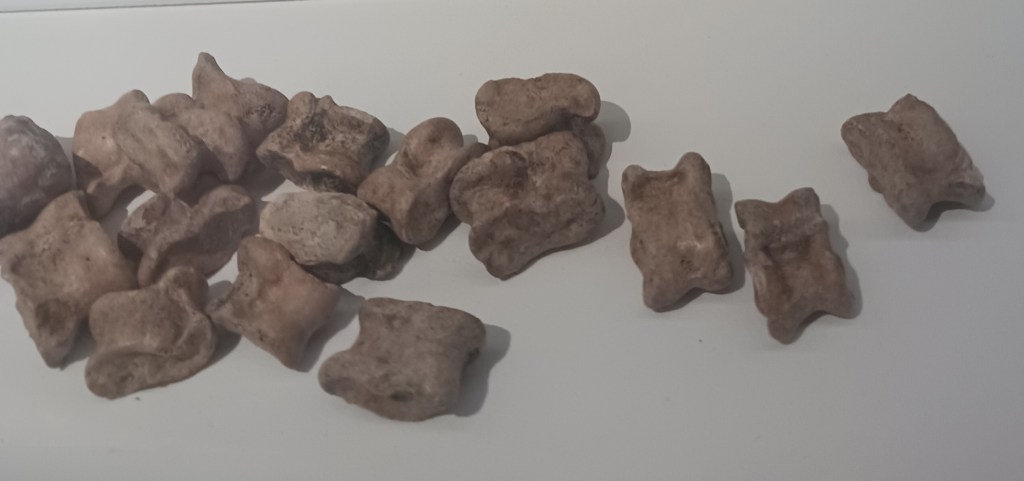
One specific example of sending their loved ones off well found in Amathous is the goat/sheep knucklebones. According to the plaque at the museum, the knuckle bones were used in games of both luck and skill and also considered to be protective. It is possible that either someone was buried with these for the purpose of protection or because the person buried in the tomb enjoyed playing the knucklebones games. Either way this is likely an example of ancient people doing their best to give a loved one what they’d need for the afterlife. To me this calls to mind people who leave beloved toys at children’s graves or bury family members with their favorite jewelry.
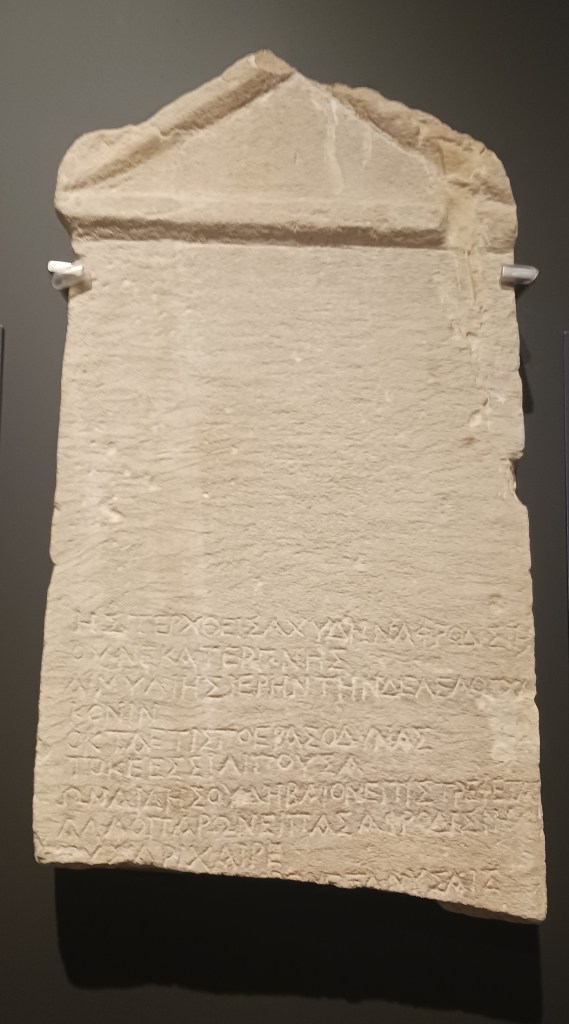
There are also the cases of the funerary stele and tomb markers that bring to mind similar practices today. The first is one inscribed for an eight year-old named Aphrodisia. It states she “was deeply adored for her pleasant allure, leaving mournful agony to the parents, which Hades surely doesn’t take into account.” This reminds me a lot of inscriptions you see on headstones today that speak to the character of the person buried below. It also makes me feel a great connection to the people of the past, as I’ve lost several young friends and understood this grief completely. It does do something I have not really seen in modern gravestones and address possible passersby stating “But you who are present here, say ‘farewell charming Aphrodisia’ and you may continue happily on your way.” This addition made me feel even more of a connection to the people of the past.
People have always felt a connection to their dead and it’s hard not to feel the same connection to people of the past when you see the ways they dealt with death. The funerary practices found in Amathous touched me deeply and I really enjoyed the opportunity to see the artifacts in the museum in Limassol.
~ Apollo Blue
 Vigla Archaeological Project
Leave a comment