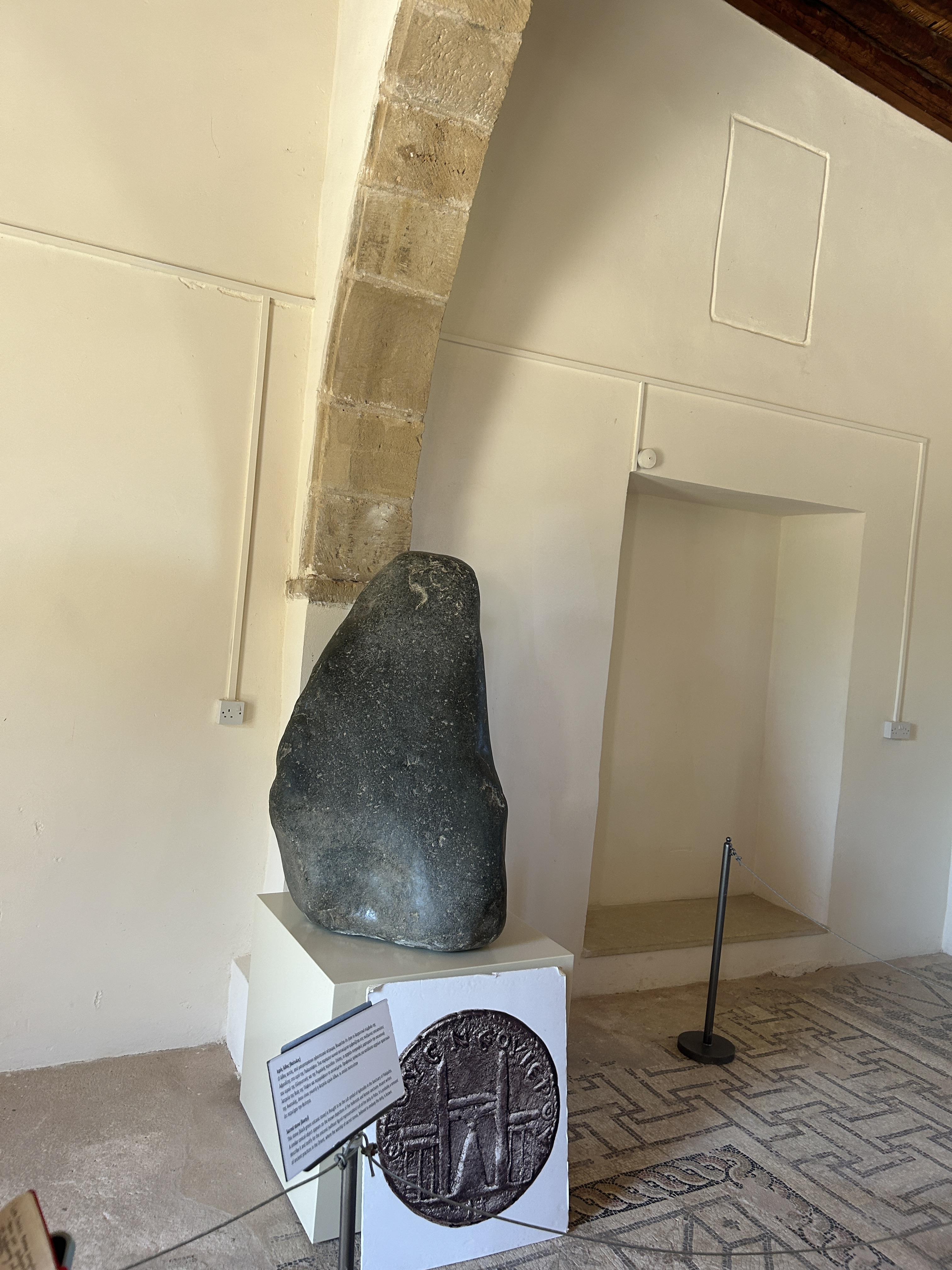
On our field trip to Paphos, I see why the Cyprus is referred to as the island of Aphrodite. In Greek mythology, this is told to be her birthplace, but it is clear here that her history on Cyprus runs deeper than even that. Before the Greeks arrived on the island in the 12th century BCE, the local people were already worshipping a fertility goddess, whom the Greeks gradually Hellenized over several centuries, until she became recognizable as Aphrodite around the 4th century BCE. During the Hellenistic Period Paphos emerged as the most prominent place for pilgrims to worship her. We visited the Temple of Aphrodite at the ancient city of Palaipafos, where veneration continued even long after the city of Paphos was moved. Central to the worship of the goddess was a large black stone, a cult statue which we saw on display in the museum at the Temple of Aphrodite site. This is indicative of a very different notion of Aphrodite than we associate with her today.
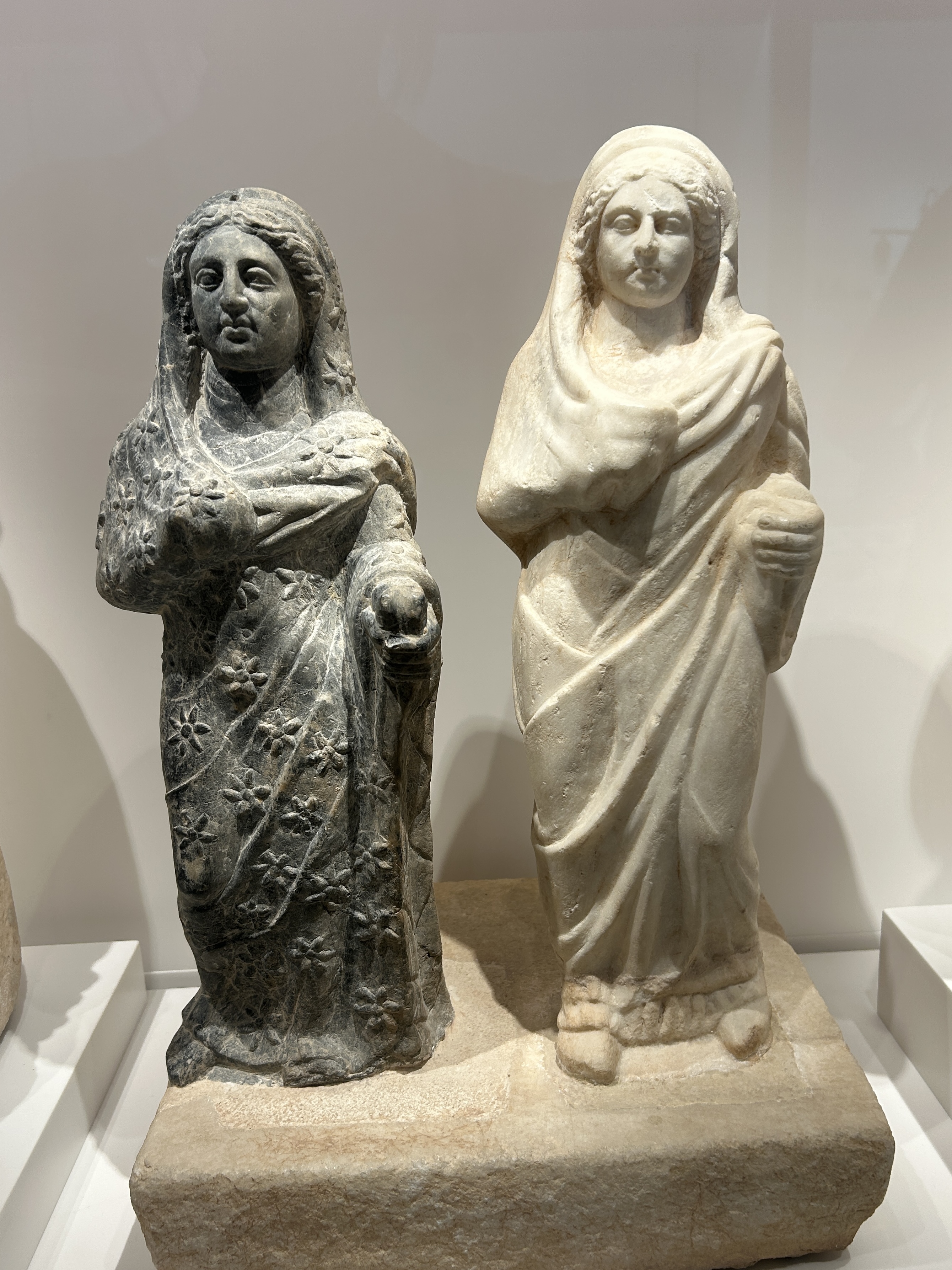
Originally the deity was worshipped for protecting Cyprus and fertility of the island, and only came to be associated with sexuality and love in time. Historians have said that her ancient cultic worship included sacrifice, divination of the future, the burning of incense, and ritual bathing and prostitution. Aphrodite is represented very differently on Cyprus, more raw and of the earth. One such representation, a statue depicting both her earthly and celestial forms caught my eye in the Paphos museum, and I have learned that there has been a continued duality to Aphrodite. In Greek literature, there is Aphrodite Urania (a transcendent, heavenly Aphrodite) and Aphrodite Pandemos (common, for the people). I wonder, but am finding it hard to research, if Aphrodite Pandemos stems more from the Cypriot Aphrodite, where her roots are a little deeper and feels more grounded. The celestial Aphrodite, Urania, seems to me to be the more Hellenized idealization of the goddess.
Annika Schramm
 Vigla Archaeological Project
Leave a comment