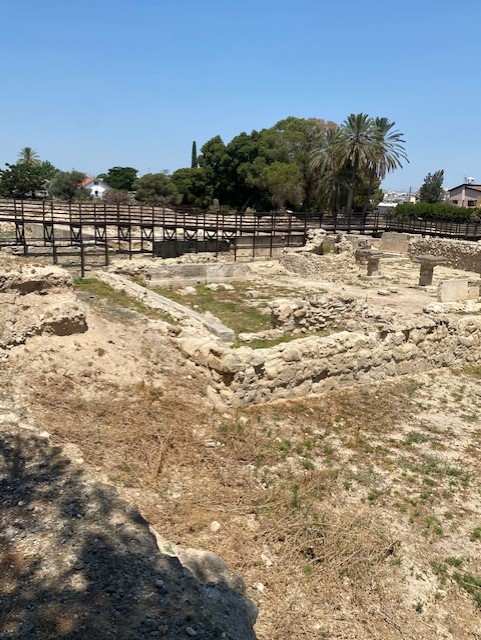
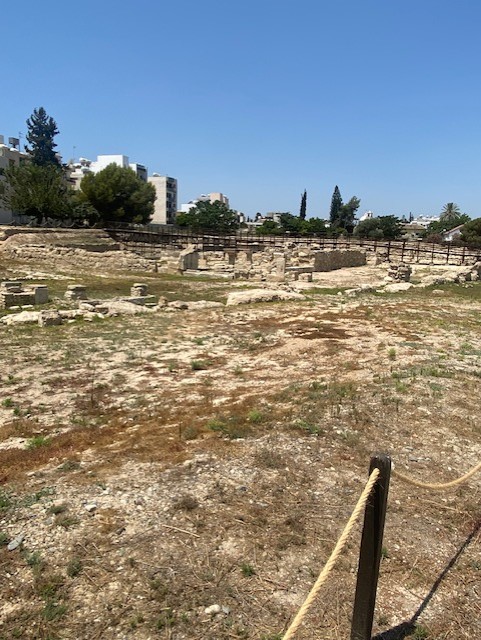
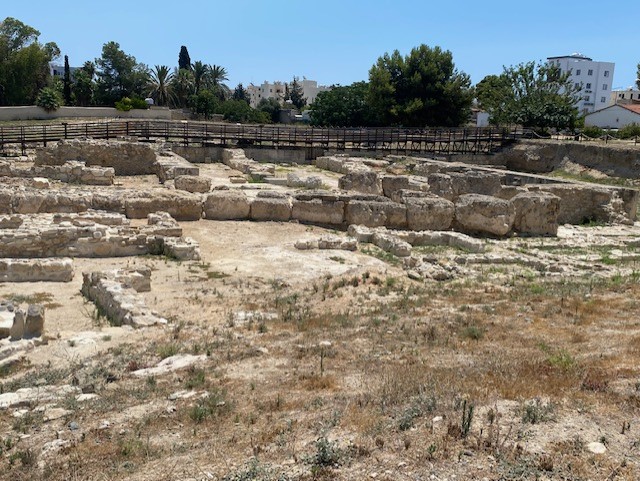
Near the Larnaca Archaeological Museum is the excavation of the site of Kition. This area is a breathtaking example of an ancient city-kingdom. It not only spans from behind the museum but also a block away where there is a more open space for you to view. The walls may not be as grand as some of the things you think about when viewing ancient places, but it is beautiful in its own right. The history of Ancient Kition begins back in the 13th century BC when the Mycenaean Achaeans inhabited this area of Southeastern Cyprus. It was occupied until the 11th century BC before the Phoenicians in the 9th century. The walls are made of large limestone. However, in the 10th century BC, this settlement was destroyed by a natural disaster. When the Phoenicians occupied this settlement a century later, they had built on top of the fortified walls and created a temple for their Goddess Astarte, the goddess of fertility. This temple would go on to be used until the 3rd century BC. However, five temples were built during this time of occupancy of Kition. During the Phoenician phase of occupation here at Kition, the area was widely used for exporting goods through the Mediterranean. Ptolemy I of Egypt would come through during the Phoenician era and conquer Cyprus diminishing the current occupancy of Kition.
The occupation phases at this site are remarkable and so it the view from the bridge that walks you through the excavated site.
 Vigla Archaeological Project
Leave a comment