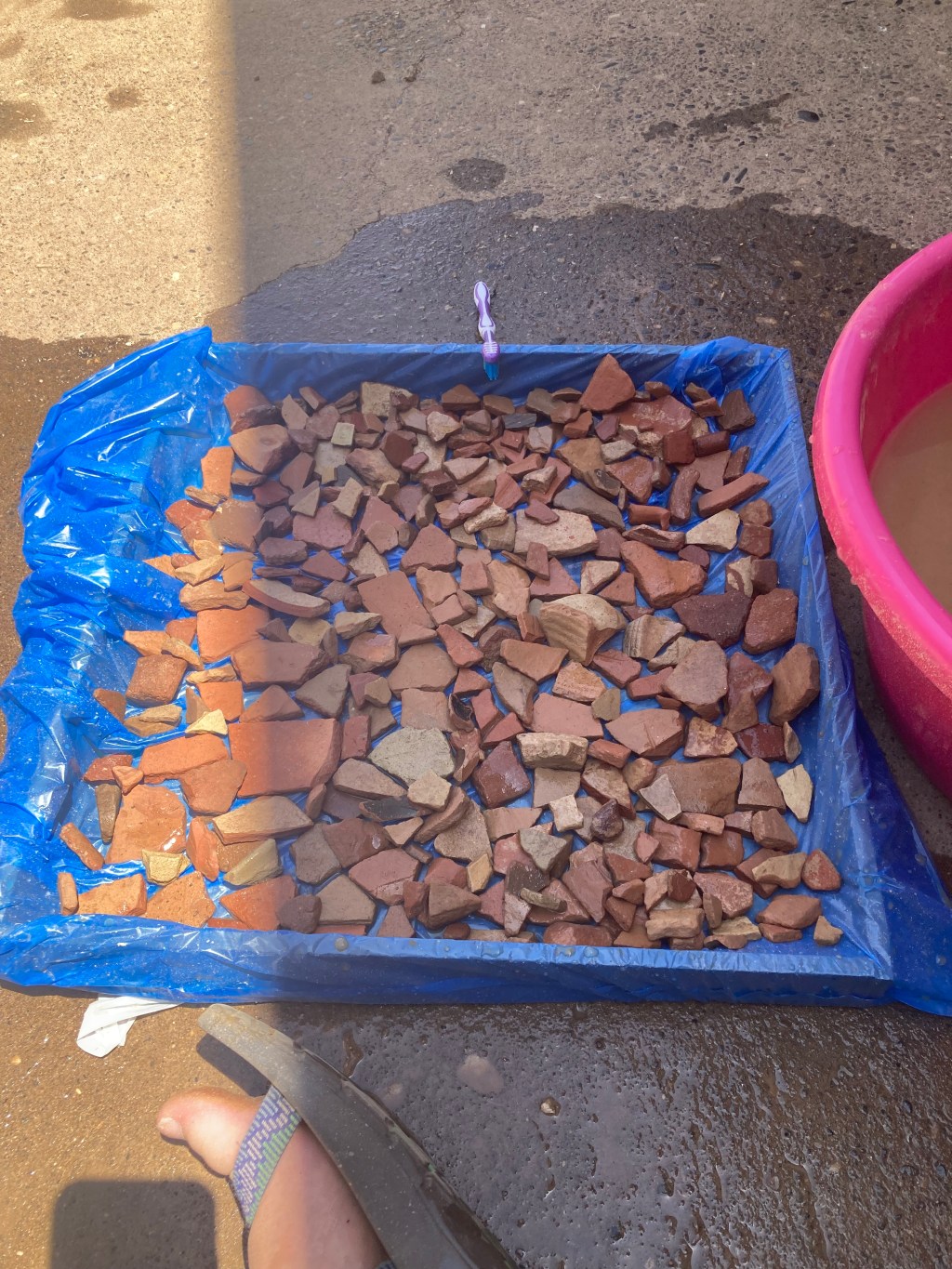
There are two main archaeological tasks we are expected to do on this trip. The first one is going to the dig site, digging, and excavating – doing the actual moving of dirt. The second is washing all of the pottery that comes into the field. At first glance, pottery washing sounds simple and easy, right? Just throw some soap on it, scrub it with a wool pad, and it’s clean. That is incorrect. The pottery is very, very old. It has been sitting in dirt and mud for thousands of years. It is also extremely fragile, so it has to be washed with care. The way pottery washing actually works is we go to Terra Ombra, we fill up a basin with water, grab a toothbrush, and find a spot on the ground that is in the shade. The shade part is tricky because, as the day progresses, the shade becomes more and more scarce. After we get to our little station, we get a bag of pottery. One of the most important things we have to do is to put both the bag and tag under the plastic in the tray. This is so that the pottery can be identified. Without that, there would be thousands of sherds of pottery everywhere, which is pretty useless.
The goal of washing pottery is to clean off both faces of pottery and one side fully so that a ceramicist can read them. Well, you may ask, what does that mean? There are experts like Dr. Olson who can look at a piece of pottery and notice its fabric (the clay), how thick it is, the glaze, the detailing, and other attributes besides, and be able to identify its use and oftentimes even date it. This is greatly important as the type of pottery (cookware, drinking glasses, anaphora for shipping) can tell us what was being done on site. Maybe it was a place of production, or a place of drinking and eating; the type of pottery can give great insight into those sorts of questions. It also can help date the site. Different styles and types of pottery are linked to specific time periods, so a ceramicist can look at pottery sherds and get a good idea of not only what people were doing in the area but the timeline in which they were doing it. In order for them to successfully do that job, though, they have to be able to read the pottery, so it has to be cleaned. This sometimes is a much harder job than it sounds. Some of the soil is full of clay and it cakes onto the pottery. It is also very old pottery that cannot be scratched or damaged, so we are using toothbrushes to try to get off thousands of years of dirt. Sometimes, cleaning a single piece of pottery can take twenty minutes because of how caked in the dirt is. At times, it can feel frustrating as the dirt feels immovable. Often though, with some patience and elbow grease, you can get the piece clean. When we have big pottery days, there will be several people to one bucket. On those days, when there is a particularly frustrating piece of pottery, often we will take turns with it. I really enjoy those moments as it feels like a tremendous piece of teamwork to get one piece of pottery clean.
Madi Barber
 Vigla Archaeological Project
Leave a comment