After finding SO many pieces of random broken pottery, I was wondering if I’d ever find anything still in one piece! It seems rare to be lucky enough to find something whole. But one day on site, I got awfully close.

What I had uncovered is known as an unguentarium, and I had to look up the name after seeing it labeled on the bag, as I had never come across this term before.
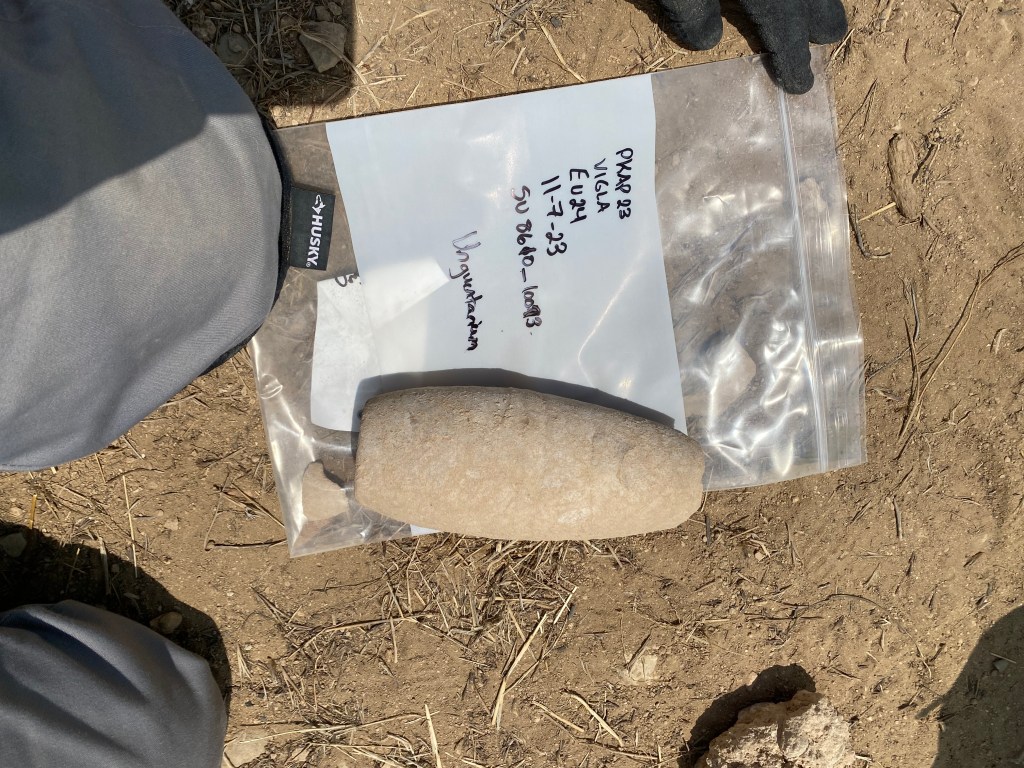
Unguentarium (or “ointment vessel”) is a broad term. Sometimes also called a lacrimarium (“tear vessel”), they were used for storing small quantities of not just ointments (or tears apparently), but other liquids and powders as well. The term refers more to the function than the design, as their design has fluctuated through the years and the locations of manufacture. Early examples seem to represent small versions of amphorae (large shipping and storage vessels). It’s easy to imagine doling out olive oil from a large amphora into its tiny twin version, to take from the market back to the home. They could then be used at home for storage, or for setting out on the table to decant oil or wine. These would have been ceramic: made from clay, molded by hand, and baked hard, like the one I got to excavate at Vigla. Later versions were colorful blown glass. Delicate and intricate. They held perfumes, cosmetics, medicine, oils. Rarely, they were smithed from metal, or even carved from rock. Unguentaria come in many shapes and materials, and I feel grateful that I got to find one in nearly one piece.
-Rachel
 Vigla Archaeological Project
Leave a comment