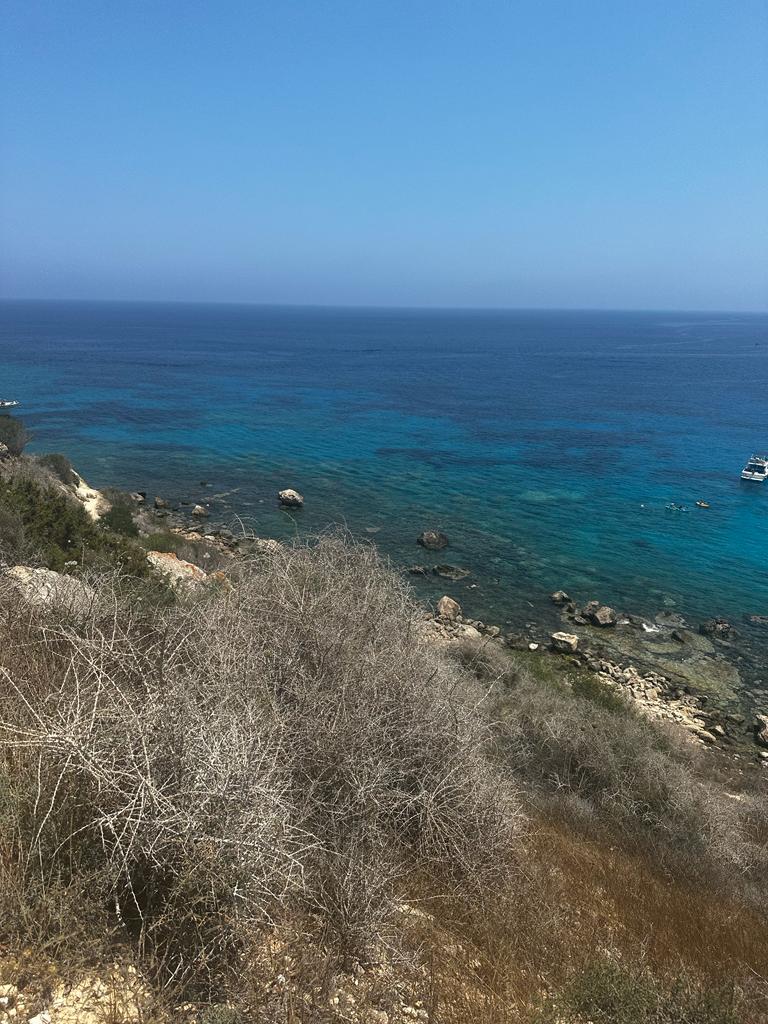
In two weeks of being on the island I have gone to the beach each and every day. When I first stuck a toe into the sea I was blown away by its warmth. The Mediterranean invites you in with its salty breath as its waves kiss the shore. I have never felt a body of water so reminiscent of an Epsom soak, soothing tenderly tired, overworked muscles. Some days though, by surprise waves are kicked up in the afternoon breeze and sand clouds the turquoise waters. Yesterday was not one of those days. The sea was calm and clear. So slowly, slowly I made my way out to the red buoys that provide me with a strange sense of security, like as long as I stay on the side nearest to shore, the Mediterranean will remain a safe space for me rather than a place which has claimed permanent ownership of many who set out with other destinations in mind. This is what I thought of as I made my way into the ever-deepening sea. For thousands of years people have been using the Mediterranean as a trade route, and Cyprus has played a crucial role. This is evident throughout the island with numerous ancient shipwrecks scattered all along the coast. For example, the Mazotos shipwreck dating to the 4th century BC which is located in the Larnaca district laying at a depth of 45 meters. This wreck consisted of dozens of wine amphorae and provides valuable information about trade routes and relations such as those between the Aegean people and those of the Eastern Mediterranean. Many more ancient wrecks like Mazotos fill the waters around Cyprus, and a great deal of resources and trained underwater archaeologists will be needed to really begin the process of scratching the surface of all that hides out beneath the stunning salty water. The next time I take a dip I will certainly be thinking about all that rests on the bottom of the sea and how much more we have yet to discover.
-Grace Simonsen
 Vigla Archaeological Project
Leave a comment