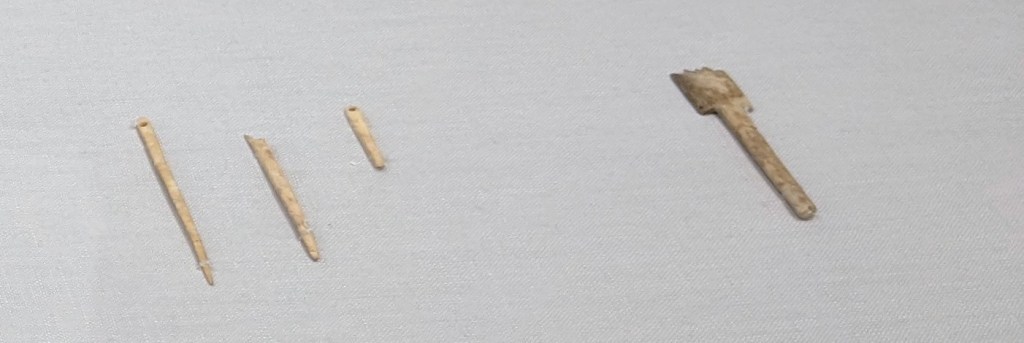
On Wednesday July 5, I visited for the first time the Archaeological Museum in Larnaca. The museum was impressive for its large selection of artifacts spanning the whole of known human habitation on the island. My favorite section of the museum was its collection of Neolithic artifacts (5000-3900 BC). These included numerous stone, clay and bone artifacts. There were both stone tools such as those for food processing and figurines which were described as clearly phallic in nature. However, I failed to see this as obvious, and I would like to gain a better understanding of this assumption. What I found to be the most interesting of the bone tools were needles, some of which even included a small eye which would have had to have been carefully carved out and would have allowed those using the needles to sew. The needles indicate the production of textiles on Cyprus in the Neolithic period which may have included the construction of clothing, nets and other perishable materials which rarely survive in the archaeological record. While needles have been found in many other parts of the world with dates thousands of years earlier, it was still impressive to see such small and important tools in person. Along with the needles at the museum there was also a small object (my guess is roughly 2.5 in long) which was flat with a handle and square head with jagged edges, almost like a fork or little brush. The purpose of this object is not known but it reminded me of something which could be used to brush out a dolls hair or comb in the sand. Perhaps this object was crafted for a child or used for special dishes, but like most things, we will likely never know. I would highly recommend a visit to this museum and plan on going back again with more time to read about and explore objects in more depth.
-Grace Simonsen
 Vigla Archaeological Project
Leave a comment