Nea Paphos was a Greek and later Roman city on the coast of Cyprus west of modern day Paphos. Sometime after the Diadochi wars for the control of Alexander the Great’s empire, Nea Paphos was made the capital of the island replacing Salamis. So with that micro image of its history, you just know it had to be a grand place.
In 1965, Polish archaeologists began excavating the site and started to uncover the vast amount of history that lay beneath the surface. In 1980 the location was designated a UNESCO world heritage site and today it is known rather more publicly as the Paphos Archaeology Park. It really is a bit of a theme park for history nerds without the flamboyance or pageantry of a real theme park. It is quiet, almost somber, and requires hiking around the site from location to location. Plenty of time to contemplate what it may have looked like many centuries ago as you walk. You must realize that of the several villas, the theatre, the basilica, the agora, and other remains that are exposed and left for tourists to come see, everywhere under your feet you walk over other buildings or roads that have yet to been discovered or uncovered. Nea Paphos might very well be a Pompeii sized site waiting to be understood.
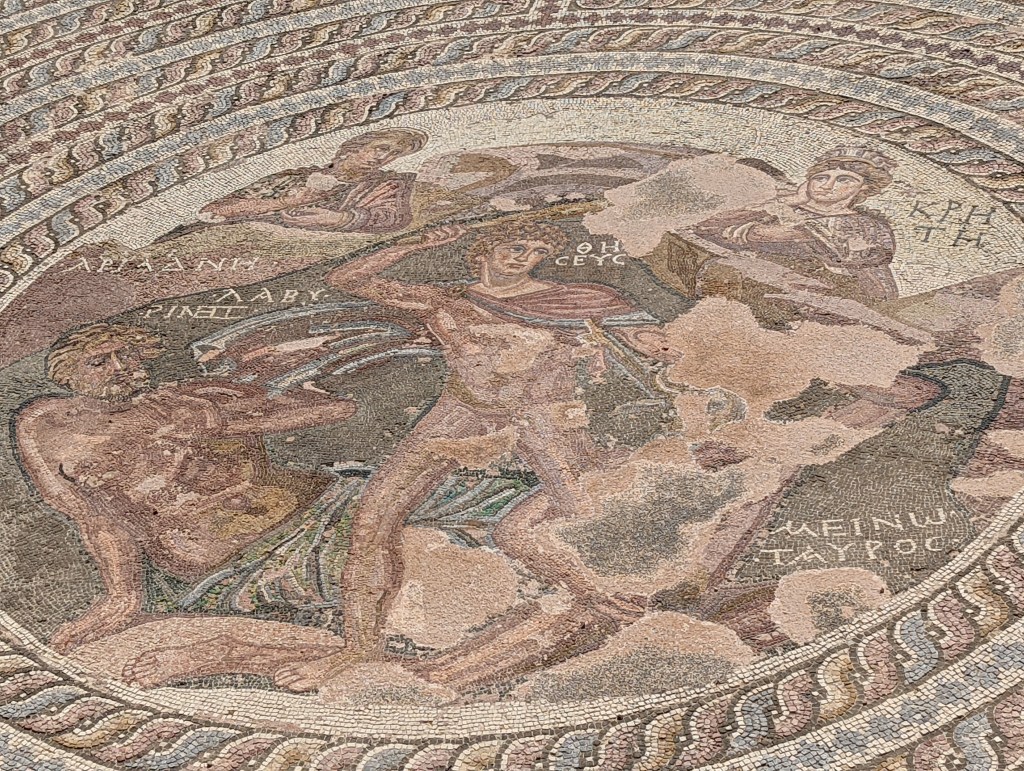
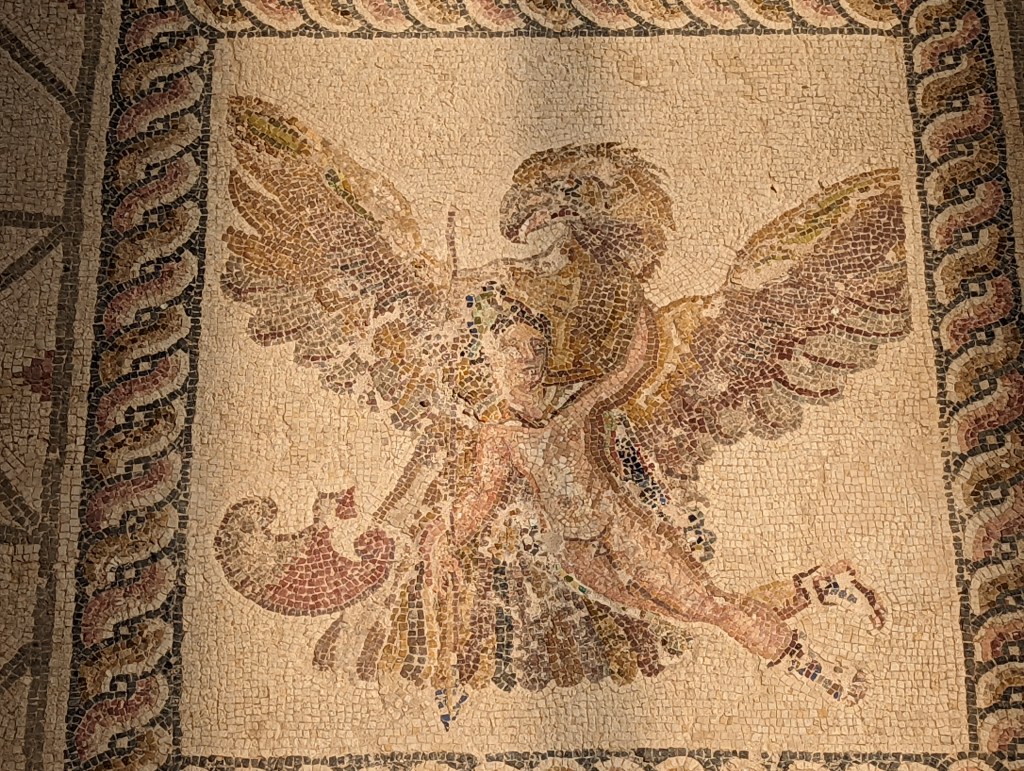
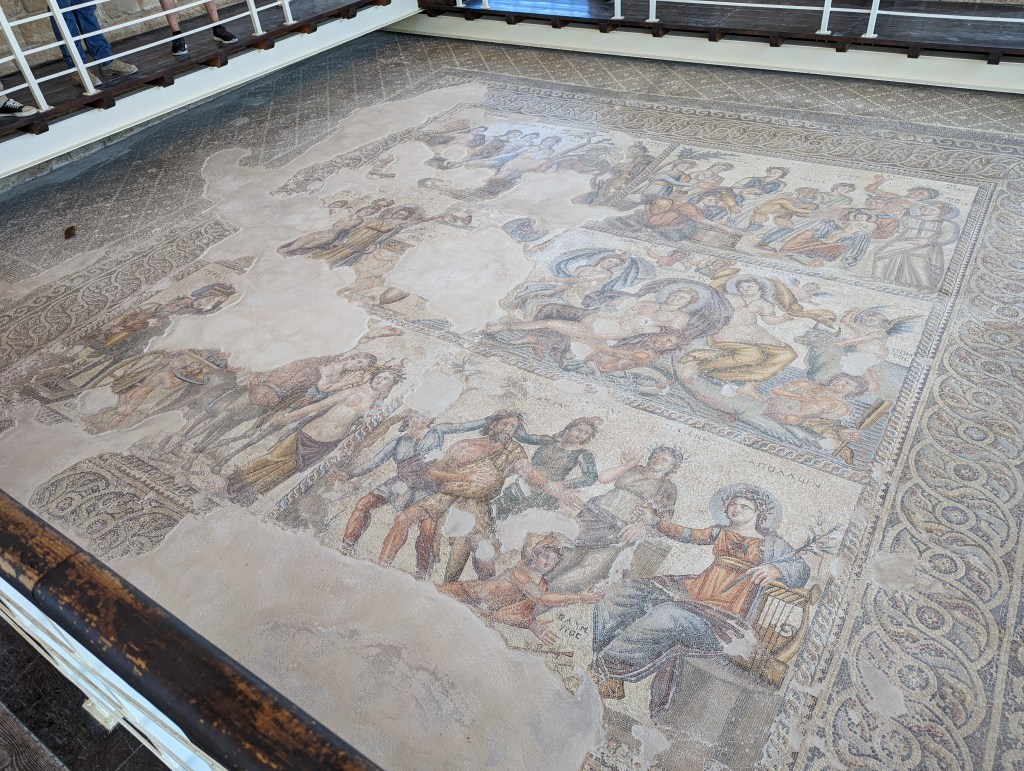
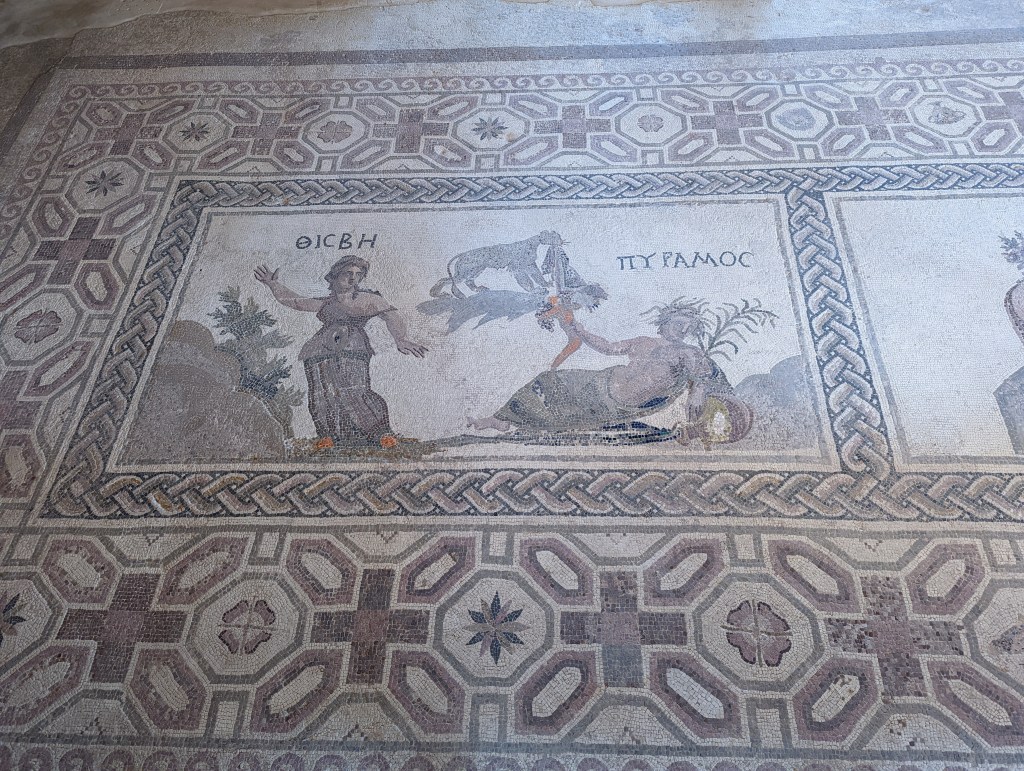
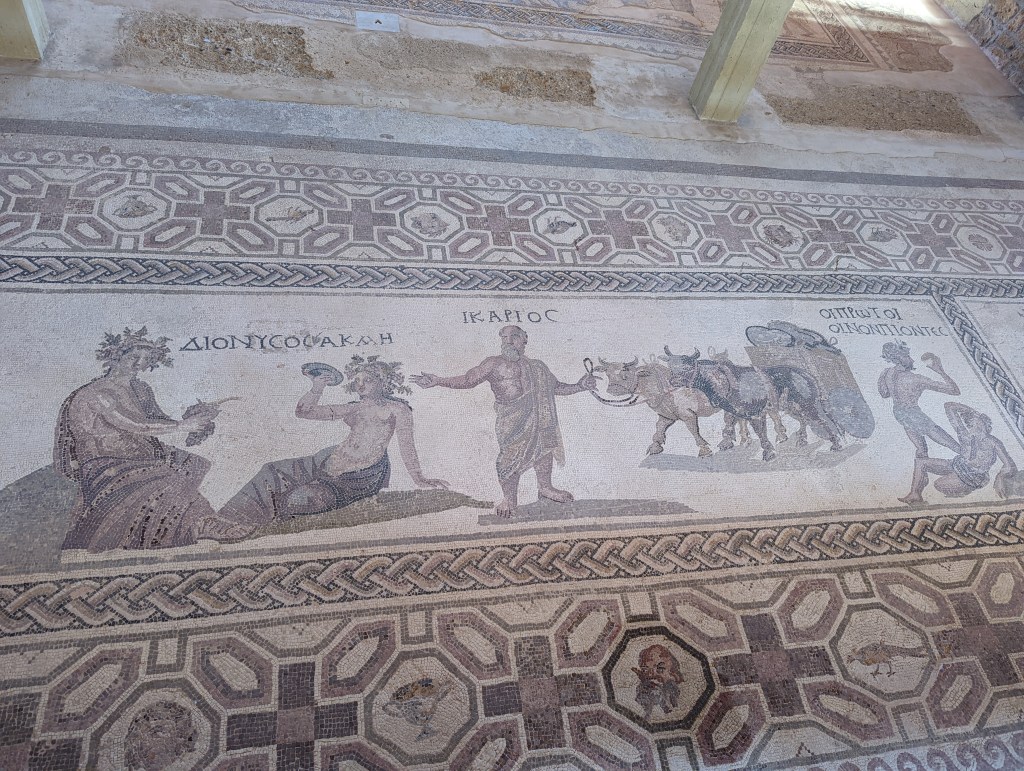
What the park is known for most is the incredibly preserved and varied Roman mosaic floors. Several grand villas of the wealthy had entire rooms covered in representations of great Greek mythology and cultural iconography. Be it the birth of Dionysos, depictions of gladiatorial combat, or pleasing geometric shapes woven into patterns. Most of these mosaics date from the 2nd to the 4th centuries CE, and sadly earthquakes struck Nea Paphos and much of Cyprus in the 4th century, destroying many cities and sites, often causing people to abandon them all together. But the sudden departure has left much of the areas rather well preserved even after all this time.
The photos speak for themselves.



-Adam E.
 Vigla Archaeological Project
Leave a comment