My one big find while excavating Vigla this year was a figurine. After my time in isolation from COVID, I had my chance to get back at digging. I was placed in a section that was initially given the designation of Stratigraphic Unit 8207 (SU8207). The way I described it to everyone was that is felt like I was in the back seat of a Toyota Corolla with the windows up without air conditioning in the middle of summer. It was low enough below the surface that no breeze would come through it, so after just minutes down on my knees sweat would drip from my nose, my chin, my neck, and begin soaking through my shirt. I’m fairly tall standing at 6’2″ and around 185 pounds, so the cubic footage of this area trapped between an ancient stone wall and the exterior wall of our trench was extremely cramped. The pit was triangular in shape where the stone wall and trench wall nearly came together the length of the SU. It was originally being worked on by another person larger than me who was here for the early days of the project, so I have no idea how he managed to maneuver around in it.
The early parts did not yield many finds. Eventually it was realized that I blew past the floor of the room that used to stand there, but we had a section of it still present. This helped us determine the location of the floor as I worked my way into the more narrow parts of the SU. And this is where things started getting interesting. After some removing of floating stones in the broken mud brick layers, approaching the assumed floor level, I had an obvious collection of broken pottery rather conspicuously stacked on top of each other. As I worked the sherds of pottery out, nothing stood out about them other than the fact most of them seemed to fit together or be nearly identical. Something I initially took as a stone, as I do not have my archaeologist eye developed yet, I worked around and ignored. After taking a moment to get a drink of water and catch some of the coastal breeze, I stared down at the collection of material and realized there was a pattern on the stone. I got back in the trench and brushed away at it for a short way before a smile took over my face.
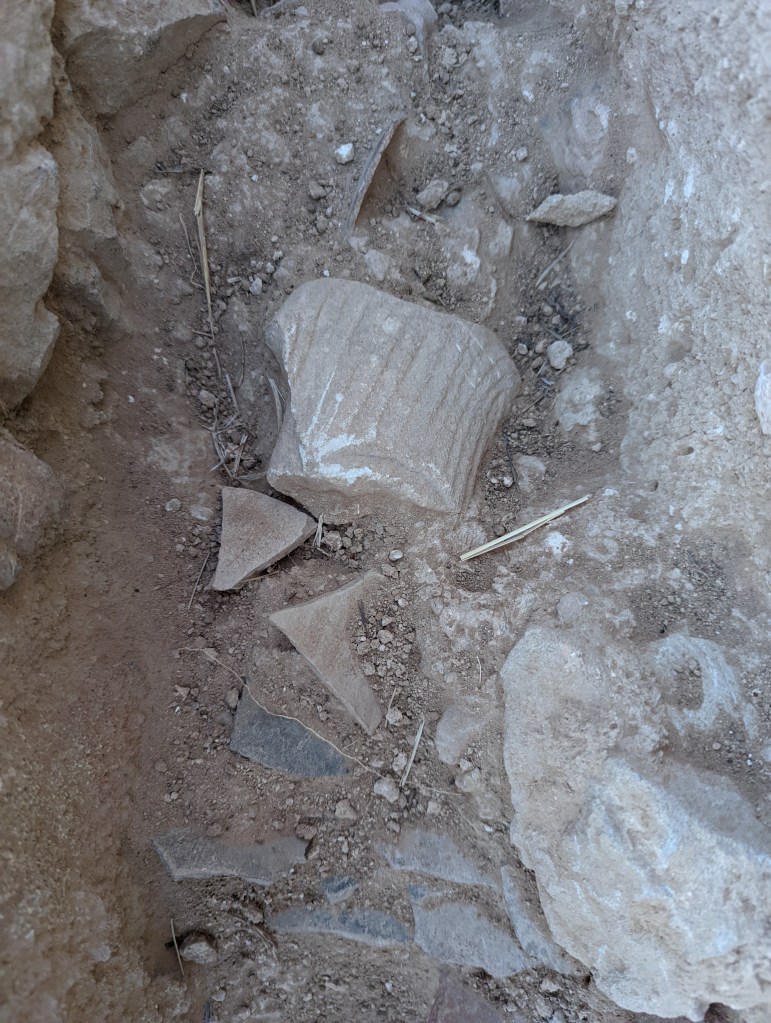
I called over for a more professional eyeball and immediately was told I found a figurine. To be honest, I did not even assume it was something like that at first. I had no idea what I was looking at. But once I was told it was without a doubt a figurine made of limestone, it made perfect sense. I spent time working around it, removing small amounts of dirt with a brush and chipping slowly away at the compressed mudbrick layer. We gave this floor level area with all this material culture a new designation of SU8218. I was not able to work on it more until the following day where I finally cleared enough around it where it came loose. I pulled it from its 2500 year old resting spot:


So I found a male figurine. You can see the beard, right at the shoulder/neck level. The figurine lacks a lower half, head, and arms, as they have been broken off long ago based on how smooth the corners of the breaks were. I was hoping to find the other pieces, but they were not located in this deposit. Perhaps they lay just inches away beyond the wall of the trench, as more pottery was imbedded there at the floor level.
There was a discussion about the artifact on site for a short while and it was concluded that is had both a Greek influence (which makes sense as we are working a Hellenistic site) but also had a Semitic influence, mainly the beard shape and presentation. If you notice on the front, the body has a shape that looks like a robe, but as one of the graduate students pointed out to me, the ‘bite mark’ on the lower part of the body was intentionally shaped, as the vertical robe pattern continues underneath the mark. She suggested the robe was that of the Greek Peplos or Chiton, a common form of clothing at that time consisting of a long tunic for men or a long shoulder draped robe for women. A belt, rope, or long part of the hanging fabric would be wrapped around the waist, giving it the appearance of another piece of fabric over the legs like a skirt or kilt.
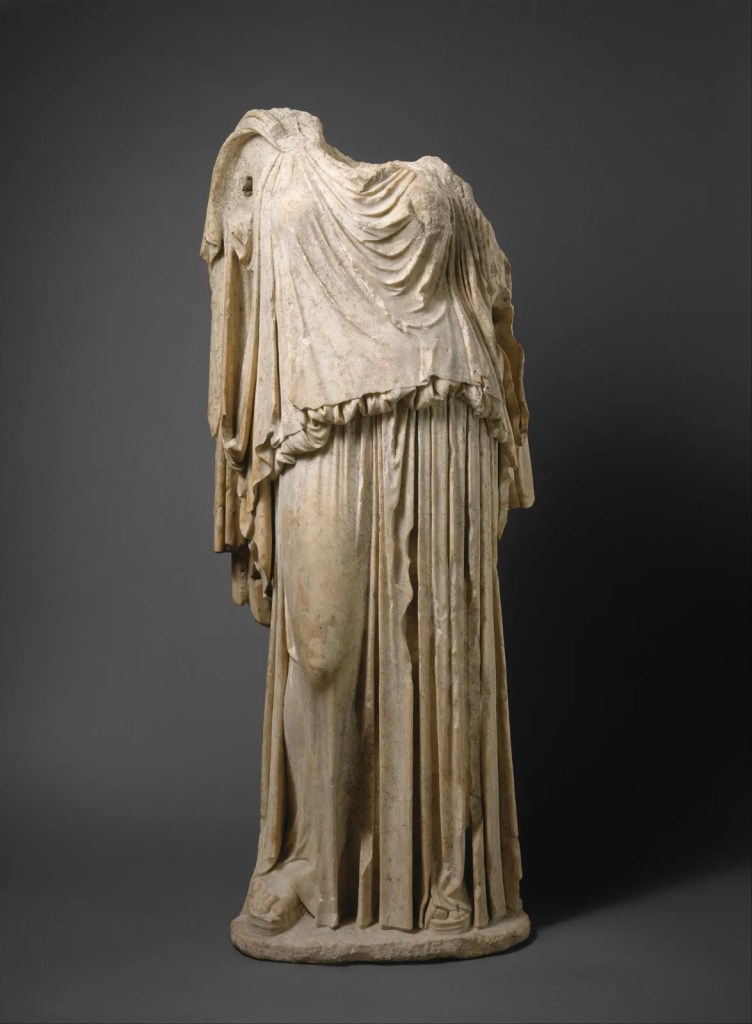
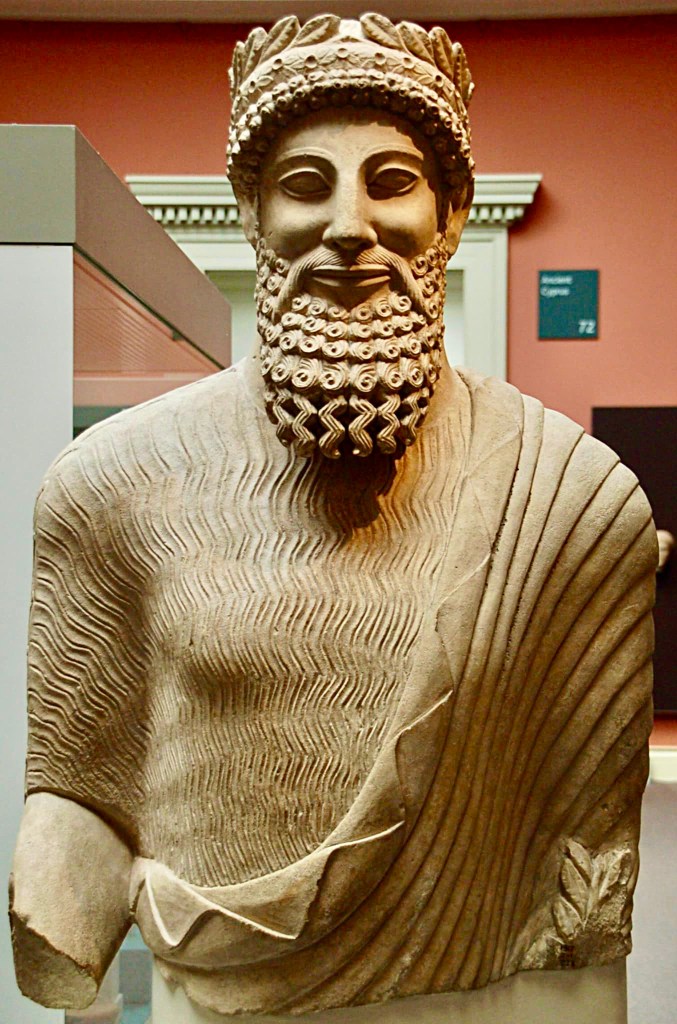
As we don’t have the whole figurine, it is hard to give a purpose or assign a more specific origin to the artifact. Everything would be speculation or an educated guess. So in the spirit of speculation, I took the time to try and find culturally similar limestone figurines or statues using internet resources. The focus was on textured square beards and robes that had the pattern of vertical yet angled plumage. Everything I found that had these characteristics were from Cyprus or in the Near East. Trying to dial in the time period ruled out some objects, but some of the most comparable examples were anywhere from 200 to 400 years older than the time period our site was. This is to not say that this figurine had to be made around the end of the 4th Century BCE, but it would be easier to explain its presence if it were manufactured around that time. The closest example of a large, much more costly and well produced statue I found was that of a Limestone statue sitting in the British Museum found in Cyprus. It was from the Achaemenid era showing both Persian and Hellenistic influence. It however dates back to the Late 6th to the Early 5th century. Perhaps there is a conceptual relationship between my small find and this magnificent piece of art. More likely though, my unprofessional mind is looking for connections I am no where near equipped to make.
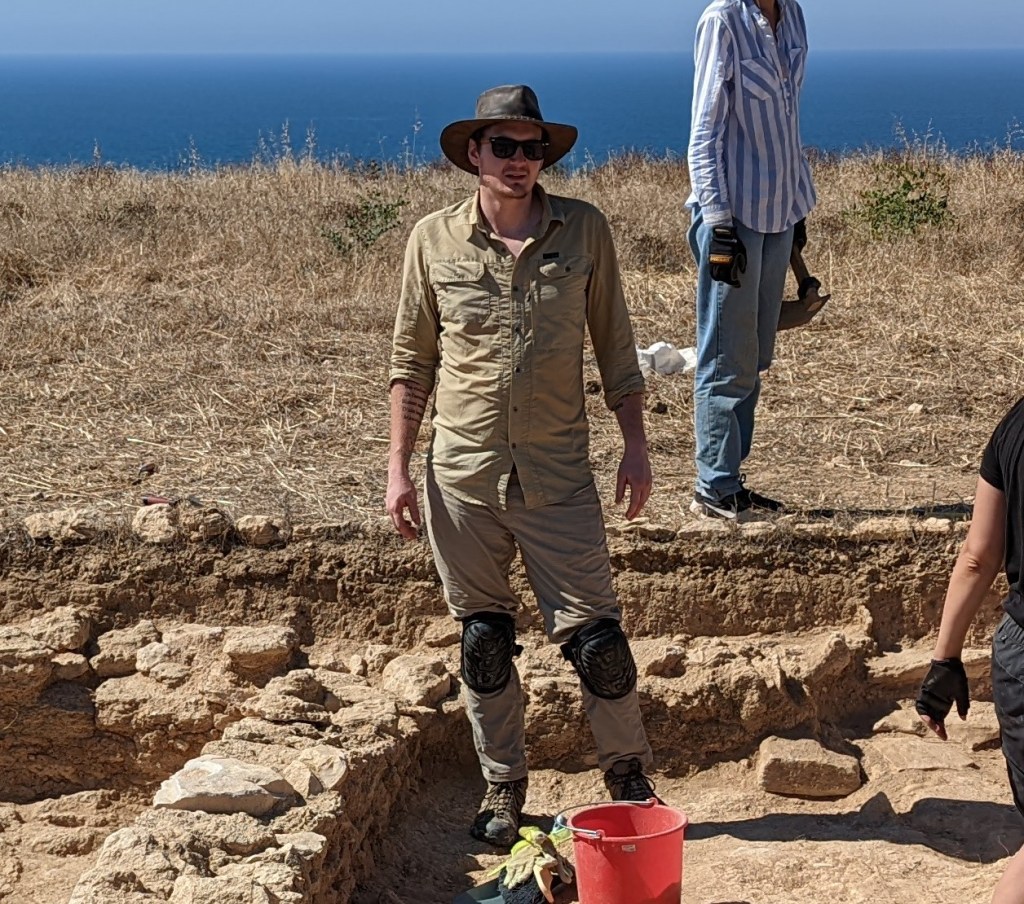
I cannot wait to read the analysis of the find by an expert. The figurine I decided to name Cora, in honor of my close friend back home in Denver whose father was from Athens. She bought me a leather hat on my birthday last year and told me to wear it on my first archaeological dig. Indiana Jones is what everyone always thinks when you tell them you are into archaeology. Here’s to you Cora. You are now forever associated with a headless, bearded man.

-Adam E.
 Vigla Archaeological Project
Leave a comment