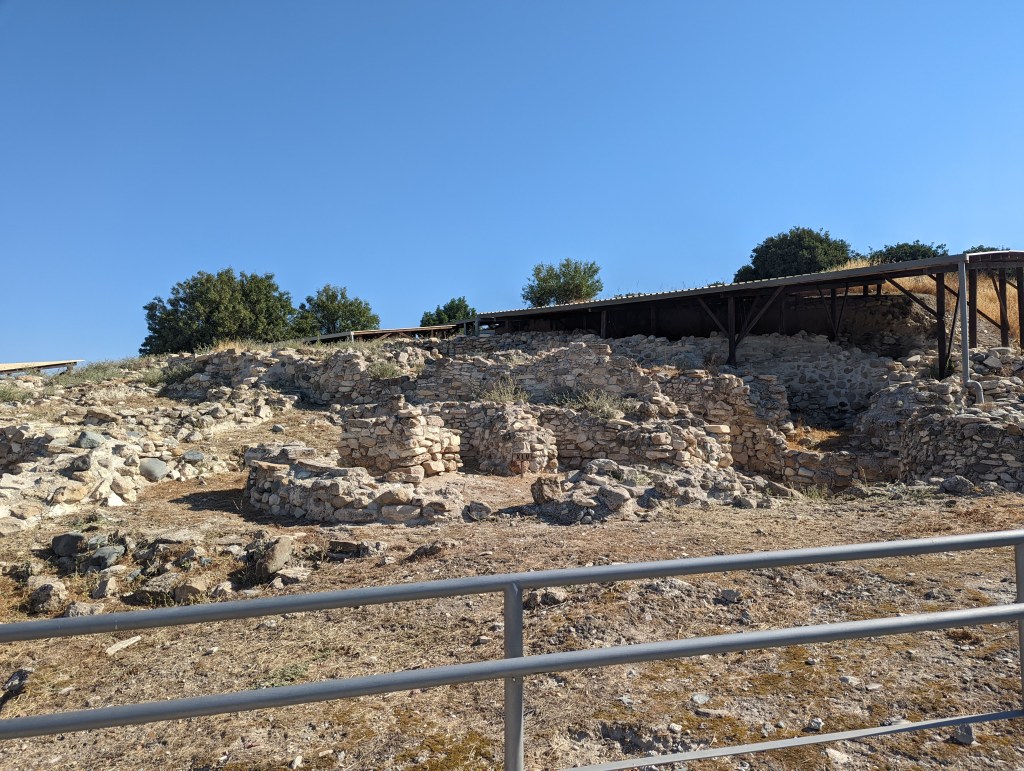
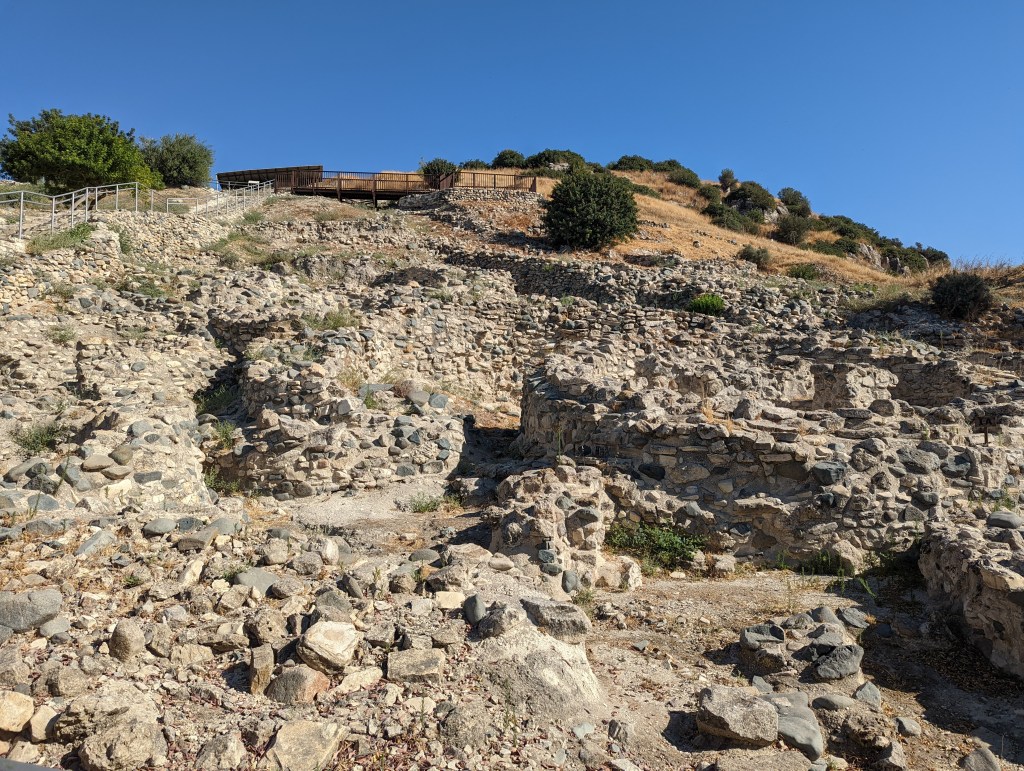
In between Larnaca and Limassol lies a Neolithic site of the earliest known culture on Cyprus. It lies a good distance away from the shoreline and is mostly enclosed by surrounding hills that a river wraps around through. These people were agriculturalists of cereal crops, gatherers of local fruits and nuts, but also subsisted through shepherding and hunting as well. This is known based on four types on animal remains that have been found in excavation: deer, sheep, goats, and pigs.
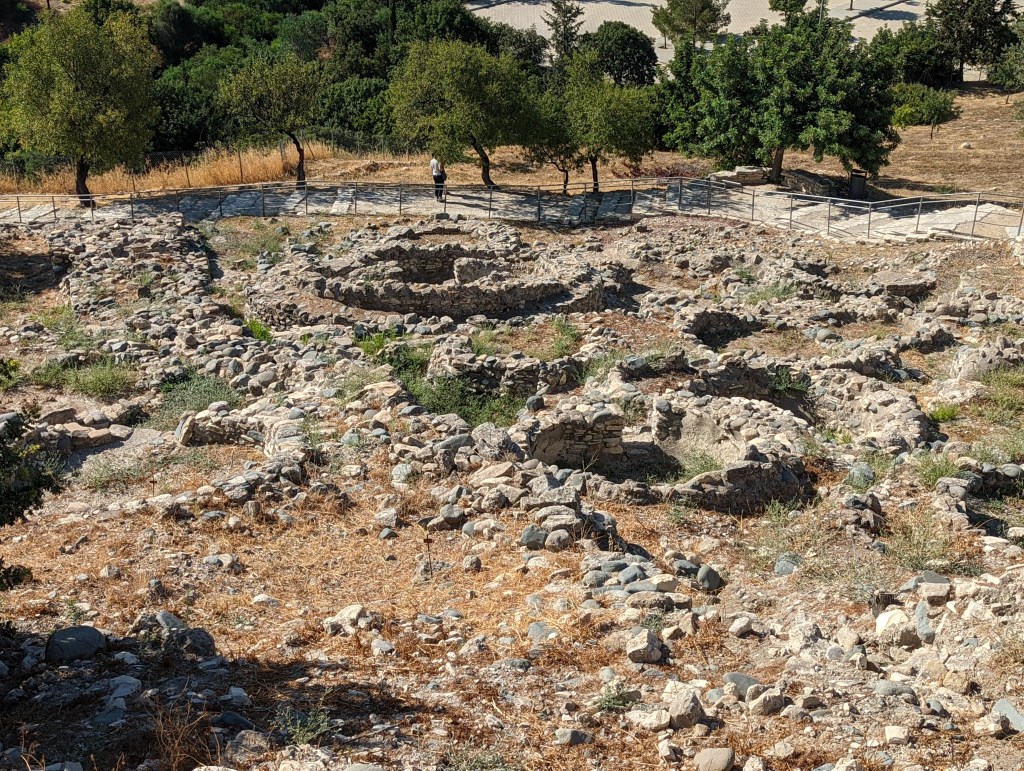
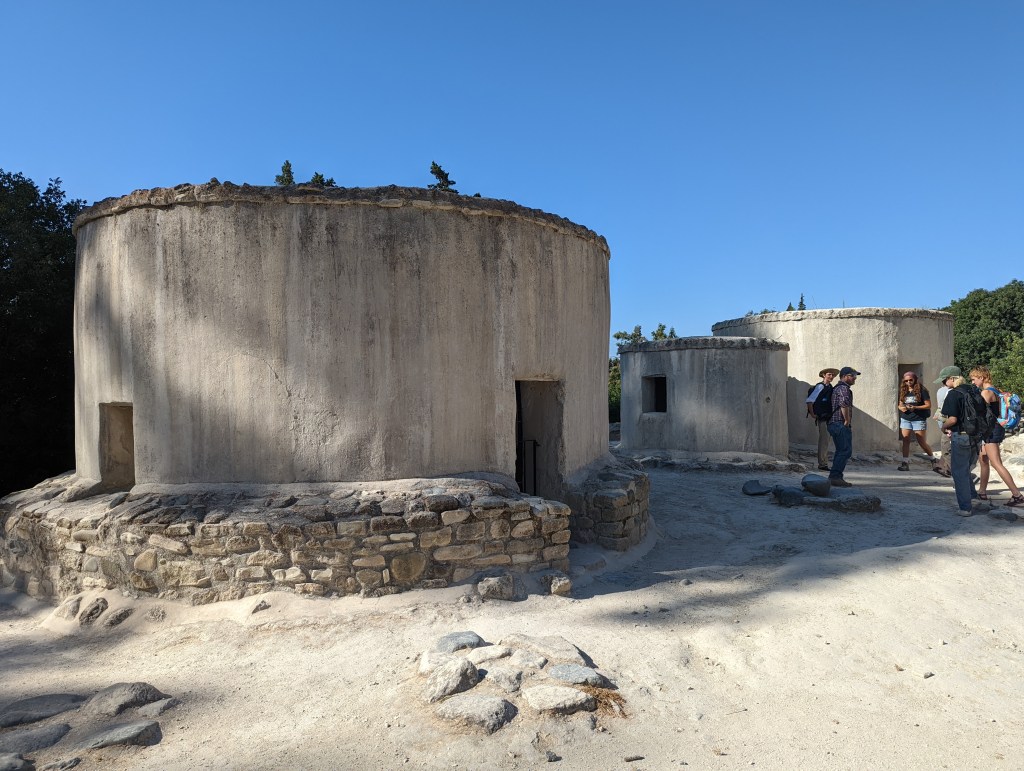
There are a few very distinctive details that makes these people unique, but also extremely significant to the study of anthropology. Their village housed anywhere from 300 to 600 people and was enclosed by a fairly tall and thick wall. This implies to me they had concerns of outside threats, but none is known at this time. Furthermore, the construction of buildings and domiciles were in a circular fashion rather than later squares or rectangles. I spent some time considering why one would construct circular buildings rather than polygonal ones and the best answer I could come up with would be the trading of square footage for the reduction of building material used. It was suggested by Anna, one of the graduate students, that the formation and clusters of rounded buildings would encourage airflow. What the climate of the location was like 8000+ years ago I can only begin to guess. Another interesting feature of this society was the burials of the dead under the floors of the home. They would not be the only peoples throughout time to do such a thing, but this funerary practices give clues towards the perceptual relationship between the mortal world and that of the afterlife. Rather than separating the deceased from the living in an isolated or even shared tomb or cemetery, they kept the dead close.
But the most fascinating aspect I learned when visiting this site, was that the society completely lacked pottery. There have been zero pottery sherds discovered. You, my future archaeology student, will quickly learn while working on a more recent site that pottery in the olden days is like the broken bottles of glass in the modern times. It is everywhere and unescapable. From my understanding, this site threw the belief that pottery manufacturing was a prerequisite for agricultural development right out the window. There are no signs of petroglyphs that remain, so I am curious about how the people here expressed themselves through material culture, because pottery was often the medium for artistic expression.
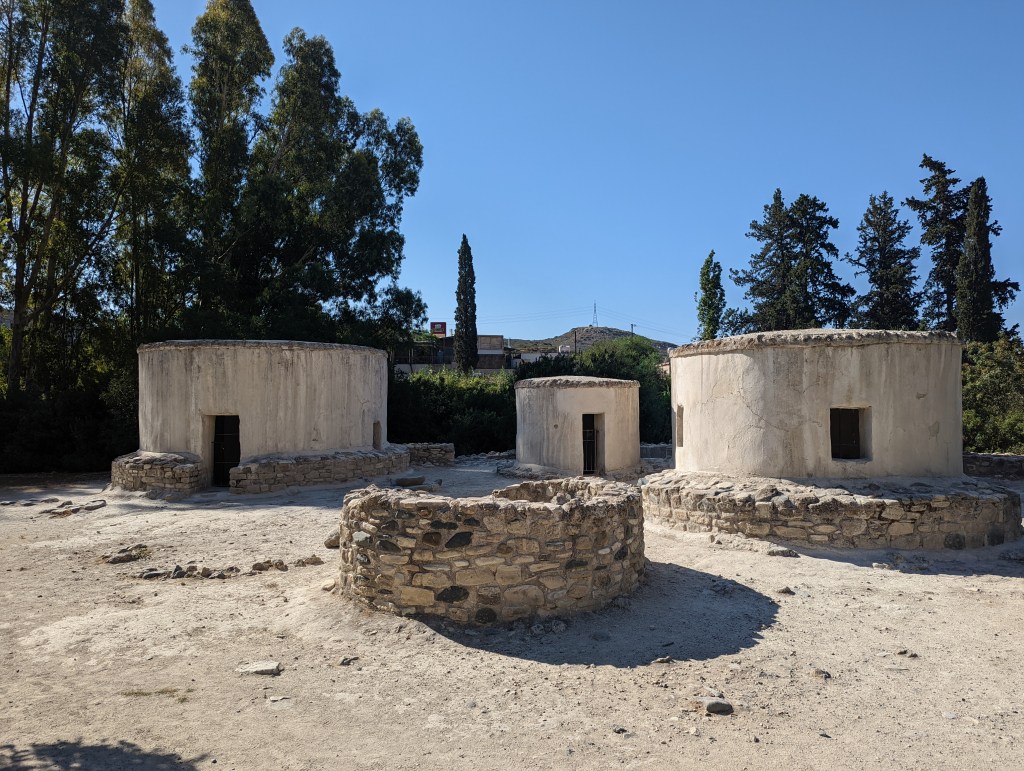
This is a trip not to miss. Especially if your interest in history or archaeology is focused in pre-history. In 1998 the site was designated a UNESCO World Heritage Site, and the caretakers have rebuilt mock examples of what they believed the structures in the village looked like.
-Adam E.
 Vigla Archaeological Project
Leave a comment