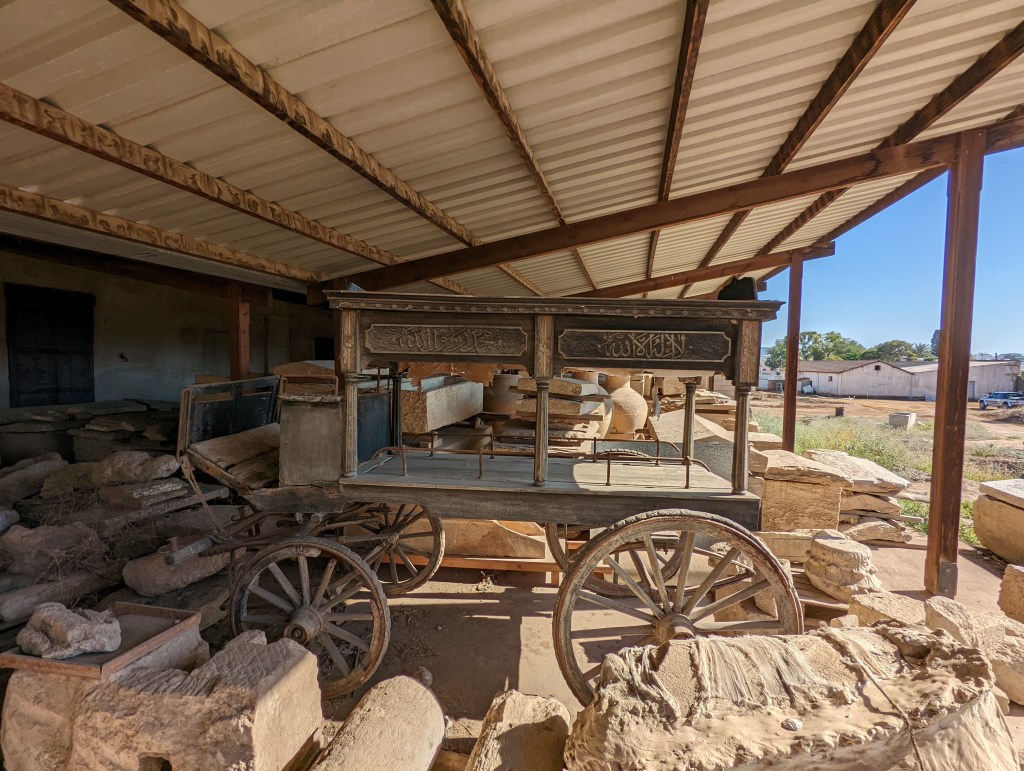
At the site we store our discovered material culture at (mainly pottery), they have a treasure trove of empty stone tombs stacked under awning and lean-tos. There was one unique item that did catch my eye, and it was an old wooden carriage. It had seen better days, but the decay of the wheel spokes and the frame had not proceeded far enough for the whole carriage to collapse. My first impression right away was it must be for transporting caskets. There was no room to sit in the back, too high lifted off the ground (around chest height), the Arabic inscription on the sides, and the framing of the back portion had carved flowers. This seemed too fancy for a simple merchant or farmers carriage to take their wares to market. I had to look into it more.
I was told 4th hand that it was found in this condition in someone’s barn. The mere fact it was being stored at the facility we used meant it had some sort of historical value. My mind immediately went to 19th or early 20th century Ottoman funerary practices on the island. The more I looked into that specific theory, the more frustrated I became because I could not find anything that seemed to explain what I was examining.
I took the time to verify the translation of the inscription of the casket by emailing a professor of mine who was fluent, and he returned back to me what was suspected by another professor who had some familiarity with Arabic. “There is no God but God” on the right and “Mohammad is the prophet of God” on the left. So we are very likely dealing with a device used in religious practices. I admittedly was patting myself on the back for guessing correct.
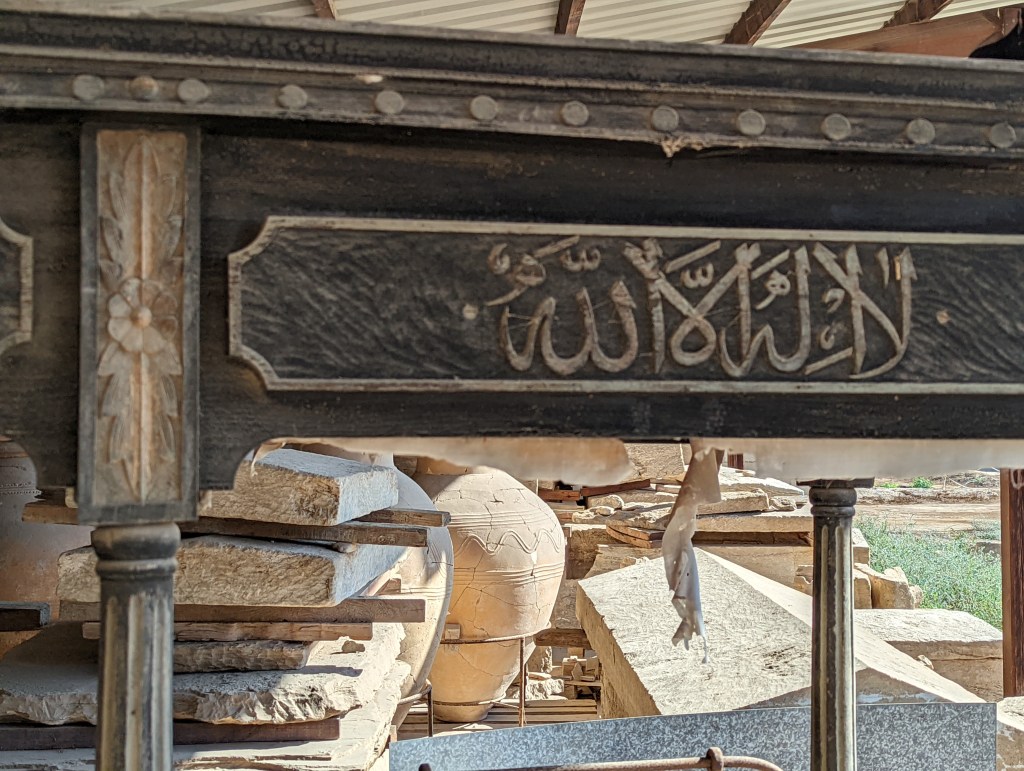
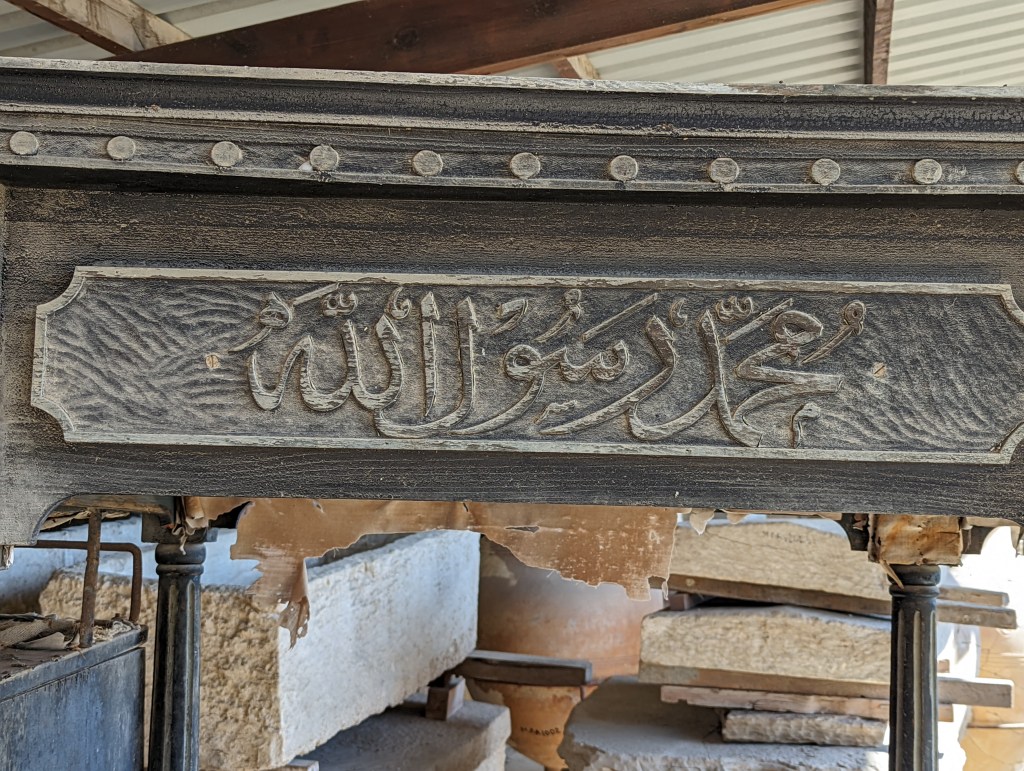
On a different day visiting the storage site, I looked at it one more time and started wondering about another feature of the carriage. The exterior circumference of the wheel had a material on it not of metal nor made of wood. After staring at it for a bit I came to the conclusion it was basically petrified rubber. But wait… rubber in 19th century Ottoman Empire? Organic rubber from tree plants could have been around back then, but I had never known or seen really old rubber last this long. Synthetic modern rubbers yes, they tend to last long periods of time, but that didn’t become commonplace until after the Second World War. The Japanese invasion of Southeast Asia was in part motivated by the need to access the rubber tree plantations for their war machine. The loss of this rubber supply chain pushed the further development of petroleum based rubber in the United States. With this new problem presented to me, I had to look into it further. My new guess became this funerary carriage was much more recent than I suspected. The minimal deterioration of the wooden accoutrements on the frame gave weight to this new theory.
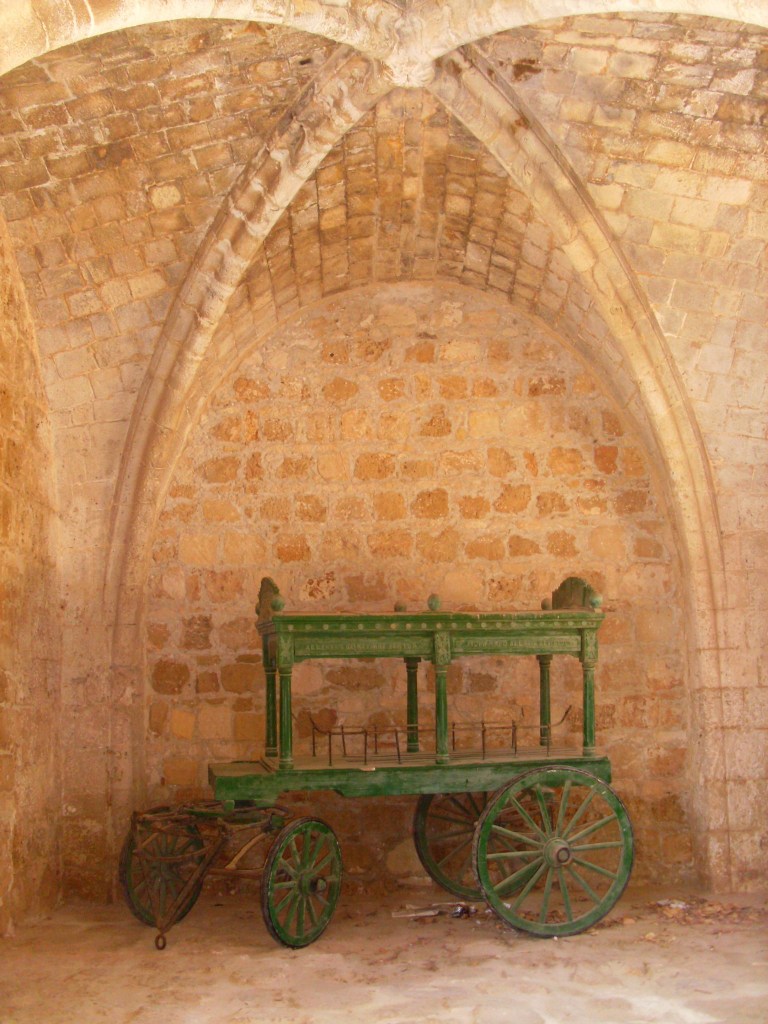
After some searching on the internet, I was a able to find another carriage in located in Famagusta, Cyprus that had many of the same features. The person who uploaded this picture left an anecdote that they remember as a child watching carts like this being used in Cyprus all the way up until the 1970’s. I was kind of sad to find out this carriage was nowhere near as old as I wanted it to be, but there is a lesson in my search to prove myself right. All the details matter before you can start making a serious hypothesis and you should try to prove yourself wrong rather than seeking out the answers that prove you right.
-Adam E.
 Vigla Archaeological Project
Leave a comment