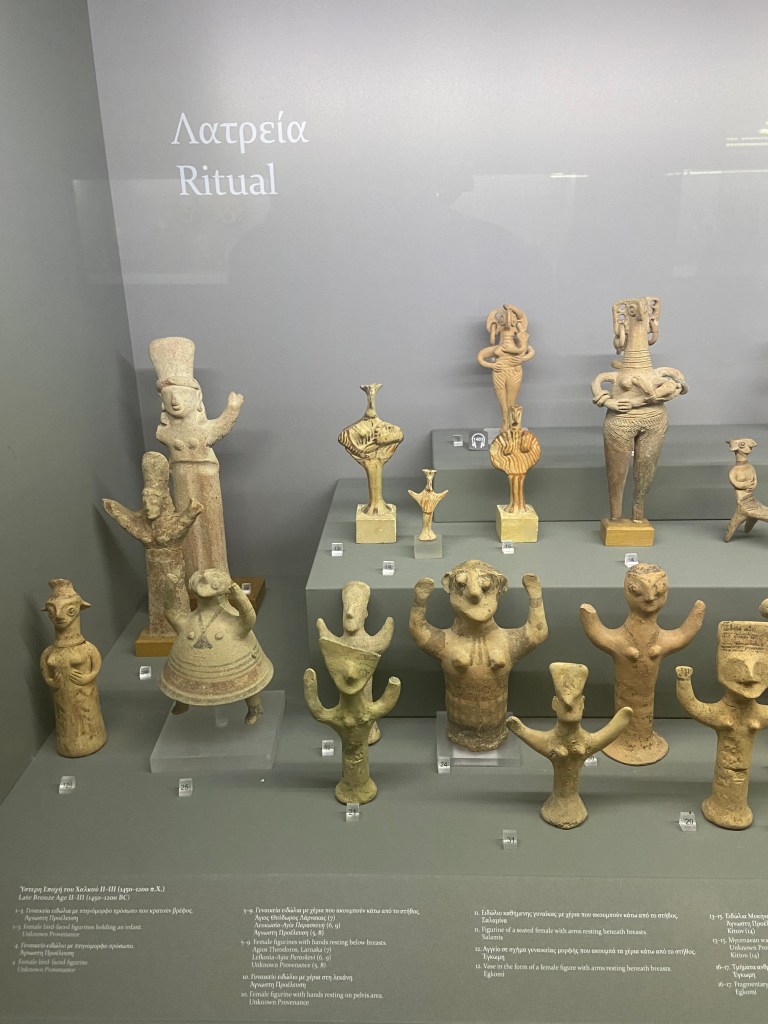
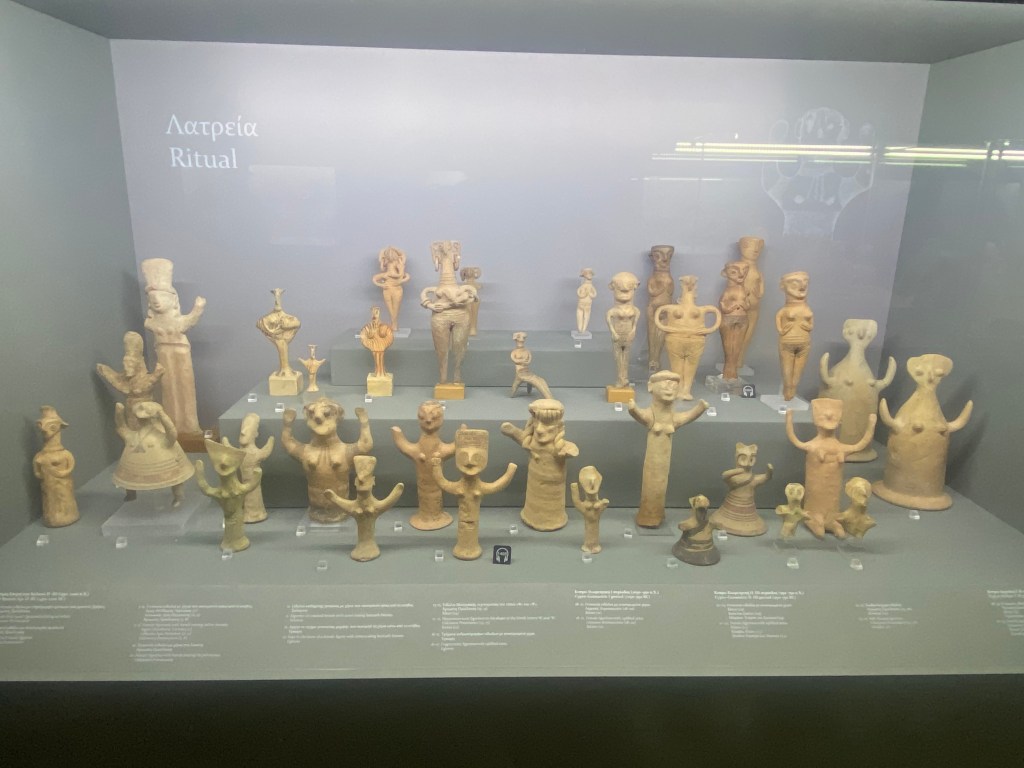
The Museum of Cyprus, located in Nicosia, houses a collection of ritualistic figurines. The figurines are shown below date back to the Late Bronze Age (1650-105 BC). The figurines are categorized into two main groups based on their characteristics. The first group of figurines has a bird-like appearance in addition to round eyes. They are usually adorned with circular earrings, and carry a baby in their left arm. These first groups of figurines are assumed to have Syrian prototypes. The next group of figurines have more naturalistic features and are more expressive. Rather than carrying an infant like the first group, this group is often depicted with their arms below their breast. Both groups are assumed to be representative of a fertility goddess. The goddess they’re associated with is Astarte, the great goddess of the east. Astarte herself is commonly associated with the ‘Great Goddess’ of Cyprus. Beginning in the Cyprus-Geometric period (11th Century BC), the third type of figurine emerges. Once again, this figurine is associated with the worship of a fertility goddess; specifically, the worship of Aphrodite-Astarte. Unlike the other two types of figures, however, it’s not entirely clear whether this third type is representative of the goddess herself, or of priestesses associated with the goddess. Regardless, all three types of figurines share a common association with the goddess Astarte, though in varying forms. The different variations of the same goddess likely point to altering religion as cultural influences change over time.
-Olivia R.
 Vigla Archaeological Project
Leave a comment