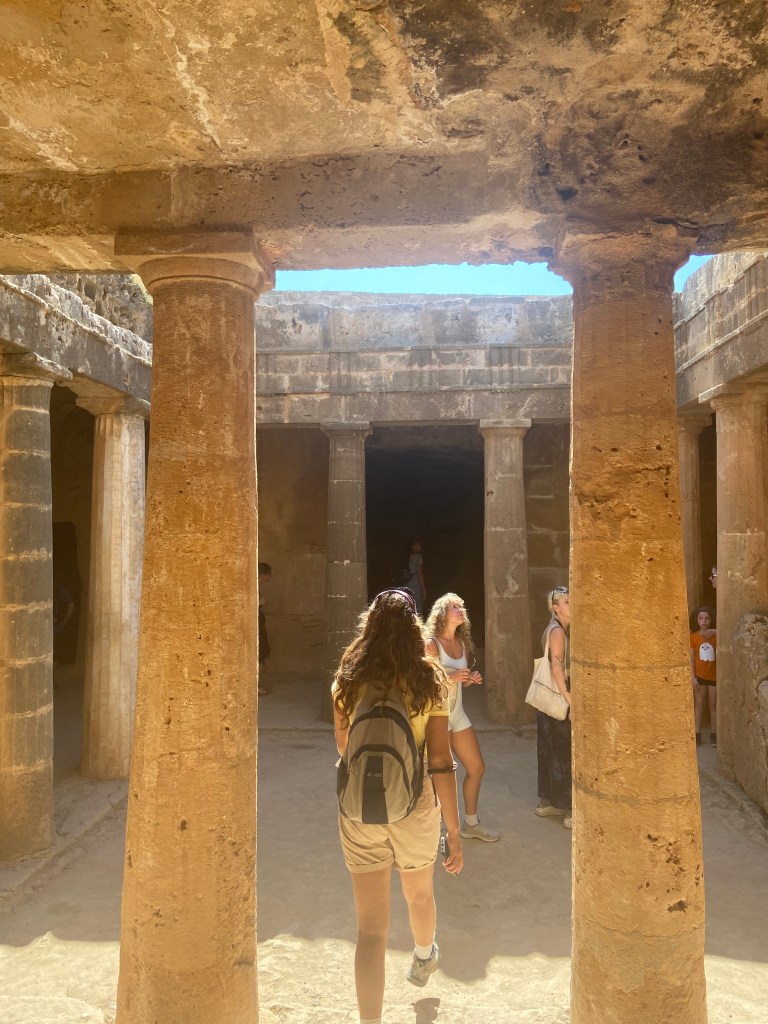
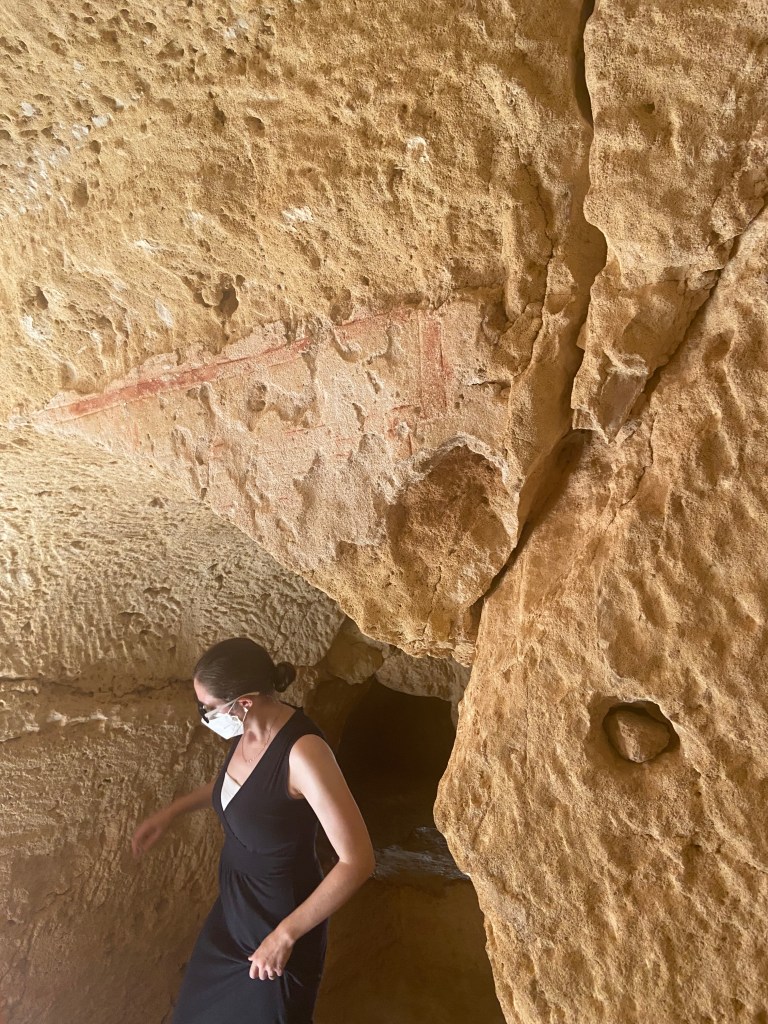
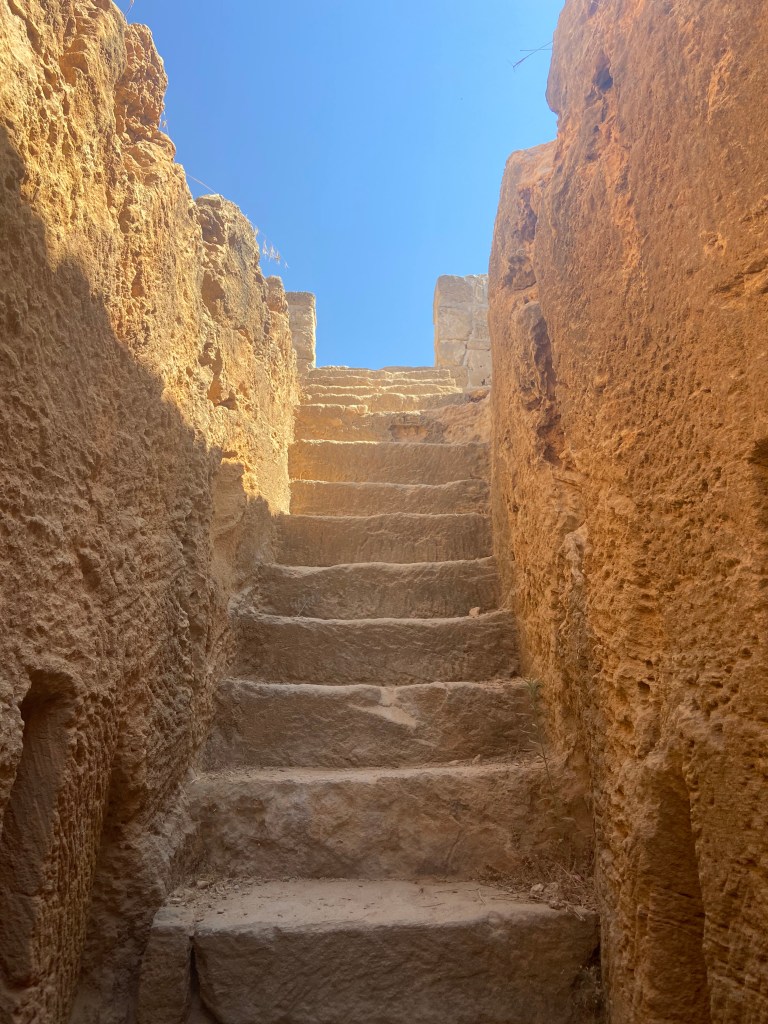
The Tombs of the kings are, as the name suggests, a collection of tombs located in Paphos. The tombs excavated here date back to the Hellenistic Period, around the 3rd century B.C. The building style of these tombs, while Greek, is also reminiscent of the same style seen in Alexandria during the rule of the Ptolemies. Although similarities in building style were similar between Paphos and Alexandria, the tombs in Paphos were communal burials rather than individual. Also, the tombs at Paphos weren’t used for kings, given the previous abolition of royalty; rather, these tombs held elite characters, such as high administrative officers, and their families. There is also evidence that these tombs may have also been used by early Christians. The structure of the tombs seems to generally be based on an open-air concept carved into large natural features of the rock. The columns surrounding the atrium of the tombs are Doric (a). These tombs would’ve been decorated with numerous frescos at the time of their construction. Though few have survived, there are remnants of paint still present, notably in tomb #3 (b). Additionally, the larger tombs consist of deep wells in the center that would’ve served a ritual purpose as people were actively being buried there. Although the architectural style of the tombs has clear adherence to Hellenistic prototypes, there is also Egyptian imagery present in the tombs. When excavated, archaeologists found two eagle statues. However, the base of the stance of the eagles’ feet seems to bear more resemblance to the Egyptian falcon god, Horus. The design of these tombs is evidence of the interesting intermingling of cultures in Cyprus, especially in conjunction with other notable sites and museums.
– Olivia R.
 Vigla Archaeological Project
Leave a comment