The name Vigla comes originally from the Latin verb vigilare, meaning “to guard”, “to keep watch”, or “to monitor.” For English speakers today, it’s the root of our vigil and vigilant. Though much later than the Hellensitic period of the site’s occupation, the Byzantine Empire also borrowed the word from Late Latin and its Roman military usage, and in Greek, the word vigla went from meaning any type of guard detachment to denoting a formal, elite unit in the Byzanitine army.
But though the term came into Greek much later than the early Hellensitic period of the site in question, vigil and vigilant are fitting words to describe the site. Situated precisely on its high coastal hill, overlooking the narrow strip of land, possibly the coastal road, and the whole expanse of the bay of ancient Kition, the watchfulness of Vigla’s ancient defenders, day and night, comes immediately to mind.
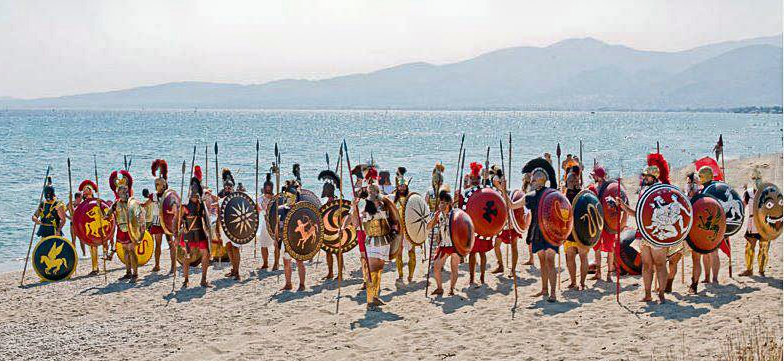
Imagine the things its garrison of Vigla may have surveyed: maybe a fleet of their enemy Ptolemy or Antigonus, heavy quadrimes rolling menacingly into the bay with the light of dawn, well visible from the height. The large warships slice quick toward shore, carried in easily by the coastal wind. In the shallow surf, out of range of bowshot from the walls, smaller boats methodically unload hoplite infantry in their thick armor, then skilled slingers, and possibly even armored cavalry, all massing on the beach for an attack on the high fortifications those Vigla defenders watch from.
The methodical research we are conducting now at this site will help to answer questions about just how Vigla’s defenders spent those days and nights as they guarded this fortress, and possibly even the end that they came to, potentially after monitoring just such an image as this.
- Jeff H.
 Vigla Archaeological Project
Leave a comment